Rahul Gandhi accuses Gyanesh Kumar of illegally altering Form 6
Synopsis
Congress leader Rahul Gandhi has accused Chief Election Commissioner Gyanesh Kumar of illegally and unilaterally altering Form 6 — the voter registration form — calling it proof of partisan conduct in favour of the BJP and warning that all those involved will be held accountable.
Key Takeaways
Rahul Gandhi, Leader of the Opposition, publicly accused Chief Election Commissioner Gyanesh Kumar of changing Form 6 illegally and unilaterally on October 5, 2026 .
Form 6 is the statutory form for new voter registration under the Representation of the People Act, 1950 ; any change to its prescribed format carries significant electoral implications.
Gandhi framed the alleged change as deliberate partisan abuse of office to benefit the BJP .
He warned that Kumar and 'everyone else involved' in what he called a 'criminal assault on our democracy' will be held accountable.
The allegation arrives in the context of a broader opposition challenge to the independence of the Election Commission, particularly following the 2023 law that changed the CEC appointment process.
India's electoral rolls cover over 96 crore voters , making any alteration to voter registration forms a matter of national democratic consequence.
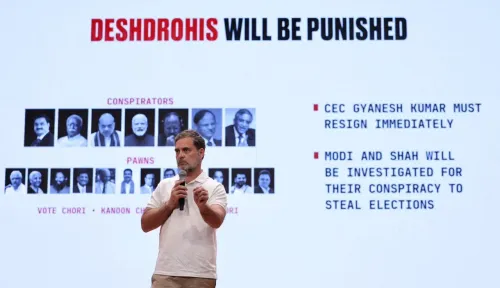
A fresh political firestorm erupted on Monday, October 5, 2026, after Congress leader Rahul Gandhi, Leader of the Opposition in the Lok Sabha, declared that Chief Election Commissioner Gyanesh Kumar had 'changed Form 6 illegally and unilaterally' — and vowed that everyone involved in what he called a 'criminal assault on our democracy' would be held accountable.
The Form 6 allegation at the centre of the storm
Form 6 is the statutory application form through which a citizen registers as a new voter on the electoral rolls under the Representation of the People Act, 1950. Any alteration to its prescribed format or the rules governing it falls under the jurisdiction of the Election Commission of India, and changes of such consequence are expected to follow a consultative, rule-bound process. Gandhi's charge — that Kumar changed the form 'illegally and unilaterally' — strikes directly at the procedural sanctity of voter registration, the foundational act of democratic participation.
Gandhi did not merely flag a procedural lapse. He framed the alleged change as partisan sabotage, stating it is 'just one more proof of him abusing his position to help the BJP.' The language is unambiguous and combative: the Leader of the Opposition is accusing the nation's top election administrator of partisan conduct in the mechanics of voter enrolment.
Gyanesh Kumar and the Election Commission in the opposition's crosshairs
Gyanesh Kumar, a retired IAS officer of the Kerala cadre, was appointed Chief Election Commissioner earlier in 2024, following the passage of the controversial Chief Election Commissioners and Other Election Commissioners (Appointment, Conditions of Service and Term of Office) Act, 2023 — a law that replaced the Supreme Court-mandated selection panel (which included the Chief Justice of India) with a committee in which the government holds decisive weight. The opposition had at the time argued that the new appointment process compromised the institutional independence of the Election Commission. Gandhi's current allegation lands in that already-charged context.
The Congress and its INDIA bloc allies have repeatedly challenged what they describe as a pattern of electoral administration that benefits the ruling party — from voter list discrepancies and EVM integrity concerns to delays in by-election announcements. Today's post adds a new, specific charge: the alleged unilateral rewriting of a statutory form central to voter registration.
What 'held accountable' signals from the Opposition benches
Gandhi's closing line — that Kumar 'and everyone else involved in this criminal assault on our democracy will be held accountable' — carries both a legal and a political register. It signals the Congress's intent to pursue the matter through Parliament, potentially through privilege motions, adjournment debates, or formal complaints to constitutional authorities. It may also be a prelude to judicial intervention, as any unlawful modification to a prescribed statutory form would be challengeable before a High Court or the Supreme Court.
The phrase 'criminal assault on our democracy' is the sharpest language Gandhi has deployed in this context, elevating the allegation from administrative impropriety to a challenge against democratic fundamentals. How the Election Commission responds — and whether an official clarification or rebuttal emerges — will determine the next arc of this confrontation.
India's electoral rolls cover over 96 crore registered voters. Even a narrow change to Form 6 — the gateway to that rolls — has the potential to affect millions of enrolment applications. The stakes, if the allegation is substantiated, are systemic.
Point of View
Gandhi is signalling a paper trail the Congress believes can withstand legal scrutiny. The 'criminal' framing raises the temperature considerably and suggests the party is preparing to move this fight beyond Parliament into the courts. Whether the charge gains traction will depend entirely on documentary evidence, and the Election Commission's silence or response in the coming days will be watched with great intensity.
NationPress
5 Oct 2026
Frequently Asked Questions
What is Form 6 in Indian elections?
Form 6 is the official application form prescribed under the Registration of Electors Rules, 1960 that a citizen must submit to enroll as a new voter on the electoral roll of a constituency. Any change to its format or requirements must follow a lawful, notified process.
Who is Gyanesh Kumar and what is his role?
Gyanesh Kumar is a retired IAS officer who serves as the Chief Election Commissioner of India , the constitutional authority responsible for superintending, directing, and controlling the conduct of elections to Parliament and State Legislatures.
Why is the Election Commission's independence a political issue?
Since the passage of the Chief Election Commissioners and Other Election Commissioners (Appointment, Conditions of Service and Term of Office) Act, 2023 , the opposition has argued that the government now holds decisive influence over CEC appointments, replacing a Supreme Court-mandated panel that included the Chief Justice of India.
What could 'held accountable' mean in this context?
In parliamentary and legal terms, it could mean privilege motions or adjournment debates in the Lok Sabha , formal complaints to constitutional authorities, or legal petitions before the High Court or Supreme Court challenging any unlawful modification to a prescribed statutory form.
What is the significance of voter registration forms being altered?
India has over 96 crore registered voters . Form 6 is the entry point to those electoral rolls, so any change — however narrow — can affect millions of enrolment applications and, potentially, who is eligible to vote in future elections.