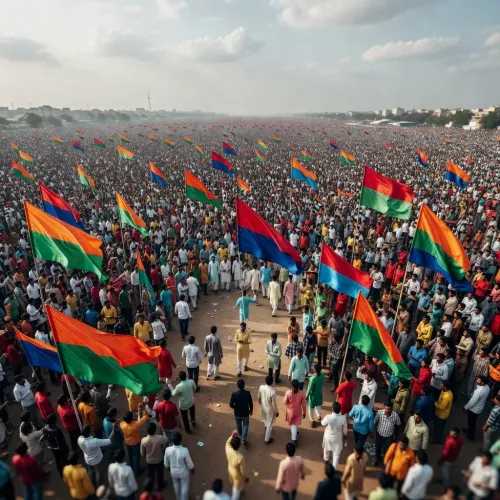
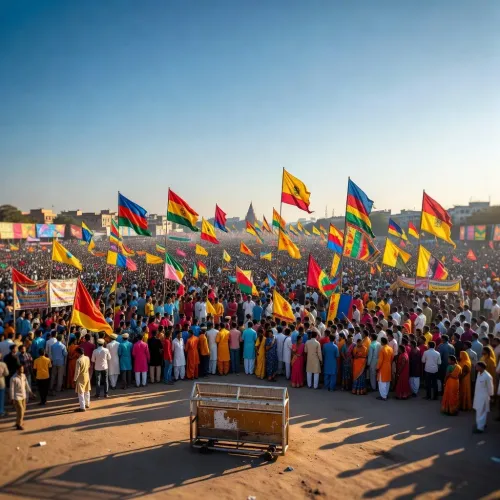
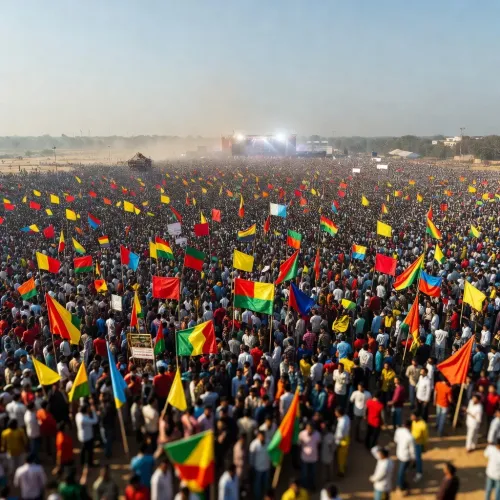
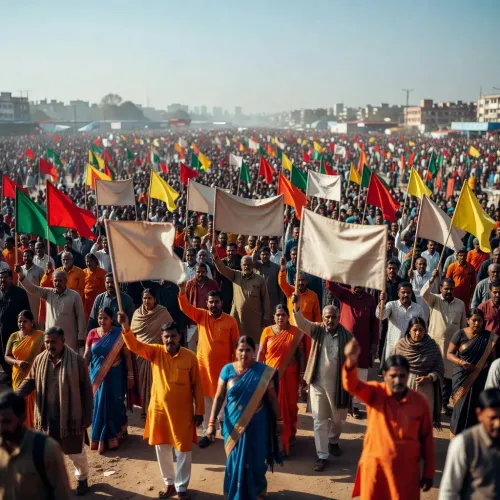
Rahul Gandhi calls Delhi to Ramleela Maidan: 'Vote Bachao, Desh Bachao'
Synopsis
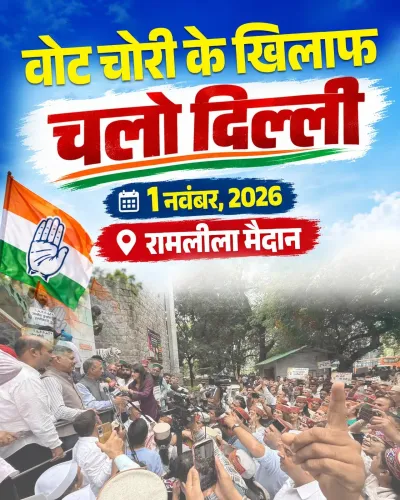
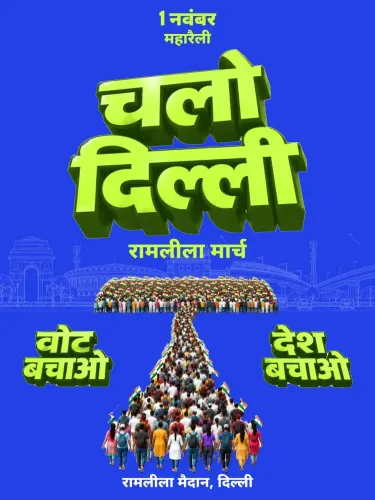
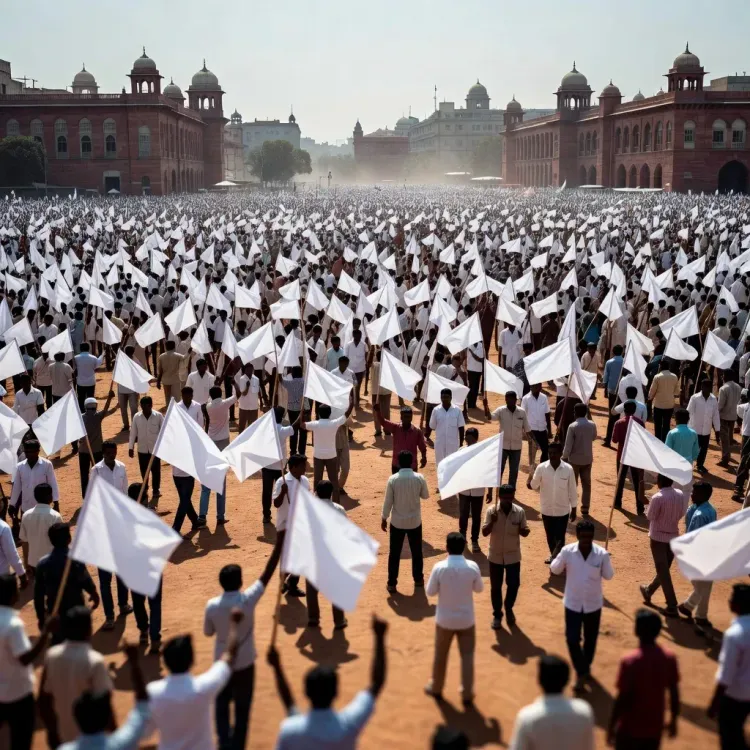
Congress leader Rahul Gandhi on November 1, 2026, called supporters to march from Connaught Place to Ramleela Maidan in Delhi under the 'Vote Bachao, Desh Bachao' slogan, mobilising opposition supporters around electoral integrity concerns.
Key Takeaways
Rahul Gandhi personally called Delhi supporters to a rally on Sunday, November 1, 2026 at noon .
The march begins at Connaught Place and converges at the historic Ramleela Maidan .
The central slogan — 'Vote Bachao, Desh Bachao' (Save the Vote, Save the Nation) — frames the event around electoral integrity.
The hashtag #ChaloDilli anchored the mobilisation call on social media.
The rally continues a pattern of Congress-led Delhi mobilisations that trace back to Gandhi's Bharat Jodo Yatra of 2022–2023 .
Police route permissions and any response from the Election Commission remain key things to watch.
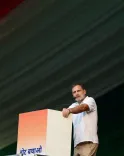
A call to march — and a message that reaches far beyond a single afternoon rally. Congress leader Rahul Gandhi on Sunday, November 1, 2026, summoned supporters to Connaught Place at noon, with Ramleela Maidan as the final destination, under the battle cry 'Vote Bachao, Desh Bachao' — 'Save the Vote, Save the Nation.'
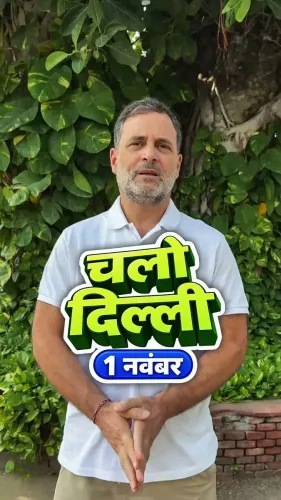
The post, timed for a Sunday midday mobilisation, carried the hashtag #ChaloDilli and offered Delhiites two entry points: join the procession from the iconic Connaught Place roundabout, or converge directly at the historic rally ground. 'Delhi, get ready!' Gandhi wrote — 'दिल्ली, तैयार हो जाओ!' — a line designed to cut through the scroll and land like a starter's pistol.
Ramleela Maidan and the grammar of opposition politics
Ramleela Maidan is not just a venue — it is a statement. Spanning a vast open ground in central Delhi, it has hosted some of independent India's most consequential public gatherings, from movements demanding accountability to celebrations of electoral victory. For the opposition, choosing it signals scale, seriousness, and historical weight.
Connaught Place as the march's launchpad is equally deliberate: a high-visibility, high-footfall starting point that channels protesters directly through the capital's civic heart before fanning out toward the Maidan.
'Vote Bachao' — the framing behind the slogan
The slogan 'Vote Bachao, Desh Bachao' is a direct invocation of electoral integrity as a national concern — not merely a party interest. Indian National Congress has increasingly anchored its opposition messaging in the language of democratic process, a thread that runs back through Gandhi's Bharat Jodo Yatra, the landmark 2022–2023 march from Kanyakumari to Kashmir that drew millions along its route and framed constitutional values as a civic emergency.
Opposition parties in India have periodically used large Delhi marches to draw public attention to questions surrounding electoral institutions and their independence. Such gatherings carry symbolic force well beyond their headcount: they force a response — from the administration over route permissions, from the Election Commission on any outstanding concerns, and from the ruling establishment on the legitimacy of the grievances being raised.
What the rally signals heading into the political calendar
A Sunday noon rally at Ramleela Maidan, framed explicitly around protecting votes, lands at a moment when electoral credibility is among the most contested terrains in Indian public life. Gandhi's choice to personally anchor the call — not delegate it to a party spokesperson — signals he intends to be the face of whatever argument his party is putting before Delhi's voters today.
Whether crowd size matches the urgency of the call, and whether any formal response emerges from the Election Commission or the government on the issues the Congress intends to raise, will determine how this afternoon echoes into the coming news cycle.
The streets of central Delhi have carried the weight of history before. Today, they are being asked to carry it again.
Point of View
Desh Bachao' call — rather than issue it through party machinery — reflects a deliberate strategy of keeping himself at the centre of the Congress's democratic-integrity narrative, a positioning the party has cultivated since the Bharat Jodo Yatra. Ramleela Maidan as the destination is a studied choice: it invokes the symbolic grammar of mass movements and forces the ruling establishment to respond, however indirectly, to the framing. The Sunday noon timing maximises public participation while the 'vote' framing attempts to broaden the coalition beyond core Congress voters to anyone with a stake in electoral fairness. How the administration responds to the march's logistics — and what specific demands emerge from the Maidan stage — will signal whether this is a one-day mobilisation or the launch of a sustained campaign.
NationPress
1 Nov 2026
Frequently Asked Questions
Where is Rahul Gandhi's rally on November 1, 2026?
The rally is at Ramleela Maidan in Delhi, with supporters also asked to assemble at Connaught Place at noon to march together.
What does 'Vote Bachao, Desh Bachao' mean?
'Vote Bachao, Desh Bachao' translates to 'Save the Vote, Save the Nation' — a Congress slogan framing electoral integrity as a national concern.
What is the #ChaloDilli hashtag about?
#ChaloDilli — meaning 'Let's go to Delhi' — is the social media rallying call used by Congress to mobilise supporters for the November 1, 2026 march and rally.
Why is Ramleela Maidan chosen for big political rallies?
Ramleela Maidan is a vast, historically significant open ground in central Delhi that has hosted major public gatherings for decades, making it a symbolic venue for large-scale political mobilisations.
What was Rahul Gandhi's Bharat Jodo Yatra?
The Bharat Jodo Yatra was a mass march led by Rahul Gandhi from Kanyakumari to Kashmir between 2022 and 2023 , aimed at engaging citizens on democracy, social cohesion, and constitutional values.