Rahul Gandhi Warns Officials Over Threats to Protesting Students
Synopsis
Congress leader Rahul Gandhi issued a sharp public warning to unnamed authorities on July 25, 2026, accusing them of threatening students for exercising democratic rights. The statement signals the opposition's intent to hold those responsible accountable, continuing a long-standing Congress focus on campus freedoms and student political expression.
Key Takeaways
Congress leader and Leader of the Opposition Rahul Gandhi posted a direct warning to unnamed authorities on July 25, 2026 .
Gandhi accused the authorities of threatening students for 'exercising their democratic rights.' He warned that those responsible 'will be held accountable when the time comes,' signalling future political or legal action.
The post continues a documented Congress pattern of defending student political expression, notably active since the 2019–2020 CAA protests .
The specific incident or institution involved has not been publicly identified.
The matter may be raised in the next parliamentary session via opposition procedural tools.
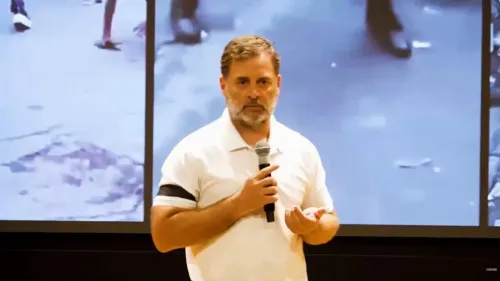
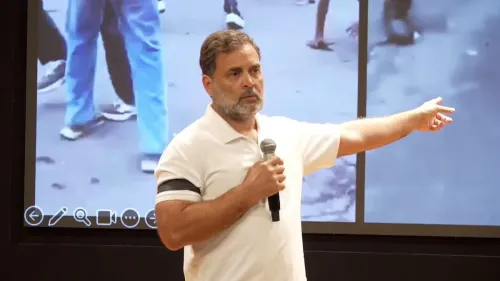
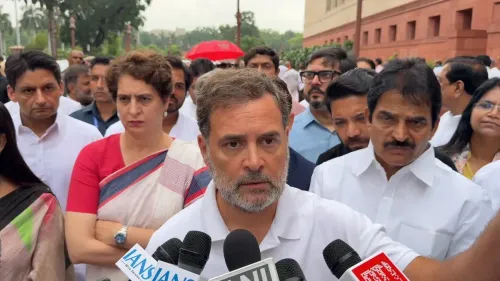
Congress leader and Leader of the Opposition in Lok Sabha Rahul Gandhi on Friday, July 25, 2026, issued a sharp public warning to unnamed authorities, accusing them of threatening students for exercising their democratic rights and cautioning that those responsible would be held accountable.
Context
In a post on X, Rahul Gandhi wrote: 'How dare you threaten students for exercising their democratic rights? Please note, you are the ones that will be held accountable when the time comes.' The statement is directed at an unnamed authority — likely campus administrators, law enforcement, or government officials — though the specific incident triggering the post has not been publicly identified.
The post carries the characteristic urgency of a direct political challenge, framing the issue as one of democratic rights rather than a narrow administrative dispute. Gandhi's use of 'when the time comes' signals a broader political warning extending beyond any single event.
Policy Backdrop
Rahul Gandhi and the Indian National Congress have consistently positioned themselves as defenders of student political expression, particularly since the nationwide protests of 2019–2020 against the Citizenship Amendment Act, when several university campuses became flashpoints between demonstrators and authorities.
Opposition parties have repeatedly accused successive central governments of deploying regulatory bodies and law enforcement to suppress dissent in universities. The University Grants Commission and campus administrations have at various points faced criticism over conduct rules seen as restricting student political activity.
This intervention by Gandhi fits a documented pattern: Congress leaders have used high-profile social media statements to internationalise campus disputes and keep pressure on the ruling establishment between parliamentary sessions.
Stakeholders and Impact
University students and campus administrations across the country are the immediate stakeholders. For students involved in protests — whatever the specific trigger — Gandhi's statement provides visible political backing and signals that the opposition is monitoring the situation.
For university administrations and the government, the post functions as a public accountability notice. Gandhi's reference to future accountability is widely read in Indian political discourse as a reminder that the Lok Sabha session and electoral cycles provide forums for redress.
Student unions affiliated with both the National Students' Union of India — the Congress's student wing — and independent campus bodies have historically amplified such statements to mobilise support and attract legal assistance for affected students.
What's Next
Political observers will watch for a formal response from the Ministry of Education or the University Grants Commission clarifying the circumstances Gandhi is referring to, as well as any follow-up statements from Congress that name specific institutions or officials.
The matter could surface during the next parliamentary session as a Zero Hour or Adjournment Motion, a tool the opposition has used previously to spotlight campus rights issues. The broader question of how far administrative authority extends over student political expression is likely to remain a live fault line in Indian higher education policy.
Point of View
He elevates what may be a localised campus dispute into a national constitutional question. This is consistent with the Congress strategy of using the Leader of the Opposition platform to set the agenda between parliamentary sessions, particularly on issues that resonate with young voters. The warning of future accountability is a signal to both the ruling establishment and the party's own student-wing base that the opposition is engaged and watching. The absence of specifics — no named institution, no named official — is itself a tactic, keeping the statement broad enough to apply to any future incident while maintaining deniability over unverified claims.
NationPress
24 Jul 2026
Frequently Asked Questions
Why did Rahul Gandhi warn authorities over student threats?
Rahul Gandhi posted a public warning on July 25, 2026, accusing unnamed authorities of threatening students for exercising their democratic rights, though the specific incident has not been publicly identified.
What did Rahul Gandhi say about students on July 25, 2026?
Gandhi said 'How dare you threaten students for exercising their democratic rights?' and warned that those responsible would be held accountable.
Which students is Rahul Gandhi referring to?
The post does not name a specific institution or group of students; the specific incident prompting the statement has not been publicly confirmed.
Has Rahul Gandhi spoken about student protests before?
Yes, Gandhi and the Congress party have consistently defended student political expression, most prominently during the nationwide campus protests against the Citizenship Amendment Act in 2019 and 2020.
What action could follow Rahul Gandhi's warning to authorities?
The matter could be raised during the next parliamentary session through opposition procedural tools, and Congress may follow up with statements naming specific officials or institutions.