Rahul, Priyanka Gandhi sit-in near PM Modi's home over NEET paper leaks
Synopsis
A day after students were lathi-charged at Jantar Mantar, Congress's top leadership — Kharge, Rahul Gandhi, and Priyanka Gandhi Vadra — marched to PM Modi's doorstep on 21 July demanding resignations over NEET-UG paper leaks. With Parliament in session and the Opposition pressing for a debate, the controversy is fast becoming the defining political flashpoint of the monsoon session.
Key Takeaways
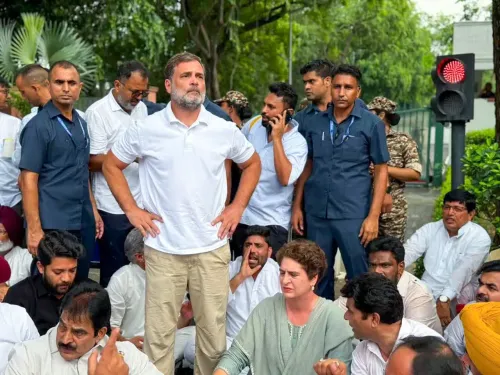
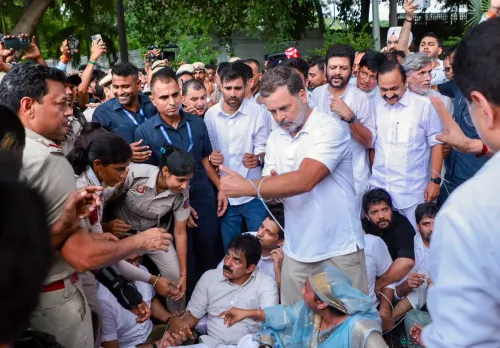
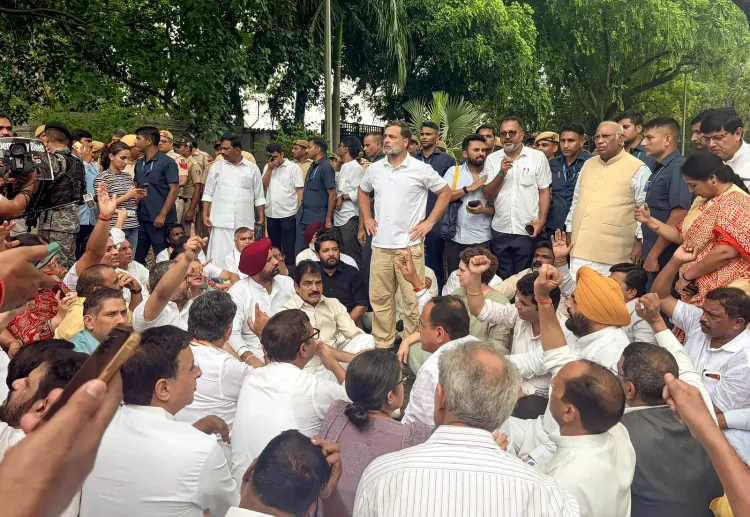
Congress President Mallikarjun Kharge , Rahul Gandhi , and Priyanka Gandhi Vadra staged a sit-in near PM Modi's residence at 7, Lok Kalyan Marg on 21 July .
Rahul Gandhi demanded the resignations of PM Modi , Home Minister Amit Shah , and Education Minister Dharmendra Pradhan over the NEET-UG paper leak and police crackdown on students.
The protest followed a CJP-led 'Sansad Chalo' march on 20 July in which students were reportedly lathi-charged and tear-gassed near Jantar Mantar .
Delhi Police said protesters displayed 'unruly, aggressive and violent behaviour'; the CJP said several participants were badly injured.
Rahul Gandhi posted on X calling for PM Modi to answer for 'brutalities against young students.' The Opposition is expected to push for a parliamentary debate on NEET during the ongoing monsoon session.
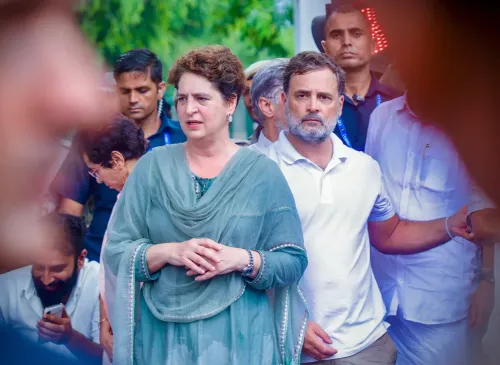
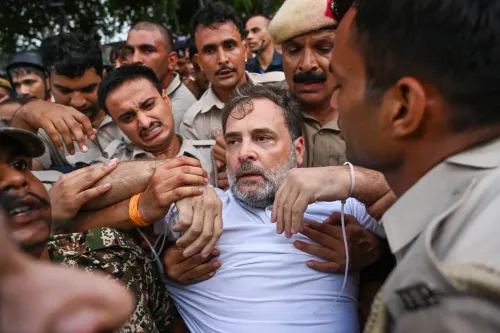
Rahul Gandhi and Priyanka Gandhi Vadra, alongside Congress President Mallikarjun Kharge, staged a sit-in protest near Prime Minister Narendra Modi's residence at 7, Lok Kalyan Marg, New Delhi, on Tuesday, 21 July, demanding accountability over the NEET-UG paper leak controversy and police action against protesting students. The demonstration came a day after a large-scale 'Sansad Chalo' march that ended in a police crackdown at Jantar Mantar.
The March and Sit-In
Congress workers assembled outside Kharge's residence at 10, Rajaji Marg on Tuesday afternoon before marching roughly a kilometre to the Prime Minister's home. The procession was led by Rahul Gandhi, in his capacity as Lok Sabha Leader of Opposition (LoP), and Priyanka Gandhi Vadra, a sitting Member of Parliament. The sit-in echoed demands first raised by the Cockroach Janta Party (CJP) during Monday's protest, including the resignation of Union Education Minister Dharmendra Pradhan over the alleged NEET-UG examination irregularities.
What Rahul Gandhi Demanded
In a post on X, Rahul Gandhi said: 'We have marched to PM Modi's house to demand answers from him for the brutalities against young students yesterday.' He further stated: 'The Government doesn't want to take any accountability nor does it want to have a debate on it in Parliament. PM and HM must resign for destroying the future of India's youth.' Speaking to reporters outside Parliament House earlier in the day, he called the police action against students 'completely unacceptable' and demanded an unconditional apology from the government. 'People are being beaten and thrashed. Why is the Prime Minister silent? He should speak up. He should apologise and stop this nonsense,' Gandhi said, flanked by party MPs including Priyanka Gandhi Vadra.
Police Action Under Scrutiny
Delhi Police came under sharp criticism after scores of students were reportedly lathi-charged and tear-gassed during the CJP's 'Sansad Chalo' march to Parliament on Monday, 20 July. The CJP alleged that several participants were badly injured and left bleeding as a result of the police response. Delhi Police, however, maintained that the action was necessitated by what they described as 'unruly, aggressive and violent behaviour' by protesters. The conflicting accounts have deepened the political standoff over how the student demonstrations were handled.
The NEET-UG Controversy
The protests are rooted in allegations of widespread paper leaks in the NEET-UG medical entrance examination, which is administered nationally and determines admissions to undergraduate medical courses across India. Critics argue the alleged irregularities have compromised the futures of lakhs of aspirants who prepared for years. The controversy has intensified calls from the Opposition for a Central Bureau of Investigation (CBI) probe and a re-examination, though the government has not yet announced either measure. This is not the first time a high-stakes national entrance exam has faced paper-leak allegations, underscoring what Opposition leaders describe as a 'broken education system.'
What Comes Next
With Parliament in session, the Opposition is expected to press for a debate on the NEET controversy in both Houses. The government's response — or continued silence — on Rahul Gandhi's demand for ministerial resignations will likely define the next phase of this political confrontation. Student groups have indicated they will sustain pressure until formal accountability measures are announced.
Point of View
Lok Kalyan Marg is as much about optics as policy — placing Opposition leaders physically at the Prime Minister's gate is a deliberate escalation designed to force a response that the government has so far withheld. What the coverage underplays is the structural issue: NEET paper leaks are not a one-off; they follow a pattern of compromised high-stakes examinations that successive governments have failed to firewall. The demand for ministerial resignations is unlikely to succeed in the short term, but the political cost of sustained silence on a controversy affecting lakhs of medical aspirants is real. If the government continues to stonewall a parliamentary debate, the Opposition gains a narrative that writes itself.
NationPress
21 Jul 2026
Frequently Asked Questions
Why did Rahul Gandhi and Priyanka Gandhi protest near PM Modi's residence?
Rahul Gandhi and Priyanka Gandhi Vadra led a Congress sit-in near PM Modi's New Delhi home on 21 July to demand accountability over alleged NEET-UG paper leaks and the police crackdown on students who had marched to Parliament the previous day. The protest called for the resignations of PM Modi, Home Minister Amit Shah, and Education Minister Dharmendra Pradhan.
What is the NEET-UG paper leak controversy?
The NEET-UG controversy centres on allegations that question papers for the national undergraduate medical entrance examination were leaked before the test, potentially compromising results for lakhs of aspirants. The Opposition has demanded a CBI probe and a re-examination, while the government has not yet announced either step.
What happened during the 'Sansad Chalo' protest on 20 July?
Students and youth participants in the CJP-led 'Sansad Chalo' march to Parliament were reportedly lathi-charged and tear-gassed near Jantar Mantar on 20 July. The CJP alleged several people were badly injured; Delhi Police said the action was a response to 'unruly, aggressive and violent behaviour' by protesters.
What did Rahul Gandhi say in his post on X about the protest?
Rahul Gandhi posted on X that Congress had marched to PM Modi's house 'to demand answers from him for the brutalities against young students yesterday.' He also stated that the PM and Home Minister 'must resign for destroying the future of India's youth,' accusing the government of refusing accountability and blocking a parliamentary debate.
What is likely to happen next in the NEET controversy?
With Parliament in session, the Opposition is expected to press for a debate on NEET in both Houses during the monsoon session. Student groups have signalled they will sustain protests until formal accountability measures — such as a probe or ministerial resignations — are announced by the government.