Indian Railways clears ₹409 crore rail flyover and signalling upgrade
Synopsis
Indian Railways has cleared ₹409 crore for two projects in eastern India — a 4.59 km flyover to unclog the Rourkela-Bondamunda industrial corridor and an electronic interlocking overhaul at 20 Malda Division sites. The flyover alone is projected to add 8 MTPA of freight capacity, while the signalling upgrade lays the groundwork for Kavach deployment.
Key Takeaways
Indian Railways approved two projects worth a combined ₹409 crore on 2 July .
A 4.59 km rail flyover at Bondamunda , costing ₹135 crore , will decongest the Rourkela-Bondamunda freight corridor and add 8 MTPA of handling capacity.
The flyover is driven by expansion of SAIL's Barsua-Taldih-Kalta mining complex and increased output at the Rourkela Steel Plant .
A ₹274 crore Electronic Interlocking upgrade will cover 18 stations and 2 intermediate block signalling locations in the Malda Division of Eastern Railway .
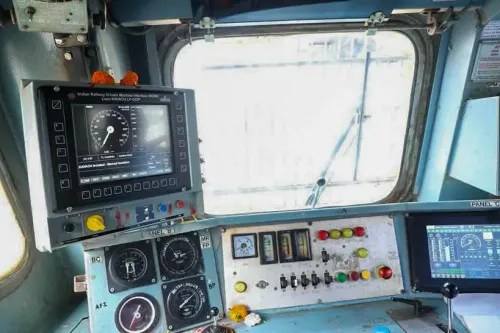
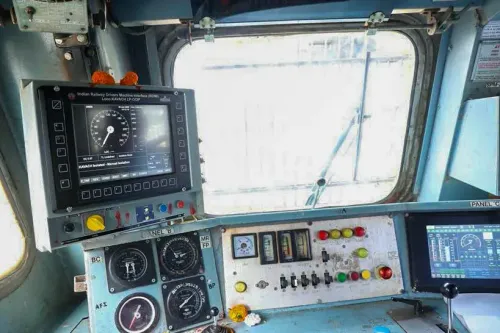
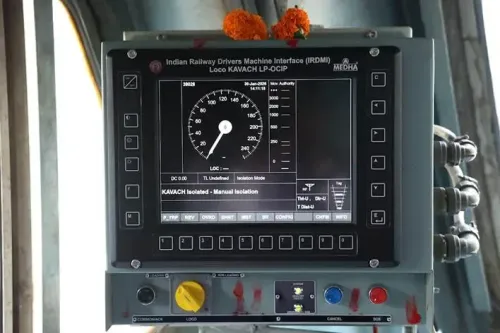
The upgraded signalling infrastructure will support future deployment of Kavach and other modern train protection systems.
Indian Railways has approved two infrastructure projects worth a combined ₹409 crore, targeting freight decongestion in the Rourkela-Bondamunda corridor and a sweeping signalling overhaul across 20 locations in the Malda Division of Eastern Railway, according to an official statement issued on 2 July. The twin approvals are aimed at boosting both freight capacity and operational safety on two of the busiest rail corridors in eastern India.
Rail Flyover at Bondamunda: Decongesting a Key Industrial Corridor
The first project sanctions the construction of a 4.59 km rail flyover from Bondamunda 'A' Cabin to Bondamunda Link 'B' Cabin in the South Eastern Railway zone, at an outlay of ₹135 crore. The flyover is designed to eliminate crossing conflicts between passenger and freight services on the heavily trafficked Rourkela-Bondamunda section, an industrial artery that has seen rapidly rising freight volumes.
The pressure on this corridor is expected to intensify further with the planned expansion of SAIL's Barsua-Taldih-Kalta mining complex, increased output at the Rourkela Steel Plant, and the proposed doubling of this High-Density Network (HDN) route. Upon commissioning, the flyover is expected to unlock an additional 8 million tonnes per annum (MTPA) of freight handling capacity, strengthening the evacuation of minerals and industrial products from the region.
This comes amid a broader push by the railways to decongest HDN routes, particularly those serving steel and mining belts in Jharkhand and Odisha, where freight demand has consistently outpaced infrastructure upgrades.
Electronic Interlocking Upgrade Across 20 Malda Division Sites
The second project, valued at ₹274 crore, covers the replacement of conventional relay-based interlocking systems with advanced Electronic Interlocking (EI) technology at 20 locations in the Malda Division of Eastern Railway — comprising 18 stations and 2 intermediate block signalling locations.
Electronic interlocking is a fail-safe signalling technology that automates route-setting and signal functions, substantially reducing the risk of equipment failure and human error. The upgraded systems are expected to improve operational flexibility, cut service disruptions, enable faster fault restoration, and enhance train punctuality on one of Eastern Railway's busiest corridors.
Notably, the modernised infrastructure will also provide a technological foundation for the future rollout of Kavach — the indigenous automatic train protection system — and other next-generation signalling platforms. This positions the Malda Division upgrade as both an immediate safety intervention and a long-term readiness investment.
Wider Significance for Rail Safety and Freight Growth
Together, the two projects reflect the railways' dual priority of expanding freight throughput and reducing accident risk through technology. The Malda Division EI upgrade is particularly significant given that relay-based interlocking systems — still prevalent across large parts of the network — have been flagged in past safety reviews as a maintenance liability on high-utilisation routes.
The combined ₹409 crore investment underscores a continued capital push into eastern India's rail network, a region that serves as the backbone for coal, steel, and mineral logistics. With disbursements and timelines yet to be publicly detailed, the pace of execution will be closely watched by industry stakeholders in the steel and mining sectors.
Point of View
But the real test is execution speed. The Bondamunda flyover addresses a freight bottleneck that has been building for years as SAIL's mining output expanded — sanctioning it now, rather than earlier, reflects a pattern of infrastructure lagging industrial demand. The Malda EI upgrade is overdue on safety grounds: relay-based interlocking on high-utilisation corridors is a known vulnerability, and the railways' own post-accident reviews have repeatedly flagged it. Framing the upgrade as Kavach-readiness is smart positioning, but Kavach's own rollout has been slow — so the sequencing of these investments with the national Kavach timeline will determine whether the readiness claim holds.
NationPress
1 Oct 2026
Frequently Asked Questions
What are the two railway projects approved worth ₹409 crore?
Indian Railways has approved a ₹135 crore rail flyover on the Rourkela-Bondamunda section in South Eastern Railway and a ₹274 crore Electronic Interlocking upgrade across 20 locations in the Malda Division of Eastern Railway. Together, the two projects are aimed at expanding freight capacity and improving signalling safety.
What is the Bondamunda rail flyover and why is it needed?
The Bondamunda rail flyover is a 4.59 km structure connecting Bondamunda 'A' Cabin to Bondamunda Link 'B' Cabin, sanctioned at ₹135 crore. It is needed to decongest the Rourkela-Bondamunda corridor, which faces rising freight traffic from SAIL's mining expansion and increased production at the Rourkela Steel Plant, and is expected to add 8 MTPA of freight handling capacity.
What is Electronic Interlocking and how does it improve safety?
Electronic Interlocking (EI) is a fail-safe signalling technology that automates route-setting and signal functions, replacing older relay-based systems. It reduces the risk of equipment failure and human error, improves fault restoration times, and enhances punctuality — while also preparing the network for advanced systems like Kavach.
Which locations are covered under the Malda Division signalling upgrade?
The ₹274 crore project covers 20 locations in the Malda Division of Eastern Railway — 18 railway stations and 2 intermediate block signalling locations on high-utilisation network routes.
How does the Bondamunda flyover connect to SAIL's mining expansion?
The Rourkela-Bondamunda section is a key evacuation route for minerals and steel products linked to SAIL's Barsua-Taldih-Kalta mining complex and the Rourkela Steel Plant. As both operations expand, freight volumes on this corridor are projected to rise significantly, making the flyover critical for avoiding rail congestion.