What is the Revenue Share of Flexi Fare, Tatkal, and Premium Tatkal in Indian Railways?
Synopsis
Indian Railways reveals that the revenue from flexi fare, Tatkal, and Premium Tatkal contributes significantly to passenger service earnings. This article delves into the details of this revenue, subsidies provided, and the ongoing efforts to manage fares across various train services.
Key Takeaways
Indian Railways' flexi fare, Tatkal, and Premium Tatkal account for 6% of passenger service revenue.
A subsidy of Rs 60,466 crore was provided on tickets in 2023-24.
Flexi fare is limited to select train services.
Revenue from flexi fare is projected at 1.80% for 2024-25.
Non-fare revenue initiatives include land development and service contracts.
New Delhi, Dec 20 (NationPress) The income generated by Indian Railways from flexi fare, Tatkal, and Premium Tatkal between 2020-21 and 2024-25 constitutes about 6 percent of the overall revenue from passenger services, as stated by the government.
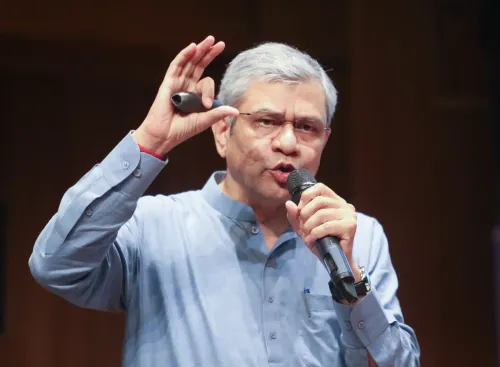
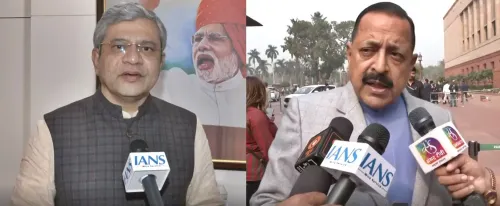
The total revenue recorded under ‘Miscellaneous Coaching Receipts’ during this period amounts to Rs 9,550.19 crore, according to Railways Minister Ashwini Vaishnaw in the Rajya Sabha.
“Furthermore, the revenue from ticket cancellations by passengers is not tracked separately,” he mentioned.
The minister also emphasized that Indian Railways aims to offer affordable services for all segments of society, providing a subsidy of Rs 60,466 crore on passenger tickets for the year 2023-24.
“This represents an average concession of 45 percent for every traveler using Railways. In simpler terms, if the service cost is Rs 100, the ticket price is only Rs 55. This subsidy is in place for all passengers,” Vaishnaw added.
Moreover, the revenue from flexi fare in 2024-25 is projected to be only around 1.80 percent of the total passenger service revenue.
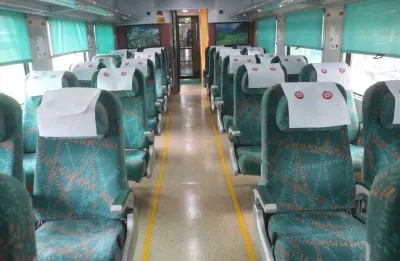
Indian Railways operates a variety of services with distinct fare structures. The flexi fare system has been applied to a limited selection of trains—namely Rajdhani, Shatabdi, and Duronto—to better manage demand. Additionally, alternative services at normal fare rates are available on the routes of these trains.
In response to another inquiry, the minister revealed that the total Sundry Non-fare revenue (Sundry Earnings) for Indian Railways in 2024-25 was Rs 11,586 crore, accounting for approximately 4.36 percent of the total receipts.
“Certain divisions have also initiated wagon-cleaning contracts by allowing the sale of leftover coal or cement. Around 1,308 hectares of unutilized land (not immediately necessary for operational uses) have been entrusted to the Rail Land Development Authority (RLDA) for commercial development, aiming to generate non-fare revenue,” the minister concluded.
Point of View
It's essential to recognize the efforts of Indian Railways in balancing revenue generation with affordability for passengers. The introduction of flexi fare and other schemes showcases a commitment to cater to diverse traveler needs while ensuring operational sustainability. The data shared by the government illustrates a proactive approach to managing resources effectively, which benefits society at large.
NationPress
3 Oct 2026
Frequently Asked Questions
What percentage of revenue does flexi fare contribute?
Flexi fare contributes approximately 6 percent of the total revenue from passenger services according to government data.
How much subsidy is provided on passenger tickets?
In the financial year 2023-24, Indian Railways provided a subsidy of Rs 60,466 crore on passenger tickets.
What types of trains use the flexi fare system?
The flexi fare system is currently applied to a limited number of trains, specifically Rajdhani, Shatabdi, and Duronto.