Nilgiris tea output halved by 55% monsoon deficit in Tamil Nadu
Synopsis
A 55 per cent southwest monsoon deficit — the worst the Nilgiris has seen in 15 years — has slashed green leaf yields from 500 kg to just 200 kg per acre. With procurement prices stuck below ₹20 per kg and annual yields potentially halving, small tea growers are caught in a double bind: falling output and no price upside. Everything now hinges on the northeast monsoon.
Key Takeaways
The Nilgiris district has recorded a 55 per cent southwest monsoon rainfall deficit this season — the worst in 15 years , attributed to the Super El Niño effect.
Green leaf output per acre has fallen from a normal 500 kg to around 200 kg per month; overall seasonal production is down an estimated 10–20 per cent .
Annual yields of 7–8 tonnes per acre could decline by as much as 50 per cent if dry conditions persist.
Procurement prices remain below ₹20 per kg , offering no price-side relief to farmers despite the supply shortfall.
Growers are now dependent on the northeast monsoon to restore soil moisture and stabilise production across Ooty , Gudalur , Coonoor , and Kotagiri .
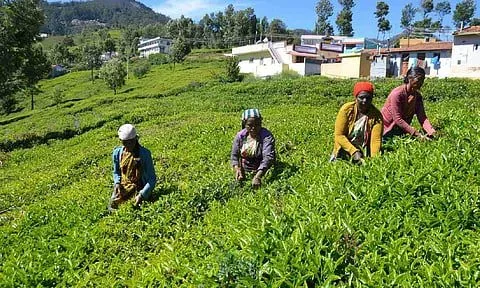
Tea growers in the Nilgiris district of Tamil Nadu are facing a dramatic collapse in green leaf production this season, as a 55 per cent shortfall in southwest monsoon rainfall — the worst in 15 years — has left plantations critically short of soil moisture. Agricultural experts attribute the deficit to the Super El Niño effect, and warn that annual yields could fall by as much as 50 per cent if dry conditions persist.
Scale of the Production Decline
Small tea producers say the output collapse this season is unprecedented in living memory. Plantations that typically yield close to 500 kg of green leaves per acre every month are now producing only around 200 kg — a drop of roughly 60 per cent from normal levels. Overall production has already declined by an estimated 10 to 20 per cent during the current season, with the full impact yet to materialise if rains continue to stay away.
Growers describe it as the sharpest decline witnessed in several decades. The annual average tea yield, normally estimated at seven to eight tonnes per acre, is at serious risk of being halved if the region fails to receive further rainfall in the weeks ahead.
Irrigation Efforts and Their Limits
Some farmers have installed sprinklers to shield their plantations from the prolonged dry spell. However, the cost of purchasing and operating irrigation equipment remains out of reach for many small growers, who make up a significant share of the district's tea sector. Agricultural experts noted that intermittent showers had provided temporary relief, helping plantations partially withstand the moisture shortage — but cautioned that this buffer is limited.
A sustained deficit could also widen the gap between successive harvests, further reducing the volume of green leaves supplied to processing factories and deepening the financial strain on growers already operating on thin margins.
Prices Offer No Cushion
Despite the sharp production decline, procurement prices have remained below ₹20 per kg, offering little financial relief to farmers. Experts pointed out that tea prices are largely governed by international market conditions, which means lower output in the Nilgiris does not automatically translate into higher prices for locally harvested leaves — a structural vulnerability that leaves small growers especially exposed during supply shocks.
Regional Rainfall Patterns and What Comes Next
The southwest monsoon, which typically runs from June to August, is critical for tea plantations across Ooty and Gudalur. Kotagiri benefits from both the southwest and northeast monsoons, while Coonoor draws a larger share of its annual rainfall from the northeast monsoon. With the southwest monsoon now nearing its end, the Nilgiris has recorded an overall rainfall deficit of approximately 55 per cent this season.
Growers are now pinning their hopes on the northeast monsoon. Adequate rainfall in the coming months is considered essential to restore soil moisture, stabilise production, and prevent further losses across the district's tea-growing belt. If the northeast monsoon also disappoints, experts warn the consequences for growers and downstream processing units could be severe.
Point of View
Output collapses, but prices do not rise to compensate — because pricing is set by global commodity markets, not local scarcity. The 55 per cent deficit is exceptional, but the vulnerability it has exposed is not. Small growers lack the capital for irrigation, the pricing power to pass on losses, and the institutional safety net to survive multi-season shocks. If the northeast monsoon also underperforms, the damage will extend well beyond this harvest — threatening the financial viability of an entire tier of producers who have no fallback.
NationPress
31 Aug 2026
Frequently Asked Questions
Why has tea production fallen sharply in the Nilgiris this season?
A 55 per cent deficit in southwest monsoon rainfall — the worst in 15 years — has left Nilgiris tea plantations critically short of soil moisture, cutting green leaf yields from a normal 500 kg per acre per month to around 200 kg. Agricultural experts attribute the shortfall to the Super El Niño effect.
By how much could annual tea yields fall in the Nilgiris?
Annual tea yields in the Nilgiris, normally estimated at seven to eight tonnes per acre, could fall by as much as 50 per cent if dry conditions continue. Production has already declined by an estimated 10 to 20 per cent during the current season.
Why are tea prices not rising despite the production drop?
Procurement prices have remained below ₹20 per kg because tea pricing is largely governed by international market conditions. Lower output in the Nilgiris does not automatically push up prices for locally harvested green leaves, leaving small growers without any price-side relief.
Which areas of the Nilgiris are most affected by the monsoon deficit?
Ooty and Gudalur depend almost entirely on the southwest monsoon, making them most exposed to this season's deficit. Kotagiri benefits from both monsoons, while Coonoor receives more of its rainfall during the northeast monsoon, giving these areas a partial buffer.
What are tea growers hoping for next?
Growers are banking on the northeast monsoon to restore soil moisture and stabilise production. Adequate rainfall in the coming months is considered essential to prevent further yield losses and ease the financial difficulties facing the district's tea-growing community.