Rajasthan Cabinet Amends Clean Energy Policy to Boost Renewables
Synopsis
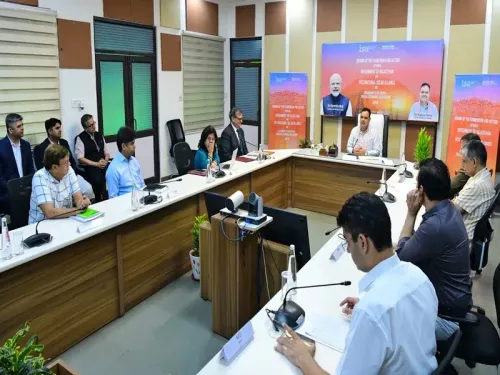
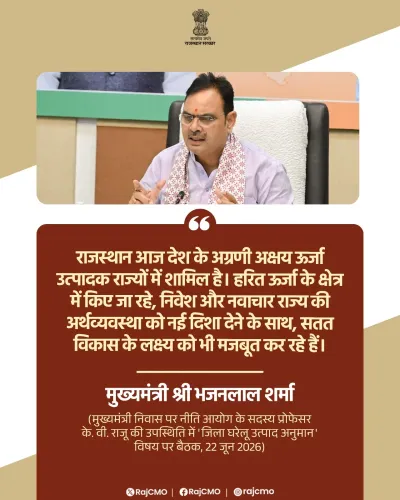
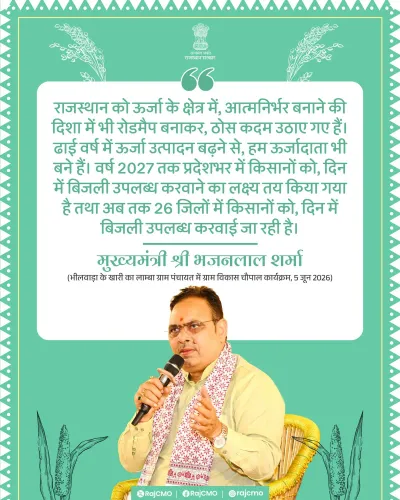
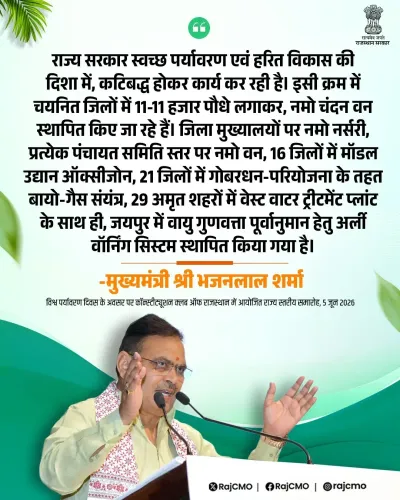
The Rajasthan State Cabinet, chaired by Chief Minister Bhajanlal Sharma, approved amendments to the Rajasthan Integrated Clean Energy Policy, 2024 on 7 August 2026, aiming to accelerate clean and renewable energy generation across the state.
Key Takeaways
The Rajasthan State Cabinet approved amendments to the Rajasthan Integrated Clean Energy Policy, 2024 on 7 August 2026 .
Chief Minister Bhajanlal Sharma chaired the cabinet meeting held at the Chief Minister's Office.
The amendments are aimed at accelerating renewable energy production across Rajasthan.
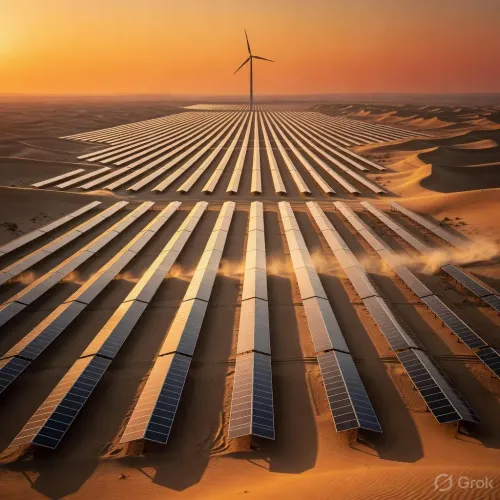
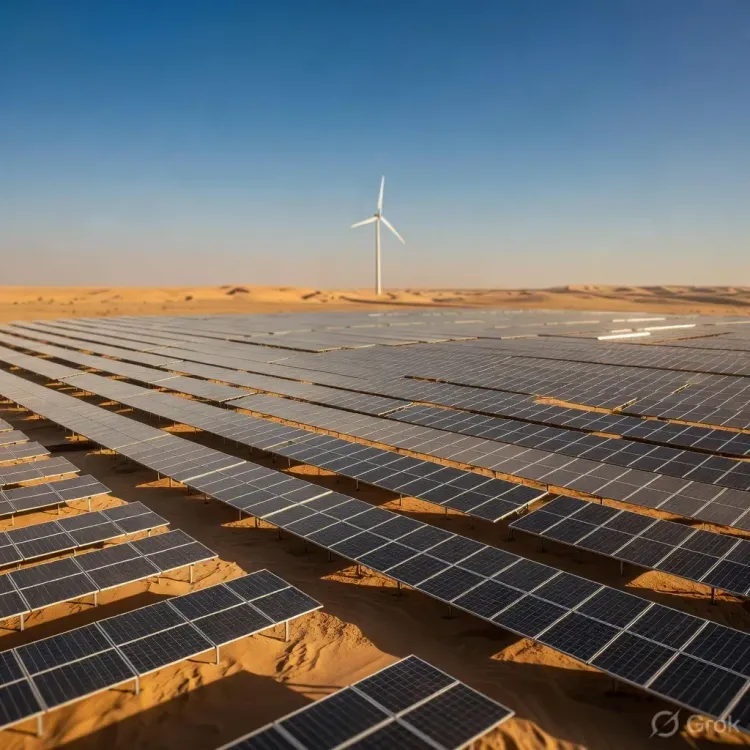
Rajasthan's Thar Desert region is among India's richest zones for solar and wind energy potential.
The policy builds on a lineage dating to the Rajasthan Solar Energy Policy, 2019 and aligns with India's 500 GW non-fossil fuel target by 2030 .
Specific provisions of the amendments — incentives, timelines, project norms — will be confirmed in an official gazette notification.
Rajasthan just sent a clear signal to the renewable energy sector: the state is accelerating. The Rajasthan State Cabinet, chaired by Chief Minister Bhajanlal Sharma at the Chief Minister's Office on 7 August 2026, approved amendments to the Rajasthan Integrated Clean Energy Policy, 2024 — a move aimed squarely at pushing the state's clean power output into a higher gear.
What the Cabinet Cleared
The cabinet meeting, held under CM Sharma's chairmanship, gave its formal approval to modify the existing 2024 clean energy policy framework. The stated objective — as shared by the Chief Minister's Office — is to give fresh momentum to renewable energy generation across the state. The exact provisions of the amendments, including any revised incentive structures, timelines or project norms, are expected to be detailed in an official gazette notification.
Why Rajasthan's Energy Push Carries National Weight
This is not a routine administrative tweak. Rajasthan sits on some of India's richest solar and wind corridors — the Thar Desert region alone offers among the highest solar irradiation levels in the country. The state has been a cornerstone of India's push toward its 500 GW non-fossil fuel target by 2030, with successive governments using dedicated policy frameworks to attract developers, allocate land, and build grid evacuation infrastructure.
The current policy lineage traces back to Rajasthan's Solar Energy Policy of 2019 and aligns with the revised National Solar Mission targets set in 2015. The 2024 Integrated Clean Energy Policy was designed to consolidate and expand that architecture — and Tuesday's amendment signals the Sharma government's intent to keep that momentum alive rather than let the policy age on paper.
What Investors and Developers Will Watch Next
For renewable energy developers and clean energy investors, the cabinet nod opens the question of what, specifically, changes. The amended policy's fine print — on land allocation, power purchase agreements, grid connectivity norms, and any new fiscal incentives — will determine whether fresh capital flows in. Bidding rounds or investment proposals under the revised framework are the next concrete milestone to track.
Rajasthan has consistently positioned itself as India's green energy frontier. This cabinet decision keeps that ambition on the record — and puts the pressure on implementation to deliver.
Point of View
Evolving instrument rather than a static document — a meaningful distinction in a state where investor confidence depends on policy continuity. Rajasthan's structural advantages in solar and wind make it a bellwether for how state-level governance can either accelerate or stall India's national clean energy transition. The move also carries political logic: owning the green energy narrative ahead of any investment summits or central government reviews reinforces BJP's pitch of development-oriented governance in a large, resource-rich state. The real test, however, will be in the gazette notification — whether the amendments sharpen incentives or simply repackage existing provisions.
NationPress
8 Aug 2026
Frequently Asked Questions
What is the Rajasthan Integrated Clean Energy Policy 2024?
The Rajasthan Integrated Clean Energy Policy, 2024 is a state-level policy framework designed to accelerate renewable and clean energy generation across Rajasthan, building on the state's earlier solar energy policies and aligning with India's national clean energy targets.
What did the Rajasthan Cabinet decide on 7 August 2026?
The Rajasthan State Cabinet, chaired by Chief Minister Bhajanlal Sharma, approved amendments to the Rajasthan Integrated Clean Energy Policy, 2024 to further boost renewable energy production in the state.
Who is Bhajanlal Sharma?
Bhajanlal Sharma is a Bharatiya Janata Party leader who has served as Chief Minister of Rajasthan since December 2023.
Why is Rajasthan important for India's renewable energy goals?
Rajasthan, particularly its Thar Desert region, holds some of India's highest solar irradiation levels and significant wind energy potential, making it a key contributor to India's target of 500 GW of non-fossil fuel capacity by 2030.
What changes will the amended clean energy policy bring?
The exact provisions — including any new incentives, land allocation rules, or project timelines — are expected to be detailed in an official gazette notification following the cabinet approval.