Rajasthan civic polls: Upper-caste anger puts BJP and Congress on notice
Synopsis
Upper-caste voters in Rajasthan are not just grumbling — they are organising. From Brahmin protests in Abu Road to bike rallies in Gangapur City and a Karni Sena boycott call in Bikaner, the discontent is structured and public. In ward-level civic elections where margins are razor-thin, even a modest vote fragment toward independents could rewrite local outcomes and send a signal that neither the BJP nor Congress can afford to ignore.
Key Takeaways
Upper-caste groups in Abu Road protested ticket distribution by both BJP and Congress , demanding removal of district presidents Raksha Bhandari and Leelaram .
In Gangapur City , a community committee is vetting more than three dozen independent candidates for endorsement, with a decision expected by Friday .
Mahipal Singh Makrana of the Shri Rajput Karni Sena has called for a BJP and Congress boycott in Bikaner .
Protests are linked to broader demands around the UGC Act , SC/ST Act , and reservation provisions.
Urban local-body elections are decided ward by ward — a small vote shift toward independents could produce three-cornered contests in closely fought wards.
Ahead of Rajasthan's urban local-body elections, an organised wave of upper-caste discontent is putting both the Bharatiya Janata Party (BJP) and the Indian National Congress (Congress) on the defensive. In multiple towns across the state, community groups are moving beyond private grievances — staging bike rallies, holding public meetings, and rallying behind independent candidates in what is shaping up as a pointed electoral warning to the two dominant parties.
Key Developments
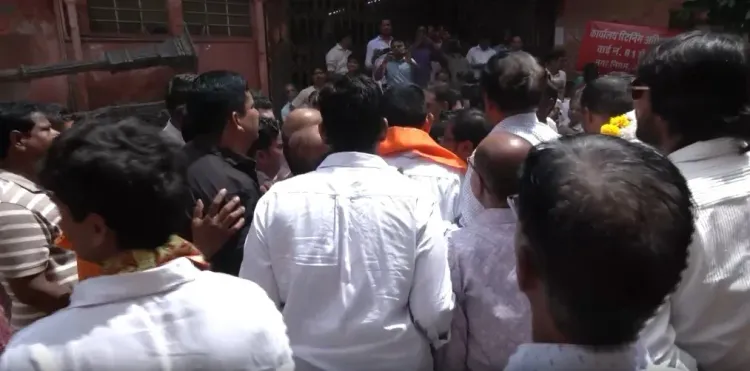
In Abu Road, members of the Brahmin community gathered at Parashuram Bhavan in Brahmpuri Colony to protest ticket distribution decisions by both the BJP and Congress. Demonstrators alleged that the community had been denied adequate representation despite its long-standing support for the two parties. Protesters went further, demanding an inquiry into the ticket allocation process and calling for the removal of BJP district president Raksha Bhandari and Congress district president Leelaram.
In Gangapur City, a community group announced it would back independent candidates rather than either major party. A bike rally was organised on Wednesday from the Hanuman Temple in Ward 30, with participants first reciting the Hanuman Chalisa before marching through the main market to the committee office in Ward 35. The gathering also raised concerns linked to UGC-related demands.
According to community spokesperson Vedprakash Mangal, more than three dozen independent candidates from different wards have approached the committee seeking endorsement. Applications were being accepted until Thursday, with a final decision on supported candidates expected by Friday.
Karni Sena Adds Political Weight
Mahipal Singh Makrana, National President of the Shri Rajput Karni Sena, has called for a boycott of both the BJP and Congress in Bikaner, framing the move as a demonstration of the upper-caste community's electoral strength. His intervention elevates what began as localised ticket disputes into a broader, coordinated political signal. Makrana also warned that agitation over UGC-related demands would intensify if the government failed to respond.
The UGC and Reservation Angle
The civic-poll discontent is unfolding alongside a wider movement involving demands related to the UGC Act, the SC/ST Act, and the reservation system. Sections of the upper-caste community have raised concerns about certain provisions and argued that existing arrangements could affect the educational environment. These claims, however, are being advanced by specific groups and do not reflect a uniform position across the entire upper-caste population, according to reports.
What It Could Mean for the Ballot
Urban local-body elections are decided ward by ward, where local equations and personal networks carry disproportionate weight. A relatively small vote shift can flip an individual ward. If even a fraction of voters who traditionally backed the BJP or Congress redirects support to independents, both parties could face three-cornered contests in closely fought wards — with outcomes potentially decided by thin margins.
This comes amid a broader pattern in Indian civic elections where ticket dissatisfaction sparks temporary mobilisation that often fades after polling day. The open question is whether the current protests reflect something deeper: a structural reassessment of political loyalty rather than a seasonal expression of grievance.
Reading the Political Signals
At present, there is no evidence of a statewide collapse in upper-caste support for either the BJP or Congress in Rajasthan. Both parties retain established organisational networks across the state. But the shift from private discontent to public protest — and now to organised independent candidacies — makes the development politically significant, even if its electoral impact remains uncertain.
As the campaign progresses, the scale of community mobilisation will become clearer. For now, the message from protesters is unambiguous: traditional political allegiances cannot be assumed. Whether it hardens into votes at the ballot box remains to be seen.
Point of View
But the Rajasthan protests carry a structural edge that sets them apart: community organisations are not just venting — they are vetting candidates and building campaign infrastructure for independents. The Karni Sena's entry transforms a local grievance into a coordinated electoral threat with a national-level figurehead. What mainstream coverage underplays is the ward arithmetic: in urban local-body contests, a community that fragments even 10–15% of its votes away from the major parties can swing multiple wards simultaneously, altering the post-election narrative far beyond what the raw numbers suggest. Both the BJP and Congress would be unwise to dismiss this as seasonal noise.
NationPress
3 Sept 2026
Frequently Asked Questions
Why are upper-caste groups protesting ahead of Rajasthan civic polls?
Upper-caste groups in several Rajasthan towns are protesting what they describe as inadequate representation in ticket distribution by both the BJP and Congress ahead of urban local-body elections. In Abu Road, Brahmin community members demanded an inquiry into ticket allocation and called for the removal of both parties' district presidents.
What is the Shri Rajput Karni Sena's role in the protests?
Mahipal Singh Makrana, National President of the Shri Rajput Karni Sena, has called for a boycott of the BJP and Congress in Bikaner, framing it as a show of the upper-caste community's electoral strength. He has also warned that agitation over UGC-related demands will continue and could escalate if the government does not respond.
What is happening in Gangapur City?
A community group in Gangapur City organised a bike rally and announced plans to support independent candidates rather than the BJP or Congress. More than three dozen independent candidates from different wards have reportedly approached the committee for endorsement, with a final decision expected by Friday.
How could this discontent affect the civic election results?
Urban local-body elections are decided ward by ward on thin margins, meaning even a modest shift of upper-caste votes toward independents could create three-cornered contests and change outcomes in closely fought wards. The impact may be localised but could carry a broader political signal for both major parties.
Do these protests represent all upper-caste voters in Rajasthan?
No. The protests and demands are being advanced by specific community groups and organisations, and do not necessarily reflect the views of the entire upper-caste population in Rajasthan, according to reports. Both the BJP and Congress retain established support bases across the state.