Rajasthan Industrial Policy 2025: 4G pillars, $350 bn economy target by 2028-29
Synopsis
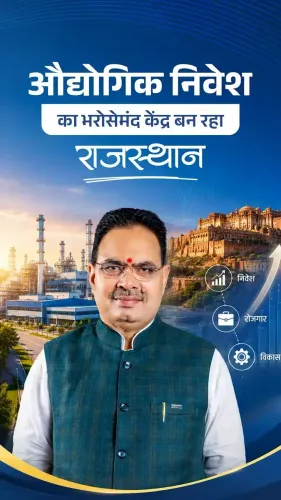
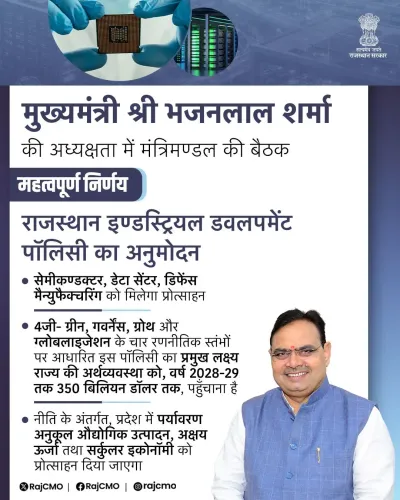
Rajasthan has approved a sweeping Industrial Development Policy anchored on four '4G' pillars — Green, Governance, Growth, and Globalisation — with an ambitious target to take the state economy to $350 billion by 2028-29. The policy bets heavily on semiconductors, data centres, and GCCs alongside traditional sectors, while layering in DMIC node parks and CETP infrastructure to signal serious industrial intent.
Key Takeaways
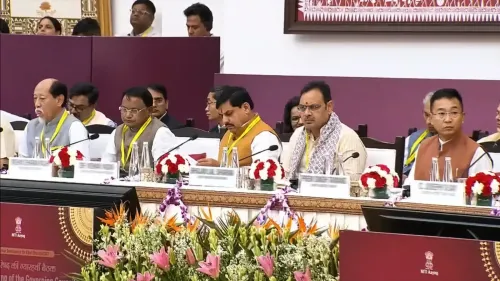
Rajasthan Cabinet approved the Industrial Development Policy on 22 May 2025 , chaired by CM Bhajan Lal Sharma .
Policy is built on four '4G' pillars : Green , Governance , Growth , and Globalisation .
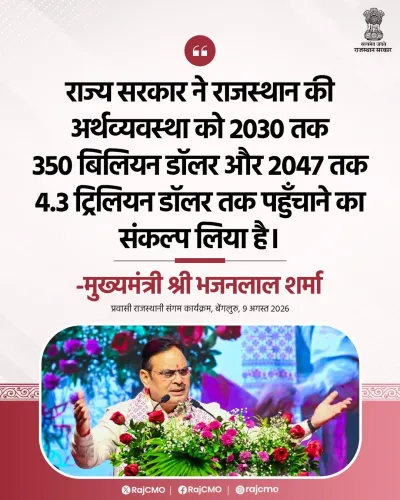
State economy target set at $350 billion by 2028-29 under the 'Viksit Rajasthan @2047' vision.
Focus sectors include semiconductors , data centres , GCCs , defence manufacturing , gems, textiles, and agro-processing.
DMIC node-based industrial park development and new CETP schemes to be launched statewide.
Peak electricity supply on 20 May was 16,580 MW against demand of 16,487 MW , with supply exceeding demand during the heatwave.
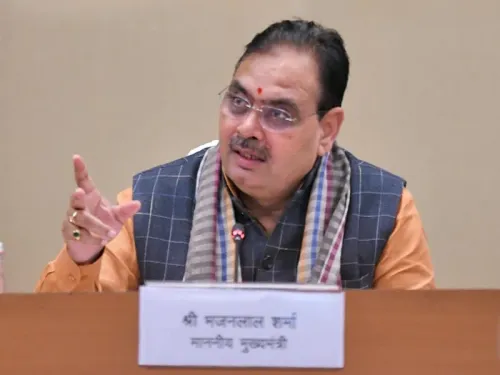
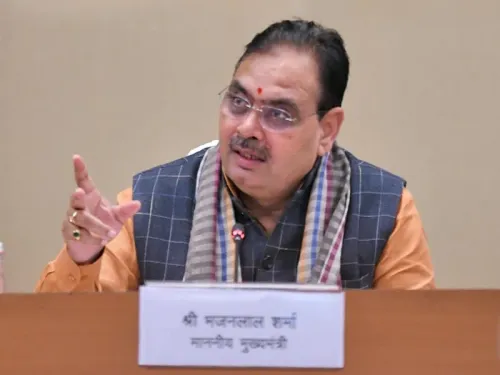
The Rajasthan Cabinet, in a meeting chaired by Chief Minister Bhajan Lal Sharma at the Chief Minister's Office on Friday, 22 May, approved the Rajasthan Industrial Development Policy, setting a target to grow the state economy to $350 billion by 2028-29 and transform Rajasthan into a global industrial hub under the 'Viksit Rajasthan @2047' vision.
The Four Pillars of the New Policy
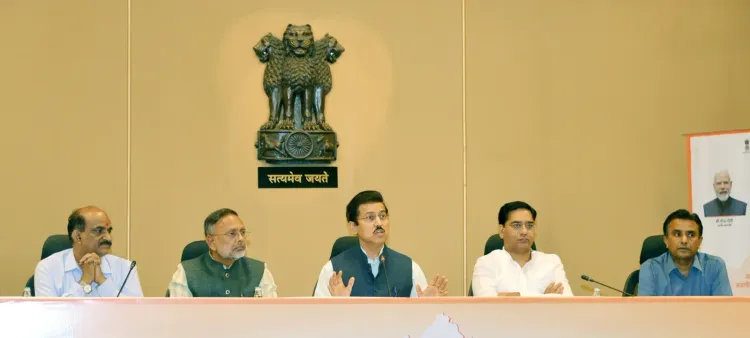
Industry and Commerce Minister Rajyavardhan Singh Rathore, Water Resources Minister Suresh Singh Rawat, and Minister of State for Energy Hiralal Nagar told reporters that the policy rests on four pillars branded '4G' — Green, Governance, Growth, and Globalisation. Eco-friendly industrial production, renewable energy, and the circular economy will be promoted statewide under this framework.
New schemes will be introduced for Common Effluent Treatment Plants (CETPs) in both Rajasthan State Industrial Development and Investment Corporation (RIICO) and non-RIICO areas, alongside Integrated Resource Recovery Parks. Development work for node-based industrial parks within the Delhi Mumbai Industrial Corridor (DMIC) will also commence.
Key Sectors and Infrastructure Push
The policy places special emphasis on emerging sectors including semiconductors, data centres, Global Capability Centers (GCCs), and defence manufacturing, in addition to traditional Rajasthan strengths such as gems and jewellery, textiles, tourism, handicrafts, agro-processing, dairy, and logistics.
Additional incentives will be extended to MSMEs, One District One Product (ODOP) initiatives, and the export sector. The policy also emphasises fast-track approvals, improved logistics connectivity, plug-and-play infrastructure, and private sector participation in world-class industrial infrastructure development. Research and development (R&D) and technology transfer are highlighted as drivers of indigenous manufacturing investment.
Vande Ganga Water Conservation Campaign
The Cabinet also discussed the action plan for the Vande Ganga Water Conservation Mass Campaign, scheduled to run from Ganga Dashami on 25 May to World Environment Day on 5 June. The campaign will cover prayers and rituals at rivers, dams, and ponds, followed by canal cleaning, desilting, Shramdaan programmes, and lamp-lighting ceremonies at district, block, gram panchayat, village, and urban levels.
'Jal Chaupals' will be organised at Gram Panchayat headquarters, while workshops on drip irrigation, sprinkler systems, and micro-irrigation will be held at Krishi Vigyan Kendras. The concluding ceremony on 5 June will feature 'Jal Gaurav Samman' awards for outstanding contributors to water conservation.
Power Supply and Pension Rule Amendments
Minister Nagar reported that peak electricity demand on 20 May stood at 16,487 megawatts, against an available supply of 16,580 megawatts — indicating supply exceeded demand during the ongoing heatwave. A statewide campaign for repair and restoration of hand pumps and tubewells was also launched ahead of the summer season.
Three amendments to the Rajasthan Pension Rules, 1996 were approved. Differently-abled children will now submit a disability certificate only once, instead of every three years. Pensioners will be permitted to submit annual life certificates via face authentication on a mobile application. Additionally, the requirement of two gazetted officer signatures for a pensioner's life certificate has been reduced to one, with non-gazetted officers now authorised to issue certificates through their SSO ID.
FAO Award for PM Modi
The Council of Ministers also passed a congratulatory resolution honouring Prime Minister Narendra Modi on receiving the United Nations Food and Agriculture Organisation (FAO)'s highest honour, the 'Agricola Medal'. The Prime Minister dedicated the award to the country's farmers and livestock rearers, according to statements made during the meeting.
With the industrial policy now approved, the state government is expected to move swiftly on sector-specific guidelines and infrastructure tenders, particularly for DMIC node parks and CETP schemes.
Point of View
Gujarat, and Tamil Nadu. The '4G' branding is polished, but the real test lies in execution — particularly whether fast-track approvals translate into measurable clearance timelines rather than ministerial press-conference language. The emphasis on semiconductors and GCCs is forward-looking, yet Rajasthan lacks the deep talent pipeline and port access that rival states offer investors in those sectors. The CETP and DMIC node commitments are the most concrete elements here; how quickly land is notified and tenders are floated will determine whether this policy is transformative or aspirational.
NationPress
23 Sept 2026
Frequently Asked Questions
What is the Rajasthan Industrial Development Policy 2025?
It is a state industrial policy approved by the Rajasthan Cabinet on 22 May 2025, built on four pillars — Green, Governance, Growth, and Globalisation — with the goal of growing the state economy to $350 billion by 2028-29. The policy targets sectors ranging from semiconductors and data centres to gems, textiles, and agro-processing.
What does the '4G' framework in the Rajasthan industrial policy mean?
The '4G' framework refers to the four foundational pillars of the policy: Green (eco-friendly production and renewable energy), Governance (fast-track approvals and plug-and-play infrastructure), Growth (MSME incentives, R&D, and ODOP support), and Globalisation (export promotion and private sector participation in world-class infrastructure).
Which new sectors does the Rajasthan industrial policy focus on?
The policy gives special emphasis to emerging sectors including semiconductors, data centres, Global Capability Centers (GCCs), and defence manufacturing, alongside established Rajasthan industries such as gems and jewellery, textiles, tourism, handicrafts, agro-processing, dairy, and logistics.
What is the Vande Ganga Water Conservation Campaign approved by the Rajasthan Cabinet?
It is a statewide water conservation mass campaign running from Ganga Dashami on 25 May to World Environment Day on 5 June. Activities include canal cleaning, desilting, Jal Chaupals at gram panchayat level, and micro-irrigation workshops, concluding with 'Jal Gaurav Samman' awards on 5 June.
What changes were made to Rajasthan Pension Rules, 1996?
Three amendments were approved: differently-abled children now submit a disability certificate only once instead of every three years; pensioners can submit annual life certificates via mobile face authentication; and the requirement of two gazetted officer signatures for a life certificate has been reduced to one, with non-gazetted officers also authorised through their SSO ID.