CM Bhajan Lal Sharma Clears Rajasthan Trees Protection Bill 2026
Synopsis
Rajasthan CM Bhajan Lal Sharma's cabinet on 13 August 2026 approved The Rajasthan Trees Protection Bill 2026, which will legally protect 29 tree species including the state tree Khejri, state flower Rohida, Mahua, Tendu, and Chironji. The bill now heads to the state assembly.
Key Takeaways
The Rajasthan state cabinet approved the draft of The Rajasthan Trees (Protection) Bill, 2026 on 13 August 2026 .
The bill covers 29 tree species , including state tree Khejri and state flower Rohida .
Other protected species include Bargad, Peepal, Lasoda, Tendu, Mahua, Kair, and Chironji .
The bill aims to give structured legal momentum to conservation and propagation of desert-adapted native trees.
The draft must now be introduced and debated in the Rajasthan Legislative Assembly before becoming law.
Species like Tendu and Mahua are critical to rural and tribal livelihoods across the state.
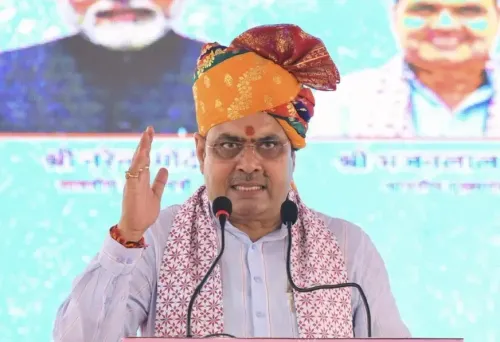
Twenty-nine trees. One cabinet decision. Rajasthan Chief Minister Bhajan Lal Sharma on Thursday, 13 August 2026, announced that the state cabinet had approved the draft of 'The Rajasthan Trees (Protection) Bill, 2026' — a legislative push to formally shield some of the desert state's most ecologically and culturally vital flora.
Khejri, Rohida, and 27 others get a legal shield
At the heart of the bill is protection for species that have defined Rajasthan's landscape for centuries. The list includes the state tree Khejri and the state flower Rohida, alongside Bargad (banyan), Peepal, Lasoda, Tendu, Mahua, Kair, and Chironji — a total of 29 species earmarked for conservation and propagation. CM Sharma stated that the decision would give 'vishesh gati' (special momentum) to the protection of these trees.
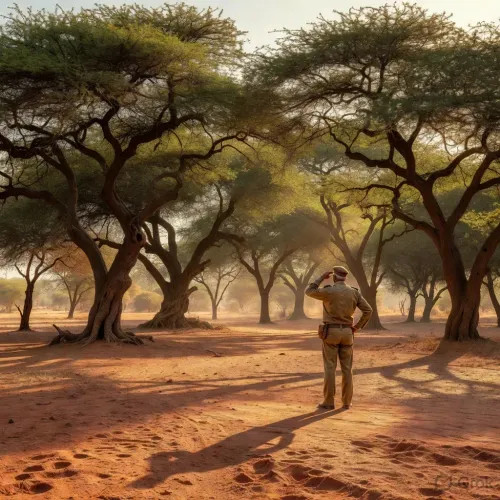
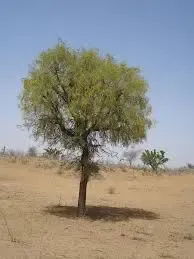
Khejri (Prosopis cineraria) is no ordinary tree in this context. Revered across the Thar desert belt, it is drought-resistant, nitrogen-fixing, and has sustained pastoral and farming communities for generations — its cultural weight so profound that the 1730 Bishnoi martyrdom in Khejarli village, where hundreds gave their lives to protect Khejri trees, is considered one of history's earliest acts of ecological resistance. Rohida, the state flower, similarly anchors the semi-arid ecosystem. That both now anchor a dedicated protection bill signals a policy acknowledgment of what communities have long known.
What the bill means for farmers and forest communities
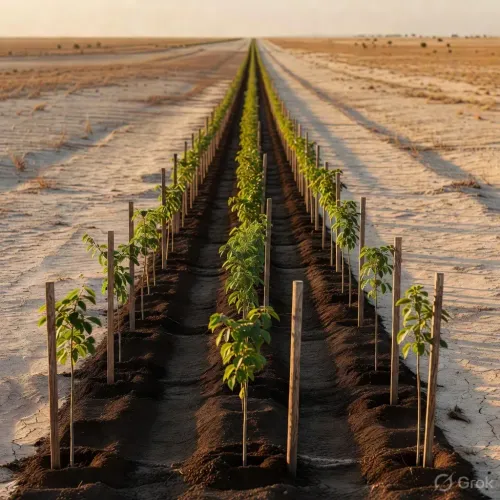
Beyond symbolism, the bill's practical reach touches farmers, rural communities, and the state forest department. Species like Tendu (whose leaves are used in traditional bidi-making), Mahua (a livelihood tree for tribal communities), and Chironji (a commercially valued nut) are woven into the rural economy of Rajasthan. Bringing them under a dedicated protection framework could mean structured propagation programmes, clearer legal deterrents against felling, and potential support for community-level conservation.
The exact provisions — including penalties, enforcement mechanisms, and the complete enumerated list — are part of the draft that must now travel to the Rajasthan Legislative Assembly for introduction, debate, and passage. How the bill is operationalised in rules will determine whether it becomes a durable conservation instrument or a largely symbolic gesture.
A desert state building its green statute book
Rajasthan's ecology — spanning the Thar desert, the Aravalli range, and semi-arid scrublands — makes tree conservation structurally different from wetter states. Native species here are slow-growing, deeply adapted, and irreplaceable once lost. The state has historically recognised this through emblematic designations, but a dedicated protection bill for 29 species would, if enacted, represent a more muscular legislative commitment than mere symbolic status.
The bill now moves toward the assembly floor. Its passage, and more critically, the rules framed under it, will be the real measure of Rajasthan's intent to turn cabinet approval into boots-on-ground conservation.
Point of View
However, is legislative: whether the bill clears the assembly with robust enforcement provisions or emerges diluted. For CM Bhajan Lal Sharma, the move also serves a political purpose — positioning his government as ecologically conscious ahead of a period when Rajasthan's groundwater and green-cover metrics face mounting scrutiny. The inclusion of livelihood trees like Tendu and Mahua also signals an attempt to align conservation with rural economic interests, a politically smart bridge in a state where farmers and forest-dependent communities are key vote blocs.
NationPress
27 Sept 2026
Frequently Asked Questions
What is The Rajasthan Trees Protection Bill 2026?
It is a draft legislation approved by the Rajasthan state cabinet on 13 August 2026, aimed at conserving and propagating 29 important tree species native to Rajasthan, including the state tree Khejri and the state flower Rohida.
Which trees are protected under the Rajasthan Trees Protection Bill 2026?
The bill covers 29 species, including Khejri, Rohida, Bargad (banyan), Peepal, Lasoda, Tendu, Mahua, Kair, and Chironji, among others.
Why is the Khejri tree significant in Rajasthan?
Khejri is Rajasthan's state tree and is central to the desert ecosystem — drought-resistant and nitrogen-fixing, it has sustained farming and pastoral communities for centuries and holds deep cultural significance, including being the tree at the centre of the 1730 Bishnoi martyrdom.
Has the Rajasthan Trees Protection Bill 2026 become law yet?
No. The cabinet has approved the draft, but the bill must still be introduced, debated, and passed in the Rajasthan Legislative Assembly before it becomes law.
Who announced the Rajasthan Trees Protection Bill 2026?
Rajasthan Chief Minister Bhajan Lal Sharma announced the cabinet's approval of the bill's draft on 13 August 2026 via a post on X.