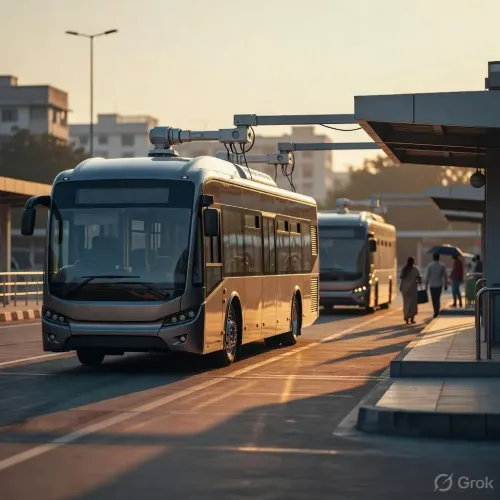
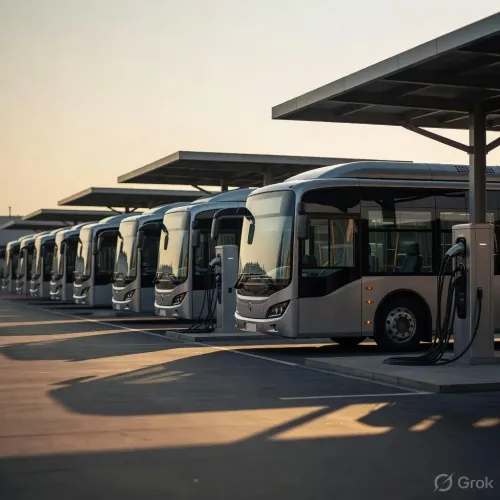
Rajasthan CM Bhajan Lal flags electric mobility as growth pillar
Synopsis
The Chief Minister's Office of Rajasthan, tagging CM Bhajan Lal Sharma, declared on 19 August 2026 that electric mobility is now the 'strong foundation' of the state's economic development, energy security, and pollution-free future — aligning state messaging with India's national EV push under the FAME scheme.
Key Takeaways
The Chief Minister's Office of Rajasthan posted on 19 August 2026 that electric mobility is the foundation of economic growth, energy security, and a pollution-free future.
The post tagged Chief Minister Bhajan Lal Sharma (BJP), who has led Rajasthan since December 2023 .
The message was anchored under #आपणो_अग्रणी_राजस्थान ('Our Pioneering Rajasthan'), the state's development branding.
India's national EV framework — the National Electric Mobility Mission Plan (2013) and the FAME scheme (2015) — provides the policy backbone that state-level messaging builds on.
Key watchpoints include rollout of EV charging infrastructure and state-specific purchase incentives in Rajasthan.
Electric mobility is no longer a distant ambition — for Rajasthan, it is the declared foundation of economic growth, energy security, and a cleaner future. The Chief Minister's Office of Rajasthan posted that message on Wednesday, 19 August 2026, tagging Chief Minister Bhajan Lal Sharma and anchoring it under the state's signature development hashtag #आपणो_अग्रणी_राजस्थान ('Our Pioneering Rajasthan').
What the CMO is signalling
The post states plainly: 'इलेक्ट्रिक मोबिलिटी आर्थिक विकास, ऊर्जा सुरक्षा और प्रदूषण मुक्त भविष्य की मजबूत नींव बन चुकी है' — 'Electric mobility has become the strong foundation of economic development, energy security, and a pollution-free future.' The framing is deliberate: three distinct pillars — economy, energy, environment — bundled into a single policy identity for the state.
Rajasthan inside India's EV push
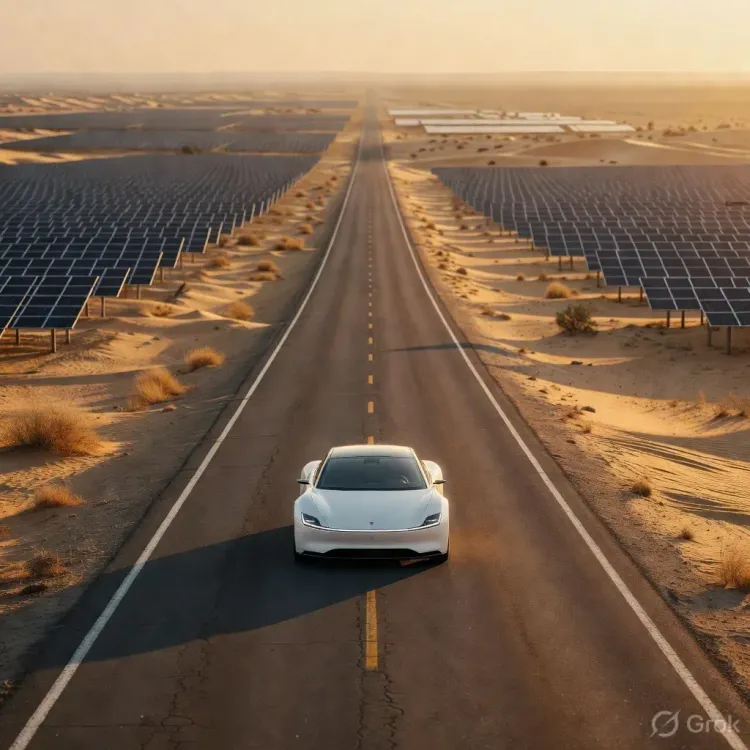
The messaging aligns with a national arc that stretches back to India's National Electric Mobility Mission Plan of 2013 and the FAME scheme launched in 2015, which together laid the incentive framework for EV manufacturing and adoption across the country. Rajasthan, a state already prominent in solar and wind energy, has been positioning itself as a natural fit for the electric transition — renewable generation feeding clean transport is a coherent story the state has been telling for several years.
For Chief Minister Bhajan Lal Sharma, who has led the state since December 2023 under the Bharatiya Janata Party, the EV push dovetails with India's broader goal of cutting oil import dependence and meeting its climate commitments. Urban air quality, a pressure point in Rajasthan's larger cities, adds a domestic urgency that goes beyond geopolitics.
What comes next for Rajasthan's EV landscape
The immediate watch point is infrastructure: EV charging networks and state-level purchase incentives will determine whether the rhetoric translates into measurable adoption. Without a dense charging grid, even willing buyers in a large, spread-out state like Rajasthan face real range anxiety. The policy signal from the CMO suggests that announcement of concrete measures may follow.
For urban commuters and the EV industry operating in the state, this is an invitation to watch the next budget cycle and any dedicated EV policy notification closely.
Rajasthan has the sun, the political will, and now the stated framework. The next test is the charging station on the highway.
Point of View
Energy security, and environment — the Bhajan Lal Sharma administration is signalling that EV policy is not a niche green initiative but a mainstream development priority. This mirrors a competitive dynamic among BJP-governed states to be seen as proactive partners in the Centre's climate and manufacturing ambitions. The real test will come when the rhetoric meets the budget line for charging infrastructure.
NationPress
19 Aug 2026
Frequently Asked Questions
What did the Rajasthan CMO say about electric mobility?
The Chief Minister's Office of Rajasthan stated on 19 August 2026 that electric mobility has become the strong foundation of economic development, energy security, and a pollution-free future, tagging CM Bhajan Lal Sharma.
Who is the Chief Minister of Rajasthan in 2026?
Bhajan Lal Sharma of the Bharatiya Janata Party is the Chief Minister of Rajasthan, a position he has held since December 2023.
What is India's FAME scheme for electric vehicles?
The FAME (Faster Adoption and Manufacturing of Electric Vehicles) scheme was launched by the Indian government in 2015 to promote EV manufacturing and adoption through financial incentives and infrastructure support.
What is Rajasthan's EV policy?
Rajasthan has been aligning with national EV frameworks including the FAME scheme. The state's specific EV charging infrastructure rollout and purchase incentive details are the key policy elements to watch, based on current government signalling.
What does #AapnoAgraniRajasthan mean?
'#आपणो_अग्रणी_राजस्थान' translates to 'Our Pioneering Rajasthan' in English — a hashtag used by the state government to brand its development and governance initiatives.