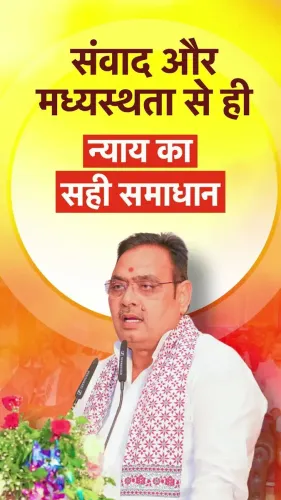
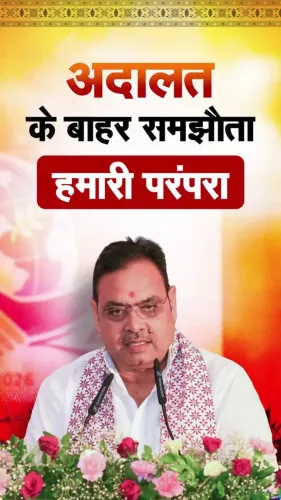
Rajasthan CM Bhajanlal flags Commonwealth Peace Mediation meet
Synopsis
Rajasthan's CMO spotlighted the Commonwealth Peace Mediation International Conference on 1 August 2026, with CM Bhajanlal Sharma's office calling it a new global perspective on justice — a move that underscores the BJP government's push for international governance visibility.
Key Takeaways
The Chief Minister's Office of Rajasthan highlighted the Commonwealth Peace Mediation International Conference on 1 August 2026 .
The CMO described the event as 'a new thought, a new direction and a new global perspective in the justice system.' Chief Minister Bhajanlal Sharma (BJP) has led Rajasthan since December 2023 and has pursued international governance visibility.
The Commonwealth is a 56-nation voluntary association focused on democracy, rule of law and shared development.
The conference targets judiciary and legal professionals as primary stakeholders for mediation reform.
Concrete follow-up declarations or frameworks from the conference will determine its lasting policy impact.
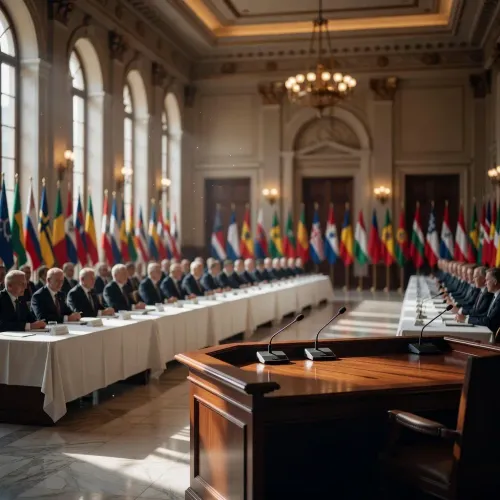
A global conversation on justice and conflict resolution has found a new address — and Rajasthan is making the case that it belongs on that map. The Chief Minister's Office of Rajasthan highlighted the Commonwealth Peace Mediation International Conference on Saturday, 1 August 2026, framing the event as the opening of a fresh chapter in how the world thinks about legal systems and dispute settlement.
The CMO's post, tagging Chief Minister Bhajanlal Sharma and carrying the hashtag #आपणो_अग्रणी_राजस्थान ('Our Leading Rajasthan'), described the conference as 'न्याय व्यवस्था में एक नई सोच, नई दिशा और नए वैश्विक दृष्टिकोण की शुरुआत' — 'the beginning of a new thought, a new direction and a new global perspective in the justice system.'
Rajasthan steps into Commonwealth's justice conversation
Bhajanlal Sharma, who has led Rajasthan for the BJP since December 2023, has made international governance visibility a visible ambition of his administration. The Commonwealth — a voluntary association of 56 independent countries that champions democracy, rule of law and shared development — periodically convenes member-state stakeholders around justice and mediation themes. Hosting or participating in such a conference signals Rajasthan's intent to position itself as a serious player in those conversations, not merely a spectator.
Mediation as a pillar of justice reform is gaining traction across South Asia, where clogged court dockets and lengthy litigation cycles have pushed policymakers toward alternative dispute resolution. A Commonwealth-linked platform amplifies that domestic push with an international endorsement — giving the state's judiciary and legal community a stage beyond state borders.
What the conference could set in motion
The real measure of any such summit lies in what follows: formal declarations, model frameworks, or bilateral cooperation mechanisms that outlast the conference hall. For Rajasthan, the immediate audience is its own legal establishment — judges, lawyers, and dispute-resolution practitioners who would implement any reform ideas that emerge. The broader audience is the Commonwealth itself, which watches whether member-state events produce durable outcomes or remain aspirational.
If the conference delivers concrete follow-up mechanisms, it could quietly reshape how Rajasthan — and potentially other Indian states — approach mediation as a tool of governance. That is the bet the CMO is placing with this spotlight.
Point of View
The Bhajanlal Sharma government is doing something deliberate: projecting a state-level BJP administration as an active participant in global rule-of-law conversations, not just a domestic political actor. This fits a broader pattern of Indian state governments seeking international legitimacy through multilateral platforms, particularly on justice and governance themes. The hashtag 'Our Leading Rajasthan' is not incidental — it is a branding exercise as much as a policy signal. Whether the conference produces enforceable outcomes or remains a prestige event will determine whether this moment is a genuine inflection point or an optics play.
NationPress
1 Aug 2026
Frequently Asked Questions
What is the Commonwealth Peace Mediation International Conference?
It is an international conference focused on mediation and justice system reform held under a Commonwealth framework, which Rajasthan's government highlighted on 1 August 2026 as a new global direction for dispute resolution.
Who is Bhajanlal Sharma?
Bhajanlal Sharma is the Chief Minister of Rajasthan, representing the BJP, and has been in office since December 2023 .
What is the Commonwealth and why does it matter for this conference?
The Commonwealth is a voluntary association of 56 independent countries that promotes democracy, rule of law and development. Its involvement lends international credibility to mediation and justice reform discussions hosted by member-state governments like India.
What does 'आपणो अग्रणी राजस्थान' mean?
The phrase translates from Rajasthani as 'Our Leading Rajasthan' — a branding tagline used by the current state government to signal ambition and progress across governance areas.
What outcomes could come from the Commonwealth mediation conference in Rajasthan?
Potential outcomes include formal declarations, model mediation frameworks, or cooperation mechanisms between Commonwealth member states — though concrete follow-up steps are yet to be announced.