Rajasthan CM directs Maa-Badi centres to integrate education, health and sports
Synopsis
The Chief Minister's Office of Rajasthan on 3 August 2026 directed Maa-Badi centres — which serve children in remote tribal and rural hamlets — to deliver integrated education, health and sports benefits, while calling on officials to ensure continuous monitoring of these centres.
Key Takeaways
The Chief Minister's Office of Rajasthan issued a directive on 3 August 2026 via X, tagging CM Bhajanlal Sharma .
Maa-Badi centres are state-run facilities providing primary education and supplementary services to children in tribal and rural hamlets across Rajasthan.
The directive mandates that these centres deliver education, health and sports activities in an integrated manner.
Officials have been specifically asked to carry out continuous monitoring of centre functioning and outcomes.
The push aligns with the state government's Aapno Agrani Rajasthan campaign, which emphasises oversight of welfare delivery.
The directive builds on the Right to Education Act, 2009 , which requires states to ensure elementary education access in hard-to-reach areas.
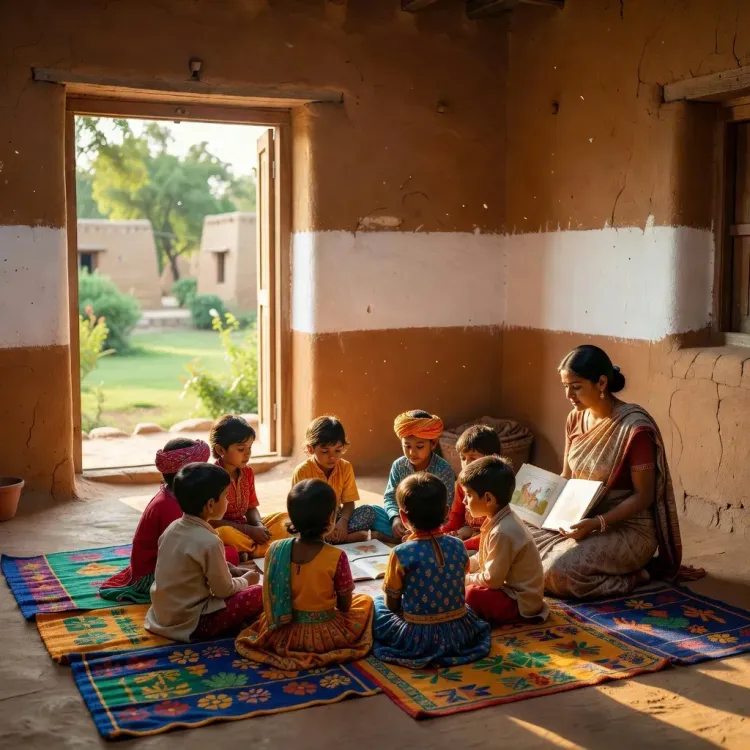
In remote hamlets across Rajasthan, thousands of young children depend on a quiet but critical institution — the Maa-Badi centre. On Monday, 3 August 2026, the Chief Minister's Office of Rajasthan issued a direct directive: these centres must deliver integrated benefits in education, health and sports to children, and officials must ensure continuous monitoring of their functioning.
The post, tagging Chief Minister Bhajanlal Sharma and carrying the hashtag #आपणो_अग्रणी_राजस्थान ('Our Frontrunner Rajasthan'), reads: 'मां-बाड़ी केन्द्रों के माध्यम से बच्चों को अच्छी शिक्षा, स्वास्थ्य एवं खेल कूद की गतिविधियों से लाभान्वित किया जाए तथा अधिकारी इसकी निरन्तर मॉनिटरिंग भी करें।' — 'Children should be benefited through Maa-Badi centres with good education, health and sports activities, and officials must also continuously monitor this.'
What Maa-Badi centres are — and why they matter
Maa-Badi centres are state-run facilities designed to reach children in tribal and rural hamlets of Rajasthan that lack formal schools. They have operated for years as the state's frontline response to the access gap left in hard-to-reach areas — a gap that the Right to Education Act, 2009 obligated states to close for children aged 6 to 14. These centres are not just classrooms; the mandate has always been to bundle primary learning with health support and physical activity under one roof.
The monitoring push under 'Aapno Agrani Rajasthan'
Monday's directive sharpens the administrative lens on these centres. The explicit call for continuous official monitoring signals that the Bhajanlal Sharma government is not content with mere existence of these centres — it wants verified delivery. This fits squarely into the state's broader governance posture under the Aapno Agrani Rajasthan ('Our Frontrunner Rajasthan') campaign, which frames welfare oversight as a marker of administrative seriousness. The primary stakeholders — tribal children and their families in Rajasthan's rural belts — stand to gain most if the monitoring directive translates into field-level accountability.
District-level reviews by the Tribal Area Development and Education departments will be the real test of whether this directive moves from directive to delivery.
Point of View
Rooted in pre-existing state infrastructure, is a cost-effective vehicle for integrated child welfare; the real question is whether district-level bureaucracies will operationalise the oversight or treat the directive as a routine circular. If monitoring mechanisms are genuinely activated, this could set a replicable template for welfare delivery in other BJP-governed states with significant tribal populations.
NationPress
3 Aug 2026
Frequently Asked Questions
What are Maa-Badi centres in Rajasthan?
Maa-Badi centres are state-run facilities in Rajasthan that provide primary education, health support and recreational activities to children living in remote tribal and rural hamlets that lack formal schools.
What did the Rajasthan CMO direct on 3 August 2026?
The Chief Minister's Office of Rajasthan directed that Maa-Badi centres must benefit children through integrated education, health and sports activities, and that officials must carry out continuous monitoring of these centres.
Who is the Chief Minister of Rajasthan in 2026?
Bhajanlal Sharma of the BJP has been Chief Minister of Rajasthan since December 2023.
What is 'Aapno Agrani Rajasthan'?
'Aapno Agrani Rajasthan' — meaning 'Our Frontrunner Rajasthan' — is the Bhajanlal Sharma government's campaign slogan framing administrative oversight and welfare delivery as its core governance priorities.
Which law underpins the Maa-Badi centre mandate?
The Right to Education Act, 2009 requires states to ensure elementary education access for children aged 6 to 14, including in hard-to-reach areas — the legal foundation on which Maa-Badi centres operate.