Rajasthan CM Office: 14 Lakh Cycles, 46K Scooties for Girls
Synopsis
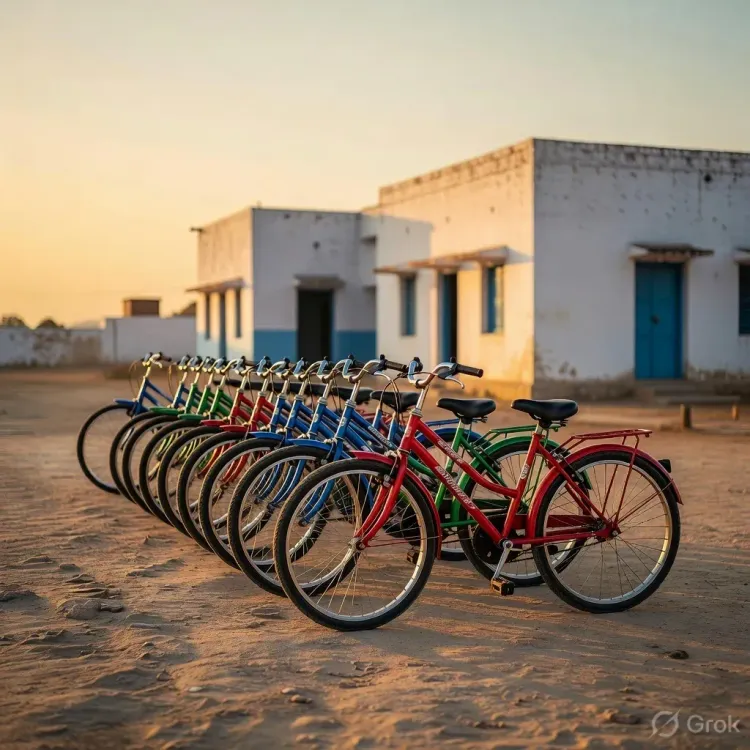
The Chief Minister's Office of Rajasthan announced on 19 August 2026 that the state has distributed 14 lakh bicycles and 46,000 scooties to girl students, citing the drives as central to CM Bhajan Lal Sharma's push to boost female school enrolment and retention across the state.
Key Takeaways
14 lakh bicycles have been distributed to girl students across Rajasthan to reduce distance-related dropout.
46,000 meritorious girl students have been given scooties as an academic achievement incentive.
The announcement was made by the Chief Minister's Office of Rajasthan on 19 August 2026 , tagged to CM Bhajan Lal Sharma .
Bicycle-for-girls schemes trace their Indian policy lineage to Bihar's Mukhyamantri Balika Cycle Yojana (2007) .
The initiative targets dropout risk after Class 8 , where distance is a primary barrier for rural girl students.
The hashtag #AapnoAgraniRajasthan ('Our Leading Rajasthan') anchors the announcement within the BJP government's wider welfare branding.
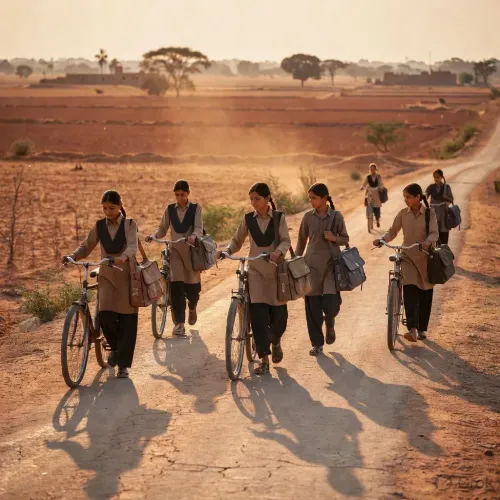
Rajasthan is putting wheels under girls' education — literally. The Chief Minister's Office of Rajasthan announced on Wednesday, 19 August 2026 that the state has distributed 14 lakh bicycles and provided 46,000 scooties to meritorious girl students, framing the twin drives as cornerstones of its push to keep girls in school.
The post, attributed to Chief Minister Bhajan Lal Sharma's office and tagged to @BhajanlalBjp, read: 'Balika shiksha ko badhawa dene ke liye, pradesh mein 14 lakh cycles ka vitaran kiya gaya hai tatha 46 hazar medhavi chhatraon ko scooty pradan ki gayi hai' — ('To promote girl-child education, 14 lakh bicycles have been distributed in the state and 46,000 meritorious girl students have been provided scooties.')
Wheels as a retention tool
The logic behind these schemes is well-established in Indian education policy. Bicycle distribution programmes for schoolgirls have been a proven retention instrument since Bihar launched its Mukhyamantri Balika Cycle Yojana in 2007, and multiple states have since adopted variants of the model. The core insight: distance is one of the most cited reasons girls drop out after Class 8, and a bicycle collapses that barrier overnight. Rajasthan, a state with vast rural stretches and historically uneven gender parity in secondary enrolment, sits squarely in the target demographic for such an intervention. The scooty component adds a merit layer — rewarding academic achievement while simultaneously addressing mobility for older students heading to colleges or senior secondary schools. That combination, bicycle for access and scooty for merit, is a two-stage pipeline designed to carry a girl from her village school all the way through higher secondary.Sharma's BJP government and the 'Aapno Agrani Rajasthan' frame
Chief Minister Bhajan Lal Sharma took office in December 2023 after the BJP returned to power in Rajasthan. The hashtag #AapnoAgraniRajasthan — loosely, 'Our Leading Rajasthan' — has been a recurring brand stamp on the government's welfare announcements. The scale cited in this post, 14 lakh cycles and 46,000 scooties, positions the programme as one of the larger girl-education mobility drives in the state's recent history, though the precise cumulative figures are administrative claims that await independent corroboration from enrolment and retention data. The real test for any such scheme is whether the numbers show up in school attendance registers and board-exam participation rates. Rajasthan's education department's next enrolment data release will be the first hard check on whether the wheels are actually moving the needle.Point of View
Two-stage approach to the girl-dropout problem — access first, merit reward second — that has quietly become standard BJP state-government playbook since 2014. For CM Bhajan Lal Sharma, announcing cumulative scale figures rather than a fresh scheme launch suggests the government is in consolidation mode, building a welfare-delivery narrative ahead of any future electoral cycle. The real political risk lies in the gap between announced numbers and verifiable outcomes: if enrolment data does not track upward, the figures become a liability rather than an asset. Rajasthan's education department's next public data release will determine whether this is a genuine milestone or a well-packaged administrative claim.
NationPress
19 Aug 2026
Frequently Asked Questions
How many bicycles has Rajasthan distributed to girl students?
The Chief Minister's Office of Rajasthan stated on 19 August 2026 that 14 lakh (1.4 million) bicycles have been distributed to girl students across the state to promote female education.
What is the scooty scheme for girl students in Rajasthan?
Rajasthan's government has provided 46,000 scooties to meritorious girl students as an incentive for academic achievement, helping older students access colleges and senior secondary schools.
Who is the Chief Minister of Rajasthan in 2026?
Bhajan Lal Sharma of the BJP has been Rajasthan's Chief Minister since December 2023 .
Which Indian state first started a bicycle scheme for girl students?
Bihar pioneered the model with its Mukhyamantri Balika Cycle Yojana in 2007 , and multiple states including Rajasthan have since adopted similar programmes.
Why are bicycle schemes important for girls' education in India?
Distance from school is one of the leading causes of dropout among girls after Class 8, especially in rural areas. Bicycles directly address this barrier, and studies across Indian states have linked such schemes to improved enrolment and retention rates.