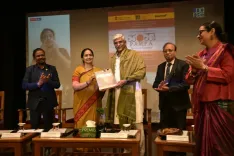
Rajasthan CM opens 97 new govt colleges and polytechnics
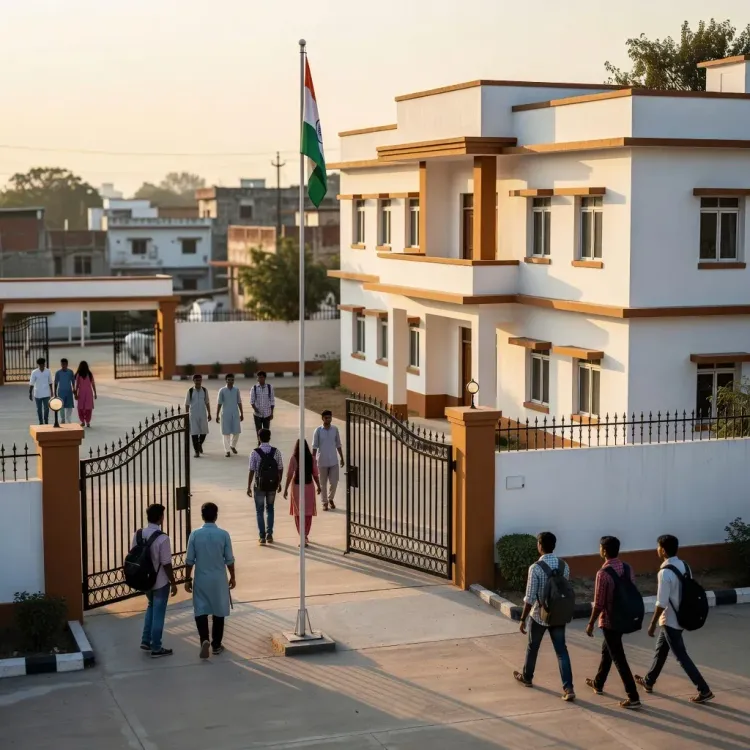
Synopsis
The Rajasthan Chief Minister's Office announced the establishment of 21 new government polytechnic colleges and 76 new government degree colleges across the state, crediting CM Bhajan Lal Sharma with the expansion under the 'Aapno Agrani Rajasthan' initiative.
Key Takeaways
21 new government polytechnic colleges have been established in Rajasthan, expanding technical and diploma-level education access.
76 new government degree colleges have also been added, taking the combined total to 97 new institutions .
Chief Minister Bhajan Lal Sharma , who took office in December 2023 , is credited with the expansion under the BJP government.
The push is aimed at improving Rajasthan's gross enrolment ratio in higher education, particularly for rural and semi-urban youth.
District-wise locations and sanctioned intake capacity for the new institutions are yet to be publicly detailed.
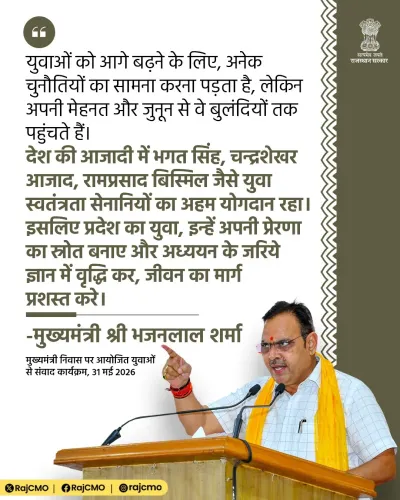
Rajasthan has just expanded its higher-education map in one move — 21 new government polytechnic colleges and 76 new government degree colleges, all established across the state. The Chief Minister's Office of Rajasthan announced the milestone on Sunday, 1 November 2026, crediting the initiative to Chief Minister Bhajan Lal Sharma under the government's 'Aapno Agrani Rajasthan' ('Our Rajasthan, the Frontrunner') vision.
97 new institutions in one announcement
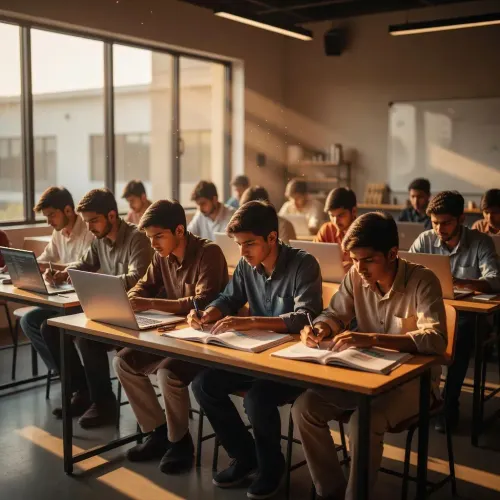
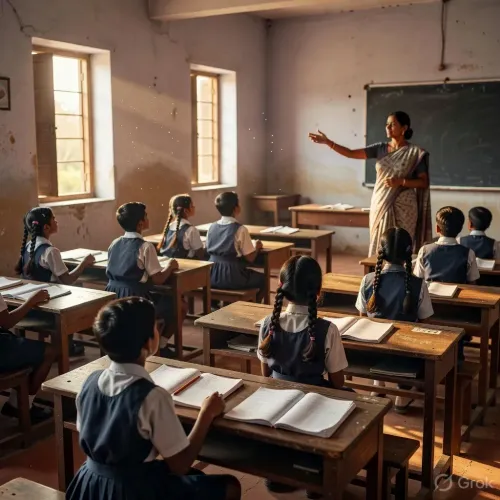
The combined addition of 97 institutions — 21 polytechnics focused on technical and vocational training and 76 general degree colleges — represents a significant push to widen access to post-secondary education, particularly for students in smaller towns and rural districts. Polytechnics, which typically offer diploma-level courses in engineering, IT, and applied sciences, have historically been under-represented in Rajasthan's semi-urban belts, making the 21 new campuses especially consequential for first-generation learners.
Sharma's BJP government and the enrolment-ratio drive
Bhajan Lal Sharma took office as Chief Minister in December 2023, leading the BJP government that returned to power in Rajasthan after the state assembly elections. Expanding government-run higher education has been a recurring policy instrument for successive Rajasthan administrations — each seeking to raise the state's gross enrolment ratio (GER) in higher education, a metric watched closely by central planners. The current government's emphasis spans both general degree pathways and technical diplomas, signalling an attempt to address both white-collar and skilled-trades pipelines simultaneously.
What the new colleges mean for rural Rajasthan's youth
Rajasthan is India's largest state by area, and geographic spread has long been the single biggest barrier to college attendance for rural youth. Adding institutions closer to home cuts travel costs and, for many families, removes the most common reason daughters are kept out of higher education. District-level notifications listing precise locations and sanctioned student intake are the next benchmark to watch — those details will reveal whether the new campuses genuinely reach under-served regions or are concentrated in existing urban centres.
Ninety-seven new institutions across one state in one government tenure. Now the accountability clock starts: when the doors open, who actually walks through them will be the real verdict on this expansion.
Point of View
97 institutions in one tenure, is notable. For the BJP government, it reinforces the 'Aapno Agrani Rajasthan' brand while directly targeting a demographic that swings elections: rural youth and aspirational families outside tier-1 cities. The critical test will be whether these colleges are staffed, funded, and located in genuinely underserved districts, or whether they replicate the familiar pattern of sanctioned-but-dormant institutions that inflate enrolment data without transforming outcomes.
NationPress
1 Nov 2026
Frequently Asked Questions
How many new government colleges has Rajasthan opened?
Rajasthan has established 76 new government degree colleges and 21 new government polytechnic colleges , a combined total of 97 new institutions , as announced by the Chief Minister's Office on 1 November 2026 .
Who is the Chief Minister of Rajasthan in 2026?
Bhajan Lal Sharma is the Chief Minister of Rajasthan. He took office in December 2023 as the BJP's chief ministerial pick after the party's victory in the Rajasthan assembly elections.
What is 'Aapno Agrani Rajasthan'?
'Aapno Agrani Rajasthan' translates to 'Our Rajasthan, the Frontrunner' — it is a tagline used by the Bhajan Lal Sharma government to brand its governance and development initiatives in the state.
What is the difference between a polytechnic college and a degree college in India?
Government polytechnic colleges in India offer diploma-level programmes in technical fields such as engineering, IT, and applied sciences, typically lasting two to three years. Government degree colleges offer undergraduate bachelor's degree programmes in arts, science, and commerce.
Where are the new government colleges in Rajasthan located?
The precise district-wise locations and sanctioned intake capacity for the 21 polytechnics and 76 degree colleges had not been publicly detailed at the time of the announcement. Official government notifications are expected to list these specifics.