Rajasthan CM, Union Health Minister flag off 10 blood transport vans
Synopsis
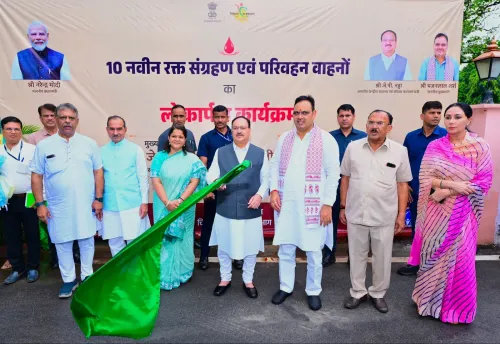
Union Health Minister Jagat Prakash Nadda and Rajasthan CM Bhajanlal Sharma flagged off 10 new blood collection and transport vehicles on 9 August 2026, bolstering cold-chain logistics for blood transfusion services across India's largest state.
Key Takeaways
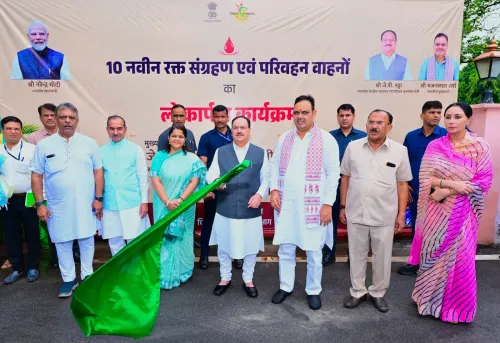
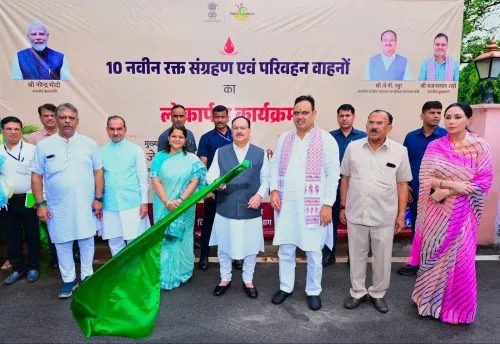
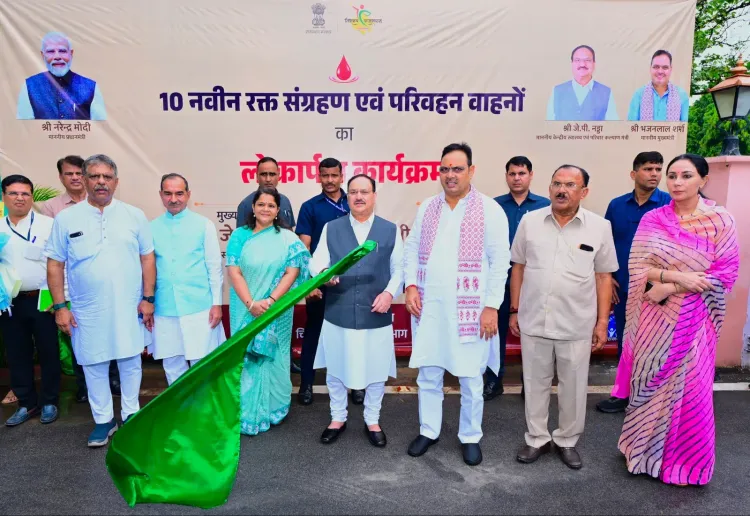
10 new blood collection and transport vehicles were flagged off jointly by Union Health Minister Jagat Prakash Nadda and Rajasthan CM Bhajanlal Sharma on 9 August 2026 .
Deputy CM Diya Kumari , Health Minister Gajendra Singh Khimsar , Speaker Vasudev Devnani , and MP Madan Rathore were among senior officials present.
The vehicles address a critical cold-chain gap in blood transfusion logistics, particularly in Rajasthan's vast rural and desert regions.
The initiative aligns with the National Health Policy 2017 and successive National Health Mission mandates to modernise blood transfusion infrastructure.
Rajasthan, India's largest state by area at 342,239 sq km , faces acute last-mile challenges in emergency blood delivery.
Further district-level deployment and potential integration with digital blood bank networks will determine the scheme's real-world impact.
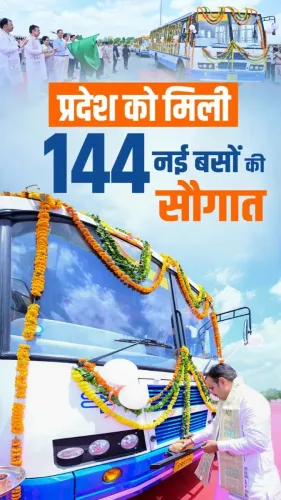
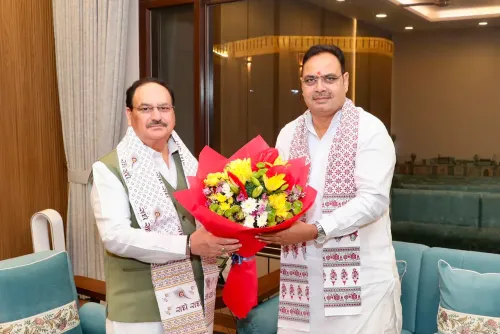
Ten new state-of-the-art blood collection and transport vehicles rolled out of Jaipur on Sunday, 9 August 2026 — a quiet but consequential push to close the gap between blood banks and the patients who desperately need them. Union Minister of Health and Family Welfare Jagat Prakash Nadda and Rajasthan Chief Minister Bhajanlal Sharma jointly flagged off the fleet, signalling a rare moment of central-state convergence on emergency health logistics.
Who was on the tarmac — and why it matters
The flag-off drew a cross-section of Rajasthan's political leadership. Rajasthan Legislative Assembly Speaker Vasudev Devnani, Deputy Chief Minister Diya Kumari, and Medical and Health Minister Gajendra Singh Khimsar — the minister with direct charge over blood services — were all present, alongside Member of Parliament Madan Rathore, other cabinet members, legislators, and senior departmental officials. The breadth of attendance underscores that this is being treated as a flagship health-infrastructure moment, not a routine administrative handover.
The cold-chain problem these vans are built to solve
Blood is fragile cargo. Temperature deviations, rough roads, and long distances between collection centres and district hospitals have historically meant that donated blood spoils before it reaches a patient in a rural emergency room. Dedicated, refrigerated transport vehicles — precisely what these 10 new units represent — are the critical link that national health planners have flagged as missing from state logistics chains for years.
India's National Health Policy 2017 explicitly called for strengthening blood transfusion services and cold-chain logistics across states. Successive phases of the National Health Mission have echoed the same priority, with central funds channelled toward modernising state-level blood bank infrastructure. Sunday's flag-off is a visible, on-ground expression of that policy arc finally moving metal.
Rajasthan's rural health stakes
Rajasthan's geography makes this upgrade especially urgent. The state stretches across 342,239 square kilometres — India's largest by area — with vast desert and semi-arid tracts where the nearest blood bank can be hours away. For trauma patients, mothers haemorrhaging during childbirth, or thalassaemia patients on regular transfusions, that distance is not an inconvenience. It is a matter of survival. Reliable, temperature-controlled transport directly addresses that gap at the district and sub-district level.
The event was tagged under the hashtag #आपणो_अग्रणी_राजस्थान ('Our Leading Rajasthan') — the Bhajanlal government's branding for its development push — suggesting these vehicles will be folded into a broader public-communication narrative around health delivery.
What the district rollout will reveal
The real test comes in deployment. Analysts watching Rajasthan's health sector will track whether the vehicles are distributed to high-need districts with thin blood-bank coverage, and whether they integrate with any centralised digital blood bank network that can match supply to demand in real time. If the logistics chain holds, the model could become a template for other large-area states facing identical challenges.
Ten vehicles. One of India's largest and most geographically demanding states. The math is stark — but it is a start, and in emergency medicine, starts save lives.
Point of View
Barely two years into office, tangible health-infrastructure deliverables help build a governance record ahead of the next electoral cycle. The deeper question is whether 10 vehicles are a meaningful intervention or a symbolic one in a state the size of Germany — the answer will depend entirely on where they are deployed and how rigorously the logistics network is maintained.
NationPress
9 Aug 2026
Frequently Asked Questions
What were the 10 vehicles flagged off in Rajasthan on 9 August 2026?
They are new, state-of-the-art blood collection and transport vehicles designed to carry donated blood safely — with temperature control — from collection centres to hospitals across Rajasthan, reducing spoilage and improving emergency supply.
Who flagged off the blood transport vehicles in Rajasthan?
Union Minister of Health and Family Welfare Jagat Prakash Nadda and Rajasthan Chief Minister Bhajanlal Sharma jointly flagged off the fleet, accompanied by senior state ministers and legislators.
Why does Rajasthan need dedicated blood transport vehicles?
Rajasthan is India's largest state by area. Long distances between blood banks and rural hospitals mean donated blood can spoil before reaching patients. Refrigerated, dedicated transport vehicles close that critical gap for trauma cases, mothers, and patients needing regular transfusions.
How does this relate to India's National Health Mission?
Successive phases of the National Health Mission have prioritised modernising blood transfusion services and cold-chain logistics at the state level, in line with the National Health Policy 2017. This fleet is a direct, on-ground expression of that policy priority.
What should we watch for after the flag-off?
Key indicators will be which districts receive the vehicles — especially whether high-need rural and desert districts are prioritised — and whether the fleet is integrated with any centralised digital blood bank network to match supply with demand in real time.