Rajasthan CMO: 4,000 Hoppers for Urban Solid Waste Collection
Synopsis
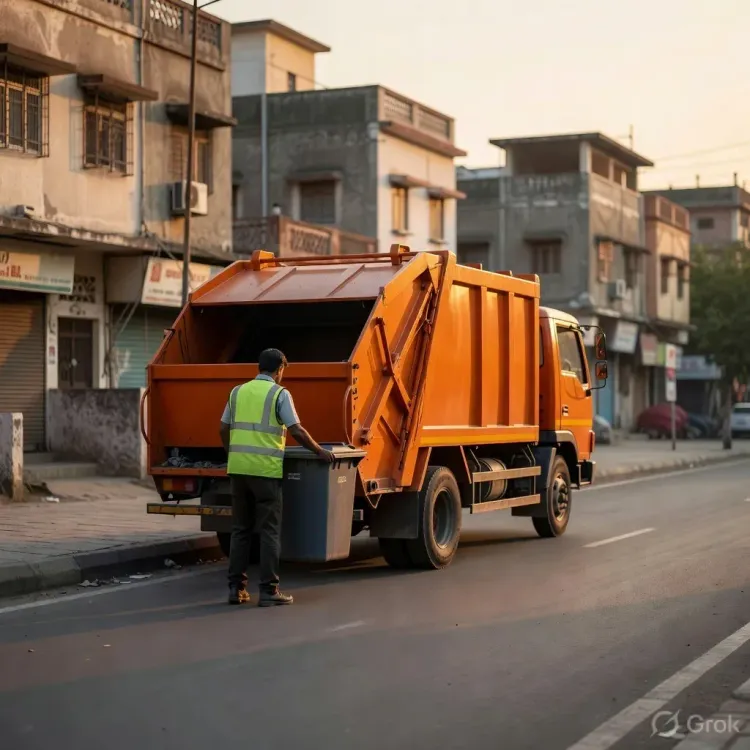
Rajasthan's Chief Minister's Office has announced deployment of 4,000 hopper vehicles under the GCC model across urban local bodies for door-to-door solid waste collection from homes and commercial establishments, advancing the state's municipal modernisation agenda.
Key Takeaways
4,000 hopper vehicles will be deployed across Rajasthan's urban local bodies for solid waste collection.
The rollout will follow the GCC (Group Concession Contract) model , bringing private-sector management into municipal waste logistics.
Collection will cover both residential homes and commercial establishments in urban areas.
The initiative aligns with Swachh Bharat Mission (Urban) 2.0 mandates for door-to-door collection and scientific waste processing.
The announcement was made by the Chief Minister's Office of Rajasthan and tagged to CM Bhajan Lal Sharma on 19 August 2026.
Tendering process, deployment schedule, and funding details remain to be announced.
Rajasthan is about to overhaul how its cities handle their garbage. The Chief Minister's Office of Rajasthan announced on Wednesday, 19 August 2026 that 4,000 hopper vehicles will be deployed across the state's urban local bodies for door-to-door solid waste collection from homes and commercial establishments — to be rolled out on the GCC (Group Concession Contract) model.
What the GCC Model Means for Rajasthan's Cities
The post, tagged to Chief Minister Bhajan Lal Sharma and carrying the hashtag #आपणो_अग्रणी_राजस्थान ('Our Leading Rajasthan'), signals the state's intent to bring private-sector efficiency into municipal waste logistics. The GCC framework typically bundles collection, transportation, and operational management under a single long-term concessionaire — a model that has gained traction in Indian urban governance as cities struggle to maintain ageing, understaffed municipal fleets.
Rajasthan's urban local bodies — spanning municipal corporations, councils, and boards across the state — have long faced gaps in last-mile waste pickup, particularly in smaller towns. A fleet of 4,000 hoppers represents a significant mechanical upgrade, designed to replace or supplement the patchwork of hand-pushed carts and ageing vehicles that currently serve many localities.
Swachh Bharat's Long Shadow
The announcement sits squarely within the architecture of Swachh Bharat Mission (Urban) 2.0, the national programme that mandates scientific door-to-door collection and waste processing in every statutory town. Under SBM-Urban 2.0, states are evaluated on collection coverage, segregation at source, and processing capacity — metrics that directly affect central fund flows. Expanding the hopper fleet is as much a compliance play as a civic one.
Rajasthan has been progressively scaling public-private partnerships in urban services, and the GCC approach fits that broader municipal modernisation push under the Bhajan Lal Sharma government. The key unknowns — tendering timelines, the deployment schedule across cities, and how the new hoppers will integrate with existing waste-processing facilities — will determine whether this pledge translates into cleaner streets or remains a headline.
Point of View
Numbers-backed commitment in an area — urban solid waste — where Indian states routinely announce targets but lag on execution. For the Bhajan Lal Sharma government, it serves a dual purpose: advancing Rajasthan's Swachh Bharat scorecards (which influence central transfers) while projecting a modernising, governance-first image under the 'Aapno Agrani Rajasthan' brand. The GCC model choice is notable — it shifts operational risk to a private concessionaire, which can accelerate deployment but also raises questions about accountability and service equity in smaller towns. The real test will be whether the tendering and deployment move at the pace the announcement implies.
NationPress
19 Aug 2026
Frequently Asked Questions
What are the 4,000 hoppers announced by Rajasthan CMO?
They are hopper vehicles — specialised trucks used for collecting solid waste — to be deployed across Rajasthan's urban local bodies for door-to-door garbage collection from homes and commercial establishments.
What is the GCC model for waste collection in Rajasthan?
The GCC (Group Concession Contract) model bundles waste collection, transportation, and operational management under a single private concessionaire for a defined area, bringing private-sector efficiency to municipal services. Exact operational details for Rajasthan's implementation are yet to be officially disclosed.
How does this relate to the Swachh Bharat Mission?
Swachh Bharat Mission (Urban) 2.0 mandates door-to-door solid waste collection in all statutory towns. Rajasthan's hopper deployment directly supports compliance with these national targets, which also affect central government fund flows to the state.
Which areas in Rajasthan will get the new hopper vehicles?
The hoppers are intended for urban local bodies across Rajasthan — covering municipal corporations, councils, and boards — though a city-by-city deployment schedule has not yet been announced.
Who is responsible for this initiative in Rajasthan?
The announcement was made by the Chief Minister's Office of Rajasthan and is associated with Chief Minister Bhajan Lal Sharma, with urban local bodies set to implement the programme on the ground.