Rajasthan CMO Directs Modern Tech Use in VB G Ram Ji Yojana
Synopsis
The Rajasthan Chief Minister's Office on 15 July 2026 directed that modern technologies, including GIS mapping and digital record maintenance, be mandatorily integrated into the VB G Ram Ji Yojana, reinforcing the Bhajan Lal Sharma government's push for transparent, technology-driven welfare delivery.
Key Takeaways
The Rajasthan CMO issued a directive on 15 July 2026 mandating modern technology use in the VB G Ram Ji Yojana .
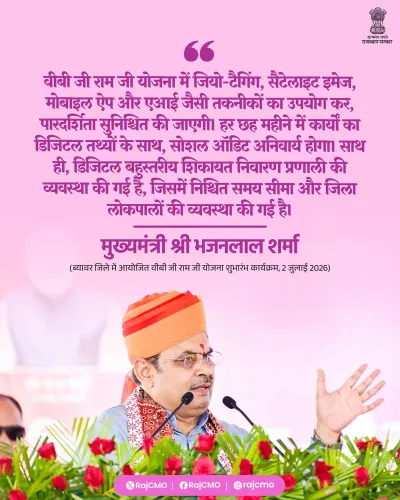
The directive specifically calls for GIS-based mapping and digital record maintenance within scheme operations.
The instruction was addressed to Chief Minister Bhajan Lal Sharma , signalling top-level administrative priority.
The move aligns with Rajasthan's e-governance history dating to the Bhamashah Yojana framework of 2014 and the national Digital India programme of 2015 .
Primary beneficiaries include rural scheme recipients and panchayat officials who will gain from improved accountability and reduced leakages.
Formal government orders on technology procurement and pilot metrics are expected in upcoming quarterly reviews.
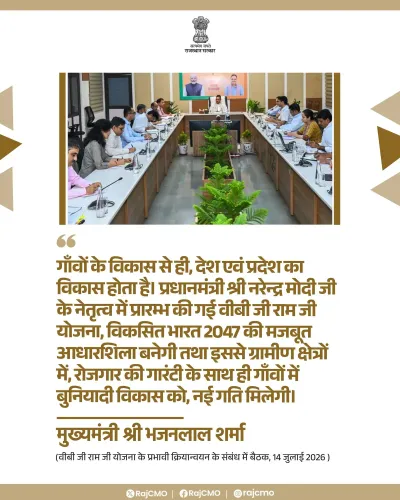
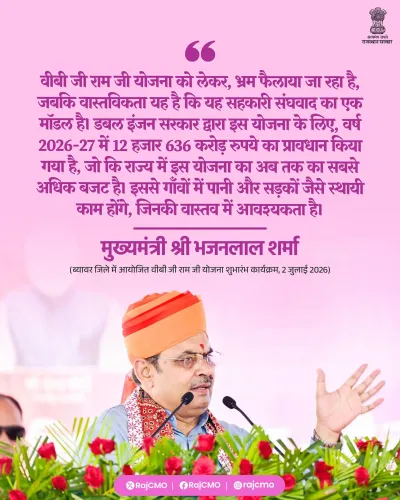
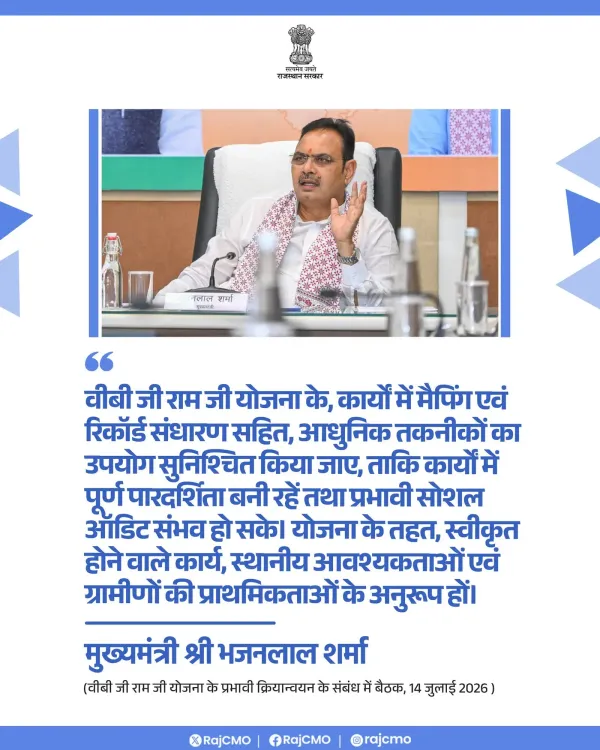
The Chief Minister's Office of Rajasthan on Wednesday, 15 July 2026 issued a public directive calling for the mandatory use of modern technologies — including mapping and record maintenance — in the implementation of the VB G Ram Ji Yojana, tagging Chief Minister Bhajan Lal Sharma directly in the communication.
The post, shared under the hashtag #आपणो_अग्रणी_राजस्थान ('Our Pioneering Rajasthan'), stated: 'In the works of the VB G Ram Ji Yojana, the use of modern technologies, including mapping and record maintenance, should be ensured.' The directive was addressed to @BhajanlalBjp, signalling that the instruction is intended to flow from the highest level of the state administration.
Context
The VB G Ram Ji Yojana is a welfare scheme being implemented by the Government of Rajasthan. The CMO's directive focuses on two specific technological interventions: GIS-based mapping of scheme activities and digital record maintenance to ensure accurate, auditable documentation. Both are widely regarded as foundational tools for plugging leakages in welfare delivery. The instruction comes amid a broader push by the Bhajan Lal Sharma government — in office since December 2023 — to digitise governance processes and bring transparency to scheme implementation across Rajasthan.Policy Backdrop
Rajasthan has a well-established history of e-governance reform. The state expanded computerisation of land records and welfare delivery under the Bhamashah Yojana framework from 2014 onward, building a digital infrastructure that subsequent administrations have continued to develop. The current directive is consistent with the national Digital India programme launched in 2015, which mandates GIS mapping, digitised record-keeping, and real-time monitoring across government schemes to reduce inefficiencies and improve accountability. Rajasthan has progressively aligned its scheme architecture with these national standards.Stakeholders and Impact
The most immediate beneficiaries of improved mapping and record maintenance are rural beneficiaries of the VB G Ram Ji Yojana and the panchayat officials responsible for on-ground implementation. Accurate GIS mapping can help ensure that scheme benefits reach intended recipients and that physical works — such as construction or land development — are geo-tagged and verifiable. For administrative officials, digitised records reduce paperwork, enable real-time monitoring by supervisory authorities, and create an auditable trail that can be reviewed during quarterly performance assessments. The directive from the CMO signals that technology adoption is now a compliance requirement, not an optional enhancement.What's Next
The key development to watch is the issuance of detailed government orders specifying technology procurement standards, the departments responsible for implementation, and pilot rollout metrics for the mapping integration. Quarterly reviews by the Rajasthan administration are expected to assess progress against these benchmarks. If the directive is followed through with formal orders, it could set a replicable template for technology-first implementation across other welfare schemes in the state, reinforcing Rajasthan's positioning as a leader in digital governance among India's larger states.Point of View
The directive could meaningfully reduce leakages, though the gap between CMO-level directives and ground-level implementation in rural Rajasthan remains the critical variable to watch.
NationPress
15 Jul 2026
Frequently Asked Questions
What is the VB G Ram Ji Yojana in Rajasthan?
The VB G Ram Ji Yojana is a welfare scheme of the Government of Rajasthan. The exact scope and implementing departments have not been officially detailed in public records available to date, but the CMO's July 2026 directive indicates it involves physical works and beneficiary outreach at the ground level.
What did the Rajasthan CMO direct on 15 July 2026?
The Rajasthan Chief Minister's Office directed that modern technologies, specifically GIS-based mapping and digital record maintenance, be mandatorily used in the implementation of the VB G Ram Ji Yojana. The directive was addressed to Chief Minister Bhajan Lal Sharma.
What is the significance of GIS mapping in welfare schemes?
GIS mapping geo-tags physical works and beneficiary locations, making it possible for supervisory authorities to verify on-ground progress remotely and in real time. It significantly reduces the scope for false reporting and helps ensure benefits reach intended recipients.
How does this directive relate to Digital India?
The directive aligns with the national Digital India programme launched in 2015, which encourages states to adopt GIS mapping, digitised records, and real-time monitoring in all government schemes to improve transparency and reduce leakages.
Who are the main stakeholders affected by this Rajasthan CMO directive?
The primary stakeholders are rural beneficiaries of the VB G Ram Ji Yojana and panchayat officials responsible for implementation. Administrative departments overseeing the scheme will also need to comply with new technology adoption requirements.