Rajasthan CMO flags MGNREGA's 6% admin cap as implementation barrier
Synopsis
The Chief Minister's Office of Rajasthan has publicly flagged that MGNREGA's 6 per cent administrative expenditure ceiling has hampered effective scheme implementation in the state, tagging CM Bhajanlal Sharma and signalling a push for policy revision at the central level.
Key Takeaways
The Rajasthan CMO stated on 3 July 2026 that MGNREGA's 6 per cent administrative expenditure cap has prevented better scheme implementation in the state.
MGNREGA , enacted in 2005 , guarantees up to 100 days of unskilled wage employment annually to rural households.
The 6 per cent ceiling was set in MGNREGA's original guidelines and retained in the 2014 revision , even as new administrative requirements like geo-tagging were added.
Gram panchayats , the primary implementing units, are directly affected by the constrained overhead budget, impacting monitoring and wage disbursement.
The post tags Chief Minister Bhajanlal Sharma and uses the #AapnoAgraniRajasthan hashtag, linking the concern to the state government's development agenda.
Rajasthan may formally raise the issue in NITI Aayog reviews or pre-Budget consultations with the Ministry of Rural Development .
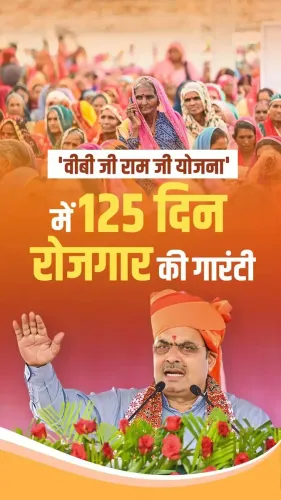
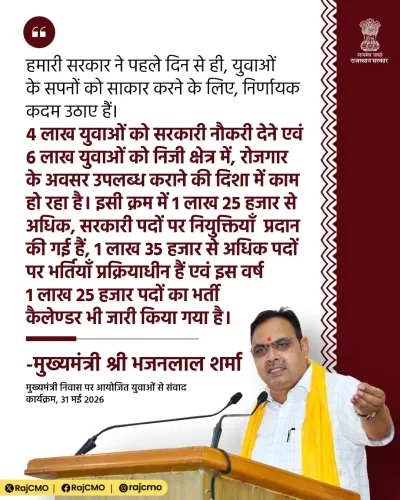
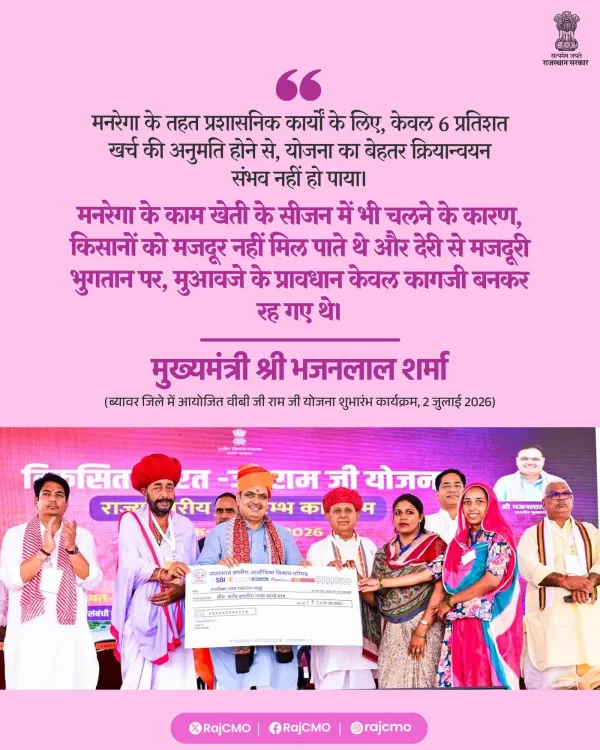
The Chief Minister's Office of Rajasthan on Friday, 3 July 2026, publicly flagged that the 6 per cent administrative expenditure ceiling under the Mahatma Gandhi National Rural Employment Guarantee Act (MGNREGA) has constrained effective implementation of the scheme in the state, tagging Chief Minister Bhajanlal Sharma in the post.
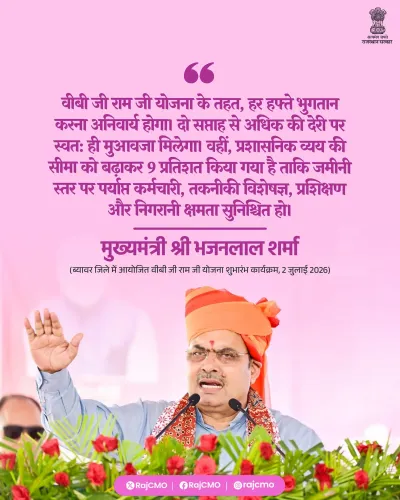
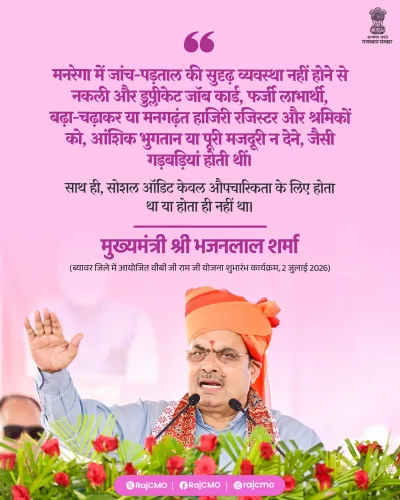
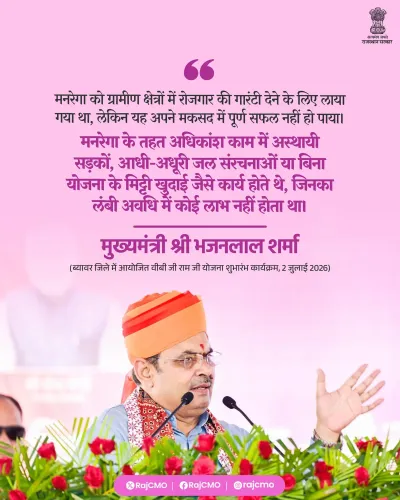
The post, shared on the official CMO handle, stated in Hindi: 'मनरेगा के तहत प्रशासनिक कार्यों के लिए, केवल 6 प्रतिशत खर्च की अनुमति होने से, योजना का बेहतर क्रियान्वयन संभव नहीं हो पाया' — translating to: 'Under MGNREGA, with only 6 per cent expenditure permitted for administrative works, better implementation of the scheme has not been possible.' The post was accompanied by the hashtag #AapnoAgraniRajasthan, a campaign phrase associated with the BJP-led state government's development agenda.
Context
MGNREGA, enacted as Act 39 of 2005, legally guarantees up to 100 days of unskilled wage employment per year to rural households across India. The Act's operational guidelines have historically capped administrative expenditure — covering costs such as monitoring, capacity building, and wage payment infrastructure — at 6 per cent of the total programme outlay, with the remainder reserved for wages and materials.
Rajasthan, with a large rural population spread across arid and semi-arid districts, is among the states most dependent on MGNREGA as a social safety net. The state's rural development machinery has to manage a wide geographic spread with the same administrative cost ceiling applied uniformly nationwide.
Policy Backdrop
The 6 per cent administrative cap was embedded in MGNREGA's initial operational guidelines and was retained through the 2014 revision of the scheme's framework, even as new requirements — including geo-tagging of assets and digital attendance systems — were introduced, adding to administrative workloads without a corresponding increase in the permissible overhead budget.
The Ministry of Rural Development, the central ministry responsible for MGNREGA guidelines, sets these fund-sharing norms for all states. Multiple state governments have over the years flagged that the fixed ceiling limits their capacity for effective monitoring, timely wage disbursement, and grassroots-level capacity building at gram panchayats.
This tension reflects a broader centre-state dynamic on implementation flexibility for centrally sponsored schemes, where uniform national ceilings may not account for state-specific administrative costs or scale of operations.
Stakeholders and Impact
Rural labourers in Rajasthan are the primary beneficiaries of MGNREGA, relying on the scheme for income support during lean agricultural seasons. Inadequate administrative resources can translate into delayed wage payments, poor asset quality, and weaker grievance redressal at the ground level.
Gram panchayats, which are the primary implementing units under MGNREGA, bear the administrative burden of work allocation, muster roll maintenance, and asset documentation. A constrained overhead budget directly affects their operational capacity, particularly in remote and under-resourced blocks.
Chief Minister Bhajanlal Sharma, who took office in December 2023, has positioned the BJP-led government's rural outreach under the 'Aapno Agrani Rajasthan' ('Our Leading Rajasthan') framework, making scheme delivery efficiency a stated priority.
What's Next
The CMO's public articulation of this concern signals that Rajasthan may formally pursue a revision of the administrative expenditure ceiling through state-central coordination channels, including upcoming NITI Aayog review meetings or pre-Budget consultations with the Ministry of Rural Development.
Any upward revision to the 6 per cent cap would require central government approval and would have national implications, potentially prompting other states with similar concerns to align their demands. The outcome of such engagements could reshape MGNREGA's implementation architecture ahead of the next Union Budget cycle.
Point of View
The communication serves a dual purpose: building a public record for a policy demand while reinforcing the BJP government's rural welfare credentials. This fits a recurring pattern where BJP-governed states use visible public advocacy to pressure the Centre on centrally sponsored scheme norms — a dynamic that has intensified as states compete for greater flexibility in implementation. If Rajasthan's push gains traction, it could open a wider national conversation about whether uniform administrative ceilings are fit for purpose in a diverse federal system.
NationPress
1 Oct 2026
Frequently Asked Questions
What is the MGNREGA administrative expenditure cap?
Under MGNREGA, only 6 per cent of total programme expenditure can be used for administrative costs such as monitoring, staffing, and capacity building, with the rest reserved for wages and materials.
Why is Rajasthan raising concerns about MGNREGA's 6% admin limit?
The Rajasthan CMO has stated that the 6 per cent ceiling is insufficient for effective scheme implementation, limiting the state's ability to monitor works, disburse wages on time, and build grassroots capacity.
Who is responsible for setting MGNREGA administrative cost rules?
The Ministry of Rural Development at the central government level sets MGNREGA's operational guidelines, including the administrative expenditure ceiling that applies to all states.
How does the MGNREGA admin cap affect gram panchayats in Rajasthan?
Gram panchayats, which implement MGNREGA at the ground level, face constraints in maintaining muster rolls, managing work allocation, and ensuring asset quality due to limited overhead funding.
Can the MGNREGA 6% administrative cap be revised?
Any revision to the cap requires central government approval through the Ministry of Rural Development; states like Rajasthan can advocate for changes through NITI Aayog reviews or pre-Budget consultations, but no revision has been confirmed.