Rajasthan CMO Launches Rs 33 Crore Chandan Van Project
Synopsis
Rajasthan's Chief Minister's Office announced the Rs 33 crore Chandan Van Project on 2 August 2026, aiming to develop sandalwood forests across the state to boost rural livelihoods, protect biodiversity, and advance a green economy alongside environmental conservation.
Key Takeaways
The Chandan Van Project carries a budget of Rs 33 crore and was announced by the Rajasthan CMO on 2 August 2026 .
The project targets four goals simultaneously: environmental conservation, rural livelihoods, biodiversity protection, and green economy development.
Chief Minister Bhajanlal Sharma (BJP) was tagged in the announcement, signalling direct political ownership of the initiative.
Sandalwood is a high-value timber crop that can generate long-term income for farmers in Rajasthan's arid and semi-arid zones.
The scheme builds on Rajasthan's history of afforestation drives, including participation in the National Mission for a Green India (2014).
Key implementation details — exact locations, timelines, and market linkage mechanisms — are yet to be made public.
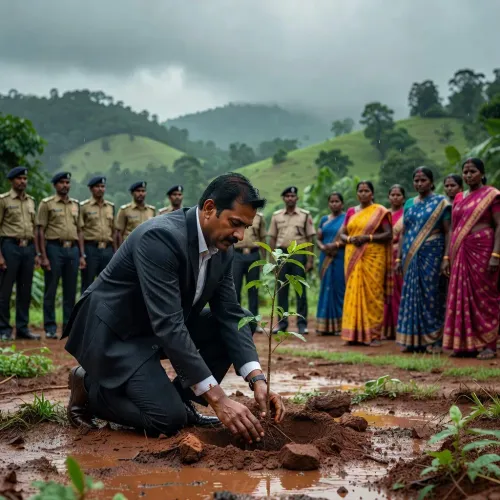
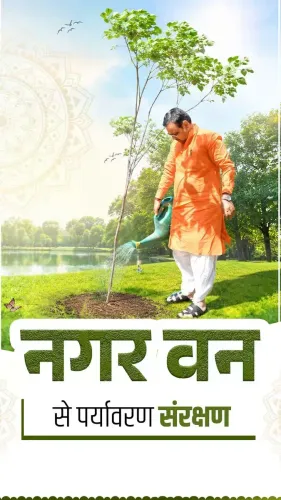
Rajasthan is betting on sandalwood to green its arid landscape and lift rural incomes — and it is putting Rs 33 crore behind that bet. The Chief Minister's Office of Rajasthan announced the Chandan Van (Sandalwood Forest) Project on Sunday, 2 August 2026, framing it as a four-pronged push for environmental conservation, rural livelihoods, biodiversity, and a greener economy.
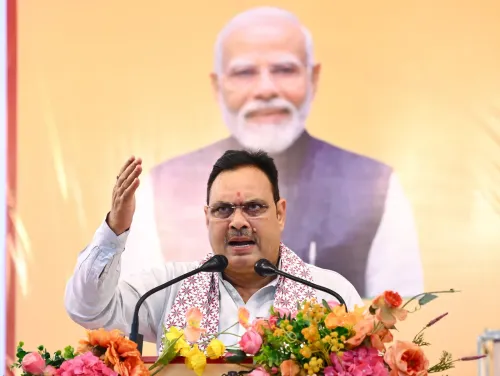
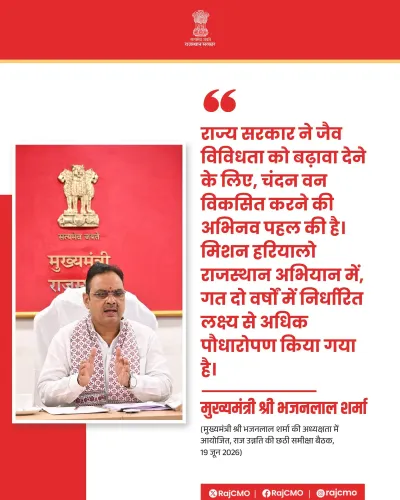
The CMO's post, tagging Chief Minister Bhajanlal Sharma, declared that the project will provide 'a new direction to rural livelihoods, biodiversity conservation and the green economy alongside environmental protection' — paryavaran sanrakshan ke saath, gramin aajivika, jeev vividhata sanrakshan tatha harit arthvyavastha ko nayi disha.
Why sandalwood, why now
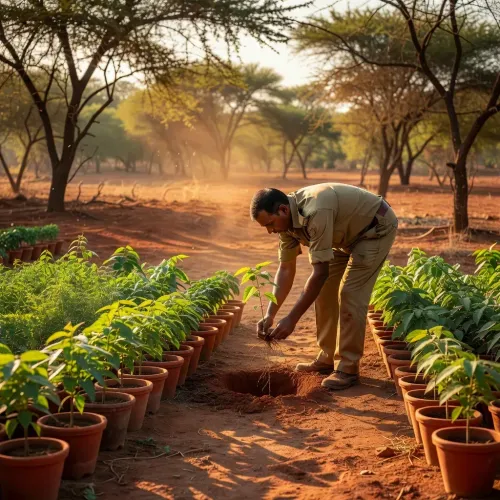
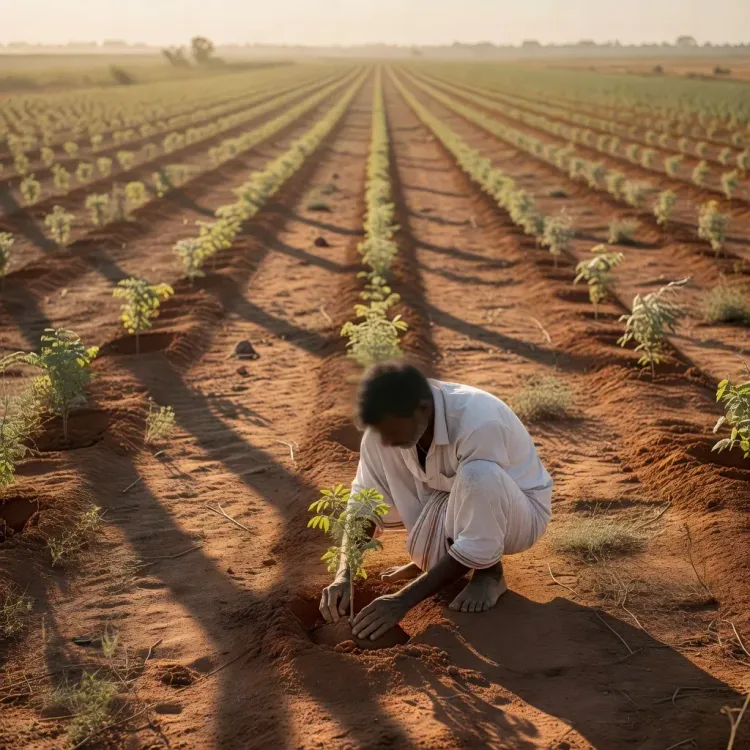
Sandalwood is among the highest-value timber species in India, commanding strong domestic and export demand for its oil, fragrance, and pharmaceutical uses. Planting it in Rajasthan's semi-arid tracts is a calculated gamble: the species is slow-growing but extraordinarily lucrative at maturity, meaning the project is designed to pay dividends for rural growers over a generation, not a quarter.
Rajasthan's forest department has run afforestation drives for decades, including participation in the National Mission for a Green India launched in 2014. The Chandan Van project builds on that lineage but targets a premium crop — a signal that the state is shifting from volume-planting to value-planting in its green economy strategy.
What it means for rural Rajasthan
The explicit inclusion of rural livelihoods in the project's stated objectives is the politically significant detail here. Rajasthan's farming communities in arid zones have long faced the double pressure of low crop yields and desertification. A state-backed sandalwood programme, if it delivers market linkages to growers, could convert degraded land into long-term income-generating assets for farmers who have few other options.
The project also carries a biodiversity dimension — sandalwood forests support understory species and soil health, offering ecological returns beyond the timber itself. Whether those gains materialise depends on land allocation decisions, sapling survival rates, and the robustness of any market linkage mechanism — details the government is yet to make public.
For CM Bhajanlal Sharma, who took office in December 2023, the Chandan Van project fits the Aapno Agrani Rajasthan ('Our Leading Rajasthan') brand that the BJP government has been building — pairing environmental optics with tangible rural economics. The real test will be in implementation: sandalwood is notoriously difficult to cultivate at scale, and Rajasthan's water-scarce districts will demand careful agronomy. The forests, if they stand, could outlast any single government. That is both the promise and the pressure.
Point of View
A premium and slow-yielding crop, is a long-horizon bet that distinguishes this scheme from routine plantation drives. However, the absence of disclosed implementation details — land allocation, water sourcing in an arid state, and market linkages — leaves the project's credibility contingent on execution. If the government delivers transparent progress metrics, it could set a replicable template for arid-zone green economy projects across India.
NationPress
2 Aug 2026
Frequently Asked Questions
What is the Chandan Van Project in Rajasthan?
The Chandan Van Project is a Rs 33 crore state initiative announced by the Rajasthan government to develop sandalwood forests, with the stated goals of environmental conservation, rural livelihoods, biodiversity protection, and green economy growth.
Who announced the Chandan Van Project?
The Chief Minister's Office of Rajasthan announced the project on 2 August 2026 , tagging Chief Minister Bhajanlal Sharma of the BJP.
How will the Chandan Van Project benefit farmers in Rajasthan?
Sandalwood is a high-value timber species, and the project is designed to provide rural communities in Rajasthan's arid zones with long-term income by converting degraded land into productive sandalwood plantations, though specific market linkage details are yet to be announced.
What is the budget of the Chandan Van Project?
The project has an announced cost of Rs 33 crore . The breakdown of funding sources has not yet been made public.
How does the Chandan Van Project connect to India's green economy goals?
The project builds on Rajasthan's afforestation history, including participation in the National Mission for a Green India (2014), and shifts toward high-value species cultivation as part of a green economy strategy that links ecological restoration with rural income generation.