Rajasthan CMO orders district timelines, quality checks for Atal Pragati Path
Synopsis
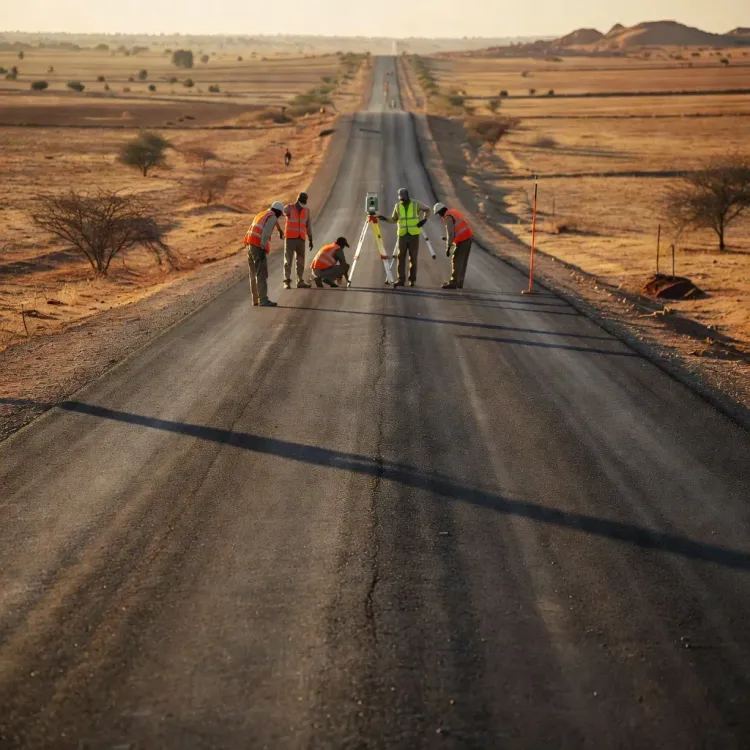
The Rajasthan CMO on 25 September 2026 directed officials to set district-wise construction timelines and run continuous quality monitoring for Atal Pragati Path road projects, tightening accountability on CM Bhajanlal Sharma's infrastructure push across the state.
Key Takeaways
The Rajasthan CMO issued a directive on 25 September 2026 for Atal Pragati Path road projects.
Officials are instructed to fix a district-wise (jilewise) construction timeline for all ongoing works.
Continuous quality monitoring of construction sites is mandated alongside the timelines.
The directive is addressed to Chief Minister Bhajanlal Sharma and tagged under #आपणो_अग्रणी_राजस्थान .
Atal Pragati Path is a connectivity infrastructure programme named after former PM Atal Bihari Vajpayee, aimed at improving road linkages across Rajasthan.
District administrations, contractors, and rural residents are the key stakeholders in the scheme's execution.
Accountability just got a deadline. The Chief Minister's Office of Rajasthan issued a sharp directive on Friday, 25 September 2026, instructing officials to fix district-wise construction timelines for Atal Pragati Path projects and to ensure continuous quality monitoring of the ongoing works — a pointed push to move state road infrastructure from announcement to auditable execution.
The post, addressed directly to Chief Minister Bhajanlal Sharma and tagged with the campaign hashtag #आपणो_अग्रणी_राजस्थान ('Our Pioneering Rajasthan'), carries a two-part instruction: first, set a district-level timeline for construction work; second, run continuous quality monitoring on every site. The pairing matters — timelines without quality checks invite rushed, substandard work; quality checks without timelines invite indefinite delay.
What Atal Pragati Path represents for Rajasthan's road network
Atal Pragati Path is a connectivity infrastructure programme named after former Prime Minister Atal Bihari Vajpayee, designed to improve road linkages — both rural and urban — across Rajasthan's vast and often underserved districts. Rajasthan, one of India's largest states by area, has historically grappled with uneven road coverage, particularly in its desert and tribal belt regions. District administrations, construction contractors, and rural residents are the primary stakeholders who stand to gain — or wait — depending on how efficiently the rollout proceeds.
The accountability architecture the directive is building
State governments across India have repeatedly launched road programmes only to watch them stall at the execution stage, throttled by contractor delays, funding gaps, or absent oversight. The CMO's instruction zeroes in on that structural weakness: a jilewise (district-wise) timeline transforms a sprawling state scheme into a set of trackable local commitments. Each district collector and implementing authority now has a clock running against them — and quality audits ensure the clock doesn't just stop at completion certificates that paper over shoddy construction.
The directive's framing is consistent with the Bhajanlal Sharma government's broader posture on project accountability — periodic review meetings, named responsibilities, and public-facing progress tracking have all been recurring features of the administration's infrastructure push since it took office.
What to watch next
The immediate signal to watch is whether district administrations respond with formal timeline submissions to the state government, and whether those timelines are made public — turning this directive from an internal memo into a civic accountability tool. Review meetings chaired by senior officials, and any independent quality audit framework rolled out alongside construction, will be the true test of whether this instruction lands as policy or fades as rhetoric.
Rajasthan has the ambition; the districts now have their orders. The stopwatch starts today.
Point of View
But its real value hinges on whether the state makes those timelines public and enforces consequences for slippage. For Rajasthan, where road connectivity is both a development imperative and a voter concern, this directive carries political weight beyond its administrative language. How district administrations respond in the coming weeks will reveal whether this is governance with teeth or governance with a hashtag.
NationPress
25 Sept 2026
Frequently Asked Questions
What is Atal Pragati Path in Rajasthan?
Atal Pragati Path is a road and connectivity infrastructure programme in Rajasthan named after former Prime Minister Atal Bihari Vajpayee, aimed at improving rural and urban road linkages across the state's districts.
What did the Rajasthan CMO direct on 25 September 2026?
The Rajasthan CMO directed officials to set district-wise construction timelines for Atal Pragati Path projects and to ensure continuous quality monitoring of all ongoing construction works.
Who is responsible for executing Atal Pragati Path projects?
District administrations and construction contractors are the primary executing bodies, with the Rajasthan state government overseeing accountability and monitoring.
Why is a district-wise timeline important for road projects?
A district-wise timeline converts a broad state scheme into trackable local commitments, helping identify delays and hold specific officials and contractors accountable for progress.
What is the significance of the hashtag #आपणो_अग्रणी_राजस्थान?
The hashtag translates to 'Our Pioneering Rajasthan' and is used by the Bhajanlal Sharma government to brand its development and infrastructure initiatives across official communications.