CM Bhajanlal's Rajasthan disburses Rs 428 cr under PM SVANidhi
Synopsis
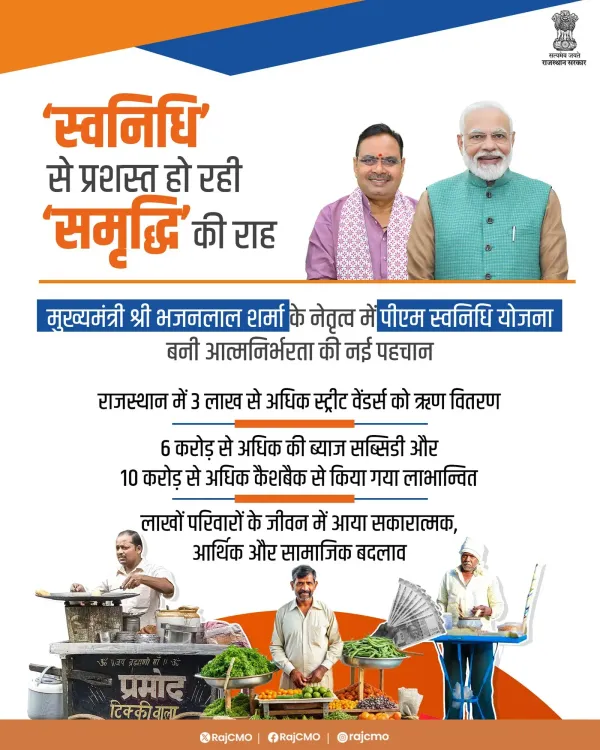
Rajasthan's Chief Minister's Office reports that over 3 lakh street vendors have received loans worth more than Rs 428.93 crore under PM SVANidhi, with Rs 6.57 crore in interest subsidies paid to timely repayers, under CM Bhajanlal Sharma's watch.
Key Takeaways
3,62,565 eligible applicants were identified under PM SVANidhi in Rajasthan.
Loans worth Rs 439 crore have been sanctioned to 3,06,255 beneficiaries.
Over 3 lakh beneficiaries have received actual disbursements of more than Rs 428.93 crore .
Timely repayers have been given interest subsidies totalling more than Rs 6.57 crore .
The scheme targets rehdi-patri and pavement vendors in the urban informal economy.
PM SVANidhi was originally launched in June 2020 as a COVID-19 relief measure for street vendors.
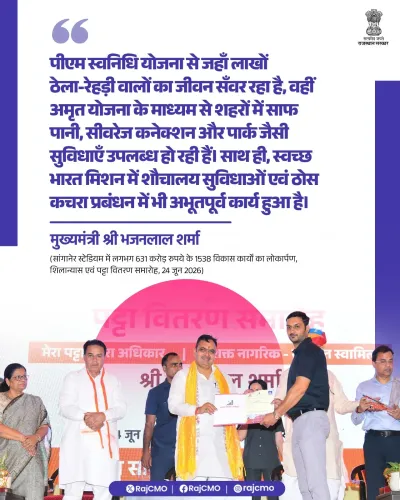
The Chief Minister's Office of Rajasthan announced on Wednesday, June 10, 2026, that the state has achieved significant milestones under the Pradhan Mantri Street Vendor's Atmanirbhar Nidhi (PM SVANidhi) scheme, crediting the leadership of Chief Minister Bhajanlal Sharma for its effective rollout across the state.
What the numbers say
Of 3,62,565 eligible applicants in Rajasthan, loans worth Rs 439 crore have been sanctioned to 3,06,255 beneficiaries under the scheme. Of these, over 3 lakh beneficiaries have already received disbursements totalling more than Rs 428.93 crore. The CMO's post states: 'patra 3 lakh 62 hazar 565 avedekon mein se, ab tak 3 lakh 6 hazar 255 labhartiyon ko, 439 crore rupaye ka rin sweekriti kiya ja chuka hai' — meaning, 'of the eligible 3,62,565 applicants, loans of Rs 439 crore have so far been sanctioned to 3,06,255 beneficiaries.'Context
PM SVANidhi was launched by the Government of India in June 2020 to provide collateral-free working capital loans to urban street vendors, initially as a relief measure during the COVID-19 pandemic. The scheme offers loans in three tiers — up to Rs 10,000, Rs 20,000, and Rs 50,000 — with higher credit limits available to vendors who repay on time. It targets the urban informal economy, which includes millions of rehdi-patri (cart and pavement) vendors across India.Policy backdrop
The Rajasthan government, led by CM Bhajanlal Sharma since December 2023, has framed the scheme's implementation as a product of 'double engine government' coordination — a term used by BJP governments to describe alignment between a BJP-ruled state and the BJP-led Centre. Timely loan repayment by beneficiaries has additionally unlocked an interest subsidy of more than Rs 6.57 crore, incentivising financial discipline among borrowers. The CMO described this as 'samay par rin chukane wale labhartiyon ko, 6 crore 57 lakh rupaye se adhik ki byaj subsidy' — 'more than Rs 6.57 crore in interest subsidy given to beneficiaries who repaid loans on time.'Stakeholders and impact
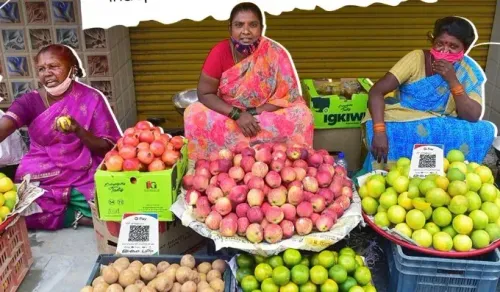
The primary beneficiaries are street vendors and pavement traders — a segment of the urban workforce that typically lacks access to formal credit. The scheme provides not just capital but also digital payment infrastructure linkages, helping vendors build a credit history. The CMO stated the scheme is giving 'lakhs of families a positive change in life' and providing vendors an opportunity for an 'atmanirbhar, swavalambi aur sammanjanak jeevan' — a self-reliant, independent, and dignified life. With over 3 lakh disbursements completed, the scheme has reached a large share of its eligible pool in the state.What's next
The pace of disbursement — with 3,06,255 sanctions and over 3 lakh actual disbursements — suggests the scheme is nearing saturation of its current eligible applicant base in Rajasthan. Attention will now likely shift to loan repayment tracking, interest subsidy expansion, and whether higher loan tiers are being accessed by repeat borrowers. Linkages with broader urban livelihood missions could shape the scheme's next phase in the state, particularly ahead of budget discussions.Point of View
Which shifts the political messaging from outreach to consolidation. The Rs 6.57 crore interest subsidy figure is particularly notable: it signals that a meaningful share of borrowers are repaying on time, lending credibility to the credit-discipline argument that underpins the scheme's tiered loan structure. Going forward, the real test will be whether higher-tier loans are reaching vendors and whether the programme is generating measurable income gains rather than just credit access.
NationPress
21 Sept 2026
Frequently Asked Questions
What is PM SVANidhi scheme and who benefits from it?
PM SVANidhi, or Pradhan Mantri Street Vendor's Atmanirbhar Nidhi, is a central government scheme launched in June 2020 that provides collateral-free working capital loans to urban street vendors. It benefits rehdi-patri vendors, pavement traders, and other informal street-based sellers across India.
How much has Rajasthan disbursed under PM SVANidhi so far?
As of June 2026, Rajasthan has disbursed more than Rs 428.93 crore to over 3 lakh beneficiaries under PM SVANidhi, according to the Chief Minister's Office.
How many beneficiaries have received loans under PM SVANidhi in Rajasthan?
Over 3 lakh beneficiaries have received loan disbursements in Rajasthan, out of 3,06,255 for whom loans worth Rs 439 crore were sanctioned from a pool of 3,62,565 eligible applicants.
What is the interest subsidy under PM SVANidhi and who gets it?
Beneficiaries who repay their PM SVANidhi loans on time are eligible for an interest subsidy. In Rajasthan, more than Rs 6.57 crore in interest subsidies have been disbursed to such timely repayers.
What is the 'double engine government' claim in the context of PM SVANidhi in Rajasthan?
The term 'double engine government' refers to the alignment between a BJP-ruled state government and the BJP-led central government. Rajasthan's CMO used this framing to credit coordinated implementation for the scheme's progress in the state.