Rajasthan executes India's first REE Exploration Licence in 207 sq km Balotra-Jodhpur block
Synopsis
Rajasthan has become the first Indian state to execute an REE Exploration Licence — a 207.63 sq km block in Balotra and Jodhpur districts carrying Lanthanum, Cerium, Praseodymium, and Neodymium. In a world where China controls the bulk of rare earth supply, this is India's clearest signal yet that it intends to build a domestic critical minerals pipeline from the ground up.
Key Takeaways
Rajasthan executed India's first Rare Earth Elements (REE) Exploration Licence on 29 July .
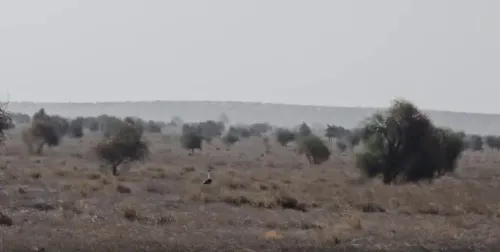
The licensed area covers 207.63 square kilometres in the Navatala-Devigarh region , across Balotra and Jodhpur districts.
Geological surveys indicate deposits of Lanthanum , Cerium , Praseodymium , and Neodymium .
CMPDI won the block through a transparent auction launched in 2025 under policy reforms initiated in 2024 .
The licence was executed by Director (Mines) Mahavir Prasad Meena , Additional Director Mahesh Mathur , and CMPDI's Vikrant Gupta .
The development supports the Centre's Atmanirbhar Bharat goal of reducing import dependence in strategic mineral supply chains.
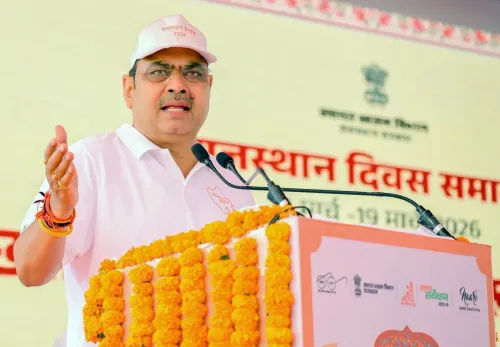
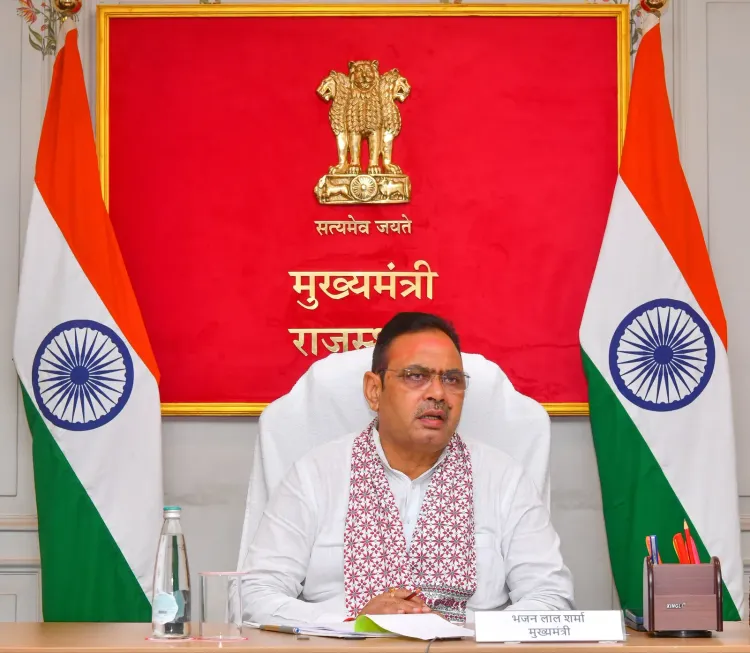
Rajasthan has executed India's first Rare Earth Elements (REE) Exploration Licence on 29 July, marking a landmark moment in the country's critical minerals strategy. The licence, granted under the leadership of Chief Minister Bhajan Lal Sharma — who also holds the Mines portfolio — covers a 207.63-square-kilometre area in the Navatala-Devigarh region, spanning Pachpadra tehsil in Balotra district and Shergarh tehsil in Jodhpur district.
A Historic First for Indian Mining
The Department of Mines and Geology formally executed the exploration licence through a transparent auction process — the first of its kind for REE in India. Rajasthan already holds the distinction of ranking first in the country in the auction of major mineral blocks; this milestone adds another first to that record.
The agreement was signed by Director (Mines) Mahavir Prasad Meena, Additional Director (Headquarters) Mahesh Mathur, and Vikrant Gupta, Head of Business Development at the successful bidder, M/s Central Mine Planning and Design Institute Limited (CMPDI), in the presence of senior officials from the department.
What the Geology Reveals
Geological surveys of the licensed area have indicated the presence of key rare earth elements — Lanthanum, Cerium, Praseodymium, and Neodymium. These four elements are among the most strategically significant in global supply chains, underpinning everything from permanent magnets in electric vehicles to guidance systems in defence applications.
Notably, China currently controls an estimated 60% of global REE production and an even larger share of processing capacity, making domestic discovery and extraction a strategic imperative for India.
Policy Backdrop: 2024 Reforms and 2025 Auctions
The licence flows directly from policy reforms initiated by the Centre in 2024, which enabled exploration licences as a distinct category in the mining framework. The first phase of auctions for such licences was launched in 2025, with CMPDI — a public sector unit under the Ministry of Coal — emerging as the successful bidder for the Rajasthan block.
This is the first exploration licence from that initial auction tranche to be formally executed, making Rajasthan the pathfinder state for the new framework.
What Officials Said
Additional Chief Secretary (Mines) Aparna Arora said the execution of the country's first auctioned REE exploration licence demonstrates Rajasthan's commitment to transparent and investment-friendly mineral governance. She added that scientific exploration of these critical minerals would encourage private investment while strengthening India's supply chain for strategic resources.
Strategic Significance and What Comes Next
Rare earth elements are indispensable across electric vehicles, defence, aerospace, renewable energy, semiconductors, electronics, and telecommunications. Domestic availability of these minerals is central to the Centre's Atmanirbhar Bharat vision and to reducing India's import dependence in high-tech supply chains.
With the exploration licence now executed, CMPDI will proceed with systematic geological investigation of the block. Findings from the exploration phase will determine the scale of any subsequent mining lease, with private sector participation expected to follow if the deposit proves commercially viable.
Point of View
But execution risk is real. CMPDI is a capable public-sector explorer, yet the gap between an exploration licence and a producing mine in India typically runs into years of environmental clearances, land acquisition, and processing infrastructure gaps — none of which exist domestically at scale for rare earths. The more consequential question is whether this licence triggers private-sector follow-on bids, or whether it remains a government-to-government exercise. Rajasthan's transparent auction mechanism is a genuine structural improvement, but the Atmanirbhar Bharat narrative will only hold if the processing end of the chain — currently absent — is built in parallel with exploration.
NationPress
28 Oct 2026
Frequently Asked Questions
What is India's first Rare Earth Elements Exploration Licence?
It is the country's first exploration licence for Rare Earth Elements, executed by Rajasthan's Department of Mines and Geology on 29 July, covering a 207.63-square-kilometre block in the Navatala-Devigarh region across Balotra and Jodhpur districts. The licence was awarded to CMPDI through a government auction and authorises systematic geological investigation of REE deposits including Lanthanum, Cerium, Praseodymium, and Neodymium.
Why are Rare Earth Elements strategically important for India?
Rare earth elements are essential inputs for electric vehicles, defence systems, aerospace, renewable energy, semiconductors, and telecommunications. India currently relies heavily on imports — primarily from China, which dominates global REE production and processing — making domestic exploration a strategic priority for supply-chain security.
Which company won the Rajasthan REE exploration block?
M/s Central Mine Planning and Design Institute Limited (CMPDI), a public sector unit under the Ministry of Coal, emerged as the successful bidder for the Rajasthan block in the first phase of REE exploration licence auctions launched in 2025.
Where exactly is the licensed REE block located?
The block spans 207.63 square kilometres in the Navatala-Devigarh region, covering Pachpadra tehsil in Balotra district and Shergarh tehsil in Jodhpur district in Rajasthan.
How does this fit into India's broader critical minerals policy?
The Centre initiated policy reforms in 2024 that created exploration licences as a distinct category in the mining framework, followed by the first phase of auctions in 2025. Rajasthan's execution of the first licence under this framework is intended to reduce import dependence and support the Atmanirbhar Bharat vision for strategic mineral self-sufficiency.