Rajasthan rare earth minerals and gas finds fuel India's self-reliance push
Synopsis
Beneath Rajasthan's desert terrain lies a resource story that could reshape India's strategic calculus. A 750-sq-km volcanic caldera in Balotra is yielding rare earths critical to defence and EVs, while Oil India's first-ever gas flow in Jaisalmer — 25,000 cubic metres a day — adds a hydrocarbon dimension. The two discoveries, taken together, mark western Rajasthan as India's most consequential new resource frontier.
Key Takeaways
The Siwana Ring Complex in Balotra district , spanning nearly 750 sq km , has confirmed reserves of Rare Earth Elements , Heavy Rare Earth Elements , and critical metals including Niobium , Zirconium , and Hafnium .
The Union Ministry of Mines has assigned technical evaluation to specialised agencies for three blocks of the complex.
Oil India Limited recorded its first-ever natural gas flow in Jaisalmer , from the Dandewala Field at roughly 950 metres depth, yielding nearly 25,000 standard cubic metres per day .
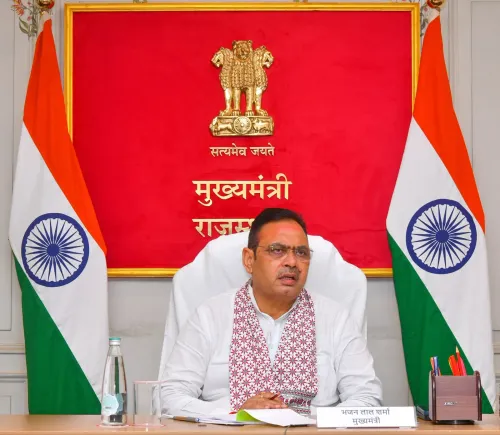
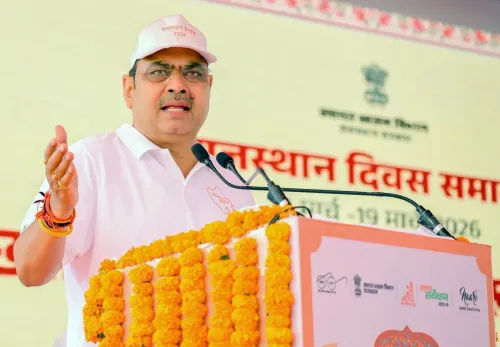
Chief Minister Bhajan Lal Sharma has ordered accelerated work on the Siwana project and appointment of a dedicated nodal officer.
Rajasthan is establishing a Centre of Excellence for Rare Earth Elements , in collaboration with the GSI , Atomic Minerals Directorate , IIT Hyderabad , and IIT-ISM Dhanbad .
The discoveries collectively support India's National Critical Minerals Mission and aim to reduce dependence on imported hydrocarbons and rare materials.
Rajasthan is rapidly repositioning itself as a cornerstone of India's critical minerals strategy and energy security, with major discoveries of rare earth elements in Balotra district and a landmark natural gas find in Jaisalmer signalling a decisive shift in the state's strategic identity. What was long synonymous with tourism and desert landscapes is now at the centre of India's resource independence ambitions.
Siwana Ring Complex: A Rare Earth Hotspot
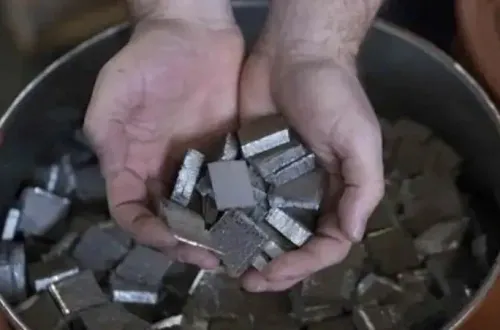
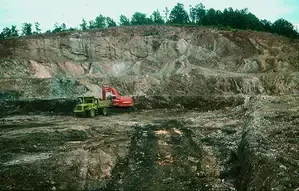
At the core of Rajasthan's mineral story is the Siwana Ring Complex in Balotra district, an ancient volcanic caldera spanning nearly 750 square km. Recent geological surveys have confirmed substantial reserves of Rare Earth Elements (REEs), Heavy Rare Earth Elements (HREEs), and critical rare metals distributed across multiple blocks of the complex.
The Union Ministry of Mines has assigned technical evaluation work for three blocks to specialised agencies, indicating that exploration has moved well past preliminary assessments into active evaluation. The complex also hosts deposits of Niobium, Zirconium, and Hafnium — materials indispensable to aerospace superalloys, superconducting magnets, nuclear reactors, missile systems, robotics, micro-electronics, and electric vehicle technologies.
This comes amid a global scramble for critical mineral supplies, with major economies racing to secure resources essential for semiconductors, batteries, and advanced defence manufacturing. Rajasthan's emerging reserves could meaningfully reduce India's import dependence and bolster domestic manufacturing under the National Critical Minerals Mission.
State-Level Push and Institutional Collaboration
Chief Minister Bhajan Lal Sharma has directed officials to accelerate work on the Siwana project and appoint a dedicated nodal officer for coordination with central agencies. The state is also establishing a Centre of Excellence for Rare Earth Elements, with research partnerships involving the Geological Survey of India, the Atomic Minerals Directorate, IIT Hyderabad, and IIT-ISM Dhanbad.
Notably, the institutional architecture being built around this discovery — combining state-level governance, central ministry oversight, and academic research — marks a more structured approach than earlier mineral exploration efforts in the region.
Jaisalmer Gas Discovery: A Hydrocarbon Milestone
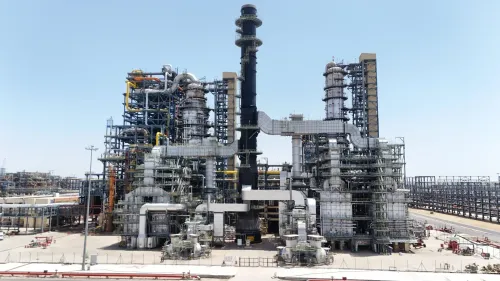
Beyond minerals, Rajasthan is also strengthening India's hydrocarbon security. Oil India Limited recently recorded a successful natural gas flow for the first time in Jaisalmer, from the Dandewala Field located approximately 950 metres below the surface. Testing yielded nearly 25,000 standard cubic metres of natural gas per day.
Union Petroleum and Natural Gas Minister Hardeep Singh Puri called the discovery 'an important step toward reducing India's dependence on imported oil and gas.' Experts have noted that the gas carries low carbon dioxide content, making it a relatively cleaner fuel option for industrial and household use.
The find reinforces the Jaisalmer Basin's standing as one of India's key hydrocarbon regions, and adds a new dimension to western Rajasthan's resource profile.
Strategic Significance for India
Together, the rare earth discoveries and the gas find represent a convergence of energy and materials security in a single region. For a country that imports a significant share of its critical minerals and hydrocarbons, the developments in western Rajasthan offer a credible domestic alternative — provided exploration translates into sustained, commercial-scale production.
With central ministries, state leadership, and research institutions now aligned, the pace of development in the coming months will determine whether Rajasthan's resource potential is fully realised.
Point of View
But the gap between discovery and commercial production in India has historically been wide. The Ministry of Mines assigning evaluation work for three blocks is a meaningful step, yet the National Critical Minerals Mission has yet to demonstrate the execution speed that China's state-backed mineral programme has set as the competitive benchmark. Rajasthan's rare earths could genuinely reduce import dependence — but only if environmental clearances, infrastructure investment, and processing capacity are built in parallel, not sequentially. The real test will come when the first tonne of commercially viable REE concentrate leaves Balotra.
NationPress
19 Sept 2026
Frequently Asked Questions
What is the Siwana Ring Complex and why is it significant?
The Siwana Ring Complex is an ancient volcanic caldera in Balotra district, Rajasthan, spanning nearly 750 square km. It has been identified as a major zone for Rare Earth Elements, Heavy Rare Earth Elements, and critical metals like Niobium, Zirconium, and Hafnium — materials essential for defence systems, EVs, aerospace, and nuclear applications.
What natural gas discovery has been made in Jaisalmer?
Oil India Limited achieved the first-ever successful natural gas flow in Jaisalmer from the Dandewala Field, located around 950 metres below the surface. Testing recorded a flow of nearly 25,000 standard cubic metres of gas per day, with low carbon dioxide content making it a cleaner fuel option.
How does Rajasthan's mineral potential support India's National Critical Minerals Mission?
The reserves identified in the Siwana Ring Complex could supply domestically sourced rare earths and critical metals, reducing India's reliance on imports for semiconductor, battery, and defence manufacturing. The Mission aims to build an end-to-end domestic supply chain for these materials.
What steps is the Rajasthan government taking to develop these resources?
Chief Minister Bhajan Lal Sharma has directed officials to accelerate the Siwana project and appoint a dedicated nodal officer. The state is also setting up a Centre of Excellence for Rare Earth Elements and collaborating with the Geological Survey of India, Atomic Minerals Directorate, IIT Hyderabad, and IIT-ISM Dhanbad.
Which minerals found in Rajasthan are used in defence and high-technology applications?
Niobium, Zirconium, and Hafnium — found in the Siwana Ring Complex — are used in aerospace superalloys, superconducting magnets, nuclear reactors, missile systems, robotics, micro-electronics, and electric vehicle technologies. Their strategic value has grown sharply as global competition for critical minerals intensifies.