Rajasthan critical minerals can power defence, solar, EVs: Kishan Reddy
Synopsis
Rajasthan's 82-mineral portfolio — including rare earth deposits in the 725-sq-km Siwana Ring Complex — is at the centre of a push to make the state India's critical minerals backbone for defence, solar, and EV supply chains. Union Minister Kishan Reddy and CM Bhajanlal Sharma aligned on faster clearances, a nodal officer for Siwana, and tighter Centre-state coordination at a high-level review in Jaipur.
Key Takeaways
Kishan Reddy declared Rajasthan capable of meeting critical mineral demand from defence, solar, energy, agriculture, and automobile sectors at a review meeting on 19 May 2025 .
Rajasthan holds 82 mineral types , of which 57 are currently being mined.
The Siwana Ring Complex , spanning 725 sq km across Barmer and Balotra districts, contains identified Rare Earth Elements and Heavy Rare Earth Elements .
A nodal officer is to be appointed for the Siwana Ring Complex; the Geological Survey of India has been asked to share exploration data with the state.
The Coal India–RRVUNL joint venture, critical mineral block auctions, and District Mineral Foundation funds were among key agenda items at the meeting.
Chief Minister Bhajanlal Sharma directed officials to expedite environmental and forest clearances so auctioned blocks begin production without delay.
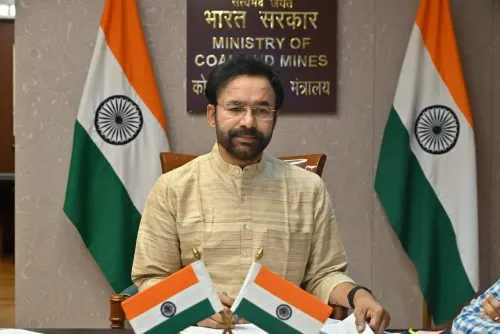
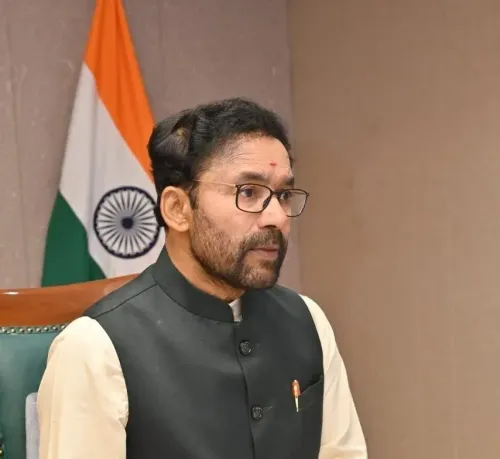
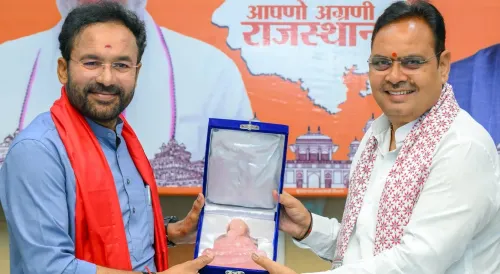
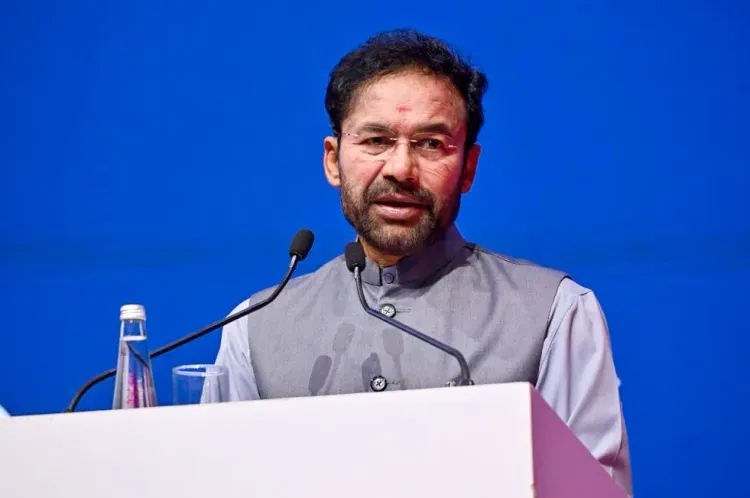
Union Minister for Mines and Coal G. Kishan Reddy on Tuesday, 19 May said Rajasthan holds vast reserves of critical minerals and is well-positioned to meet surging demand from strategic sectors including defence, energy, agriculture, solar power, and automobiles. The minister made the remarks during a high-level review meeting of the Department of Mines and Coal held at the Chief Minister's Residence in Jaipur.
Rajasthan as a Critical Minerals Hub
Reddy said the state is rapidly emerging as a national hub for critical minerals, underpinned by proactive policies, scientific mining practices, and an investor-friendly climate. He credited Central Government reforms with accelerating exploration, auctioning, and production activities across the sector.
'Scientific mining practices, investor-friendly policies and transparent governance have helped create a favourable investment climate, positioning Rajasthan as a major mining hub in the country,' Reddy said.
He stressed the importance of sustained coordination between the Centre and the state government to resolve mining-related issues within fixed timeframes and to drive investment and production targets.
Key Agenda at the Review Meeting
The meeting covered a wide range of issues, including the Coal India–Rajasthan Rajya Vidyut Utpadan Nigam Limited (RRVUNL) joint venture, solar energy projects, auction of critical mineral blocks, District Mineral Foundation funds, environmental and forest clearances, and ongoing geological exploration activities. Speedy operationalisation of already-auctioned mineral blocks was flagged as a priority.
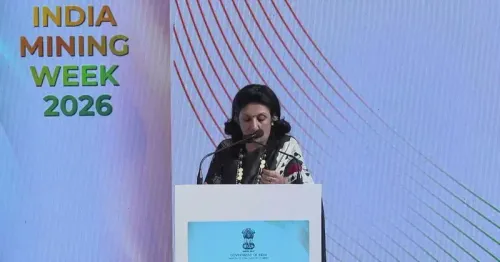
Additional Chief Secretary for Mines and Petroleum Aparna Arora presented the state's policy framework on mining and petroleum, along with pending matters requiring Central Government action. Chief Secretary V. Srinivas and senior officials from both governments were present.
Chief Minister Sharma on Rajasthan's Mineral Wealth
Chief Minister Bhajanlal Sharma noted that Rajasthan ranks among India's most mineral-rich states, endowed with 82 mineral types, of which 57 are currently under active extraction. He said the state government was prioritising transparency, policy reforms, and infrastructure development in the sector.
Sharma directed officials to hold regular coordination meetings with the Centre to ensure all mining projects are completed within stipulated timeframes, and instructed the Mines Department to formulate action plans to prevent bottlenecks and duplication.
Siwana Ring Complex: A Strategic Asset
A significant focus of the meeting was the Siwana Ring Complex, a geological formation spanning nearly 725 square kilometres across Barmer and Balotra districts. The complex comprises circular and semi-circular igneous rock structures where Rare Earth Elements (REEs) and Heavy Rare Earth Elements (HREEs) have been identified in both the Siwana Ring Complex and Siwana Granite formations.
Sharma described the region as strategically critical to modern technology and clean energy industries. He directed officials to appoint a nodal officer for the complex's development and called on the Centre to share data from the Geological Survey of India (GSI) on explored sites within the state — to prevent land earmarked for conservation from being reallocated for other purposes.
What Comes Next
The Chief Minister urged faster processing of environmental and forest clearances so that auctioned mineral blocks can begin production without further delay. With rare earth deposits increasingly central to India's clean energy and defence supply chains, Rajasthan's mineral policy is likely to attract heightened scrutiny from both industry and the Centre in the months ahead.
Point of View
And the directive to 'expedite' them has been issued at similar meetings in the past without structural change. The Siwana Ring Complex's rare earth potential is genuine, but rare earth extraction is technically complex and environmentally sensitive — appointing a nodal officer is a start, not a solution. The real test will be whether Centre-state coordination translates into operational mines, not just high-level meetings.
NationPress
9 Oct 2026
Frequently Asked Questions
What critical minerals does Rajasthan have?
Rajasthan is endowed with 82 mineral types, of which 57 are currently being mined. The state's Siwana Ring Complex in Barmer and Balotra districts contains identified Rare Earth Elements and Heavy Rare Earth Elements, making it strategically significant for clean energy and defence supply chains.
What is the Siwana Ring Complex?
The Siwana Ring Complex is a geological formation spanning nearly 725 square kilometres across Barmer and Balotra districts in Rajasthan. It comprises circular and semi-circular igneous rock structures where Rare Earth Elements and Heavy Rare Earth Elements have been identified, with importance to modern technology and clean energy sectors.
What did Union Minister G. Kishan Reddy say about Rajasthan's mining sector?
Reddy said Rajasthan has the potential to meet growing demand for critical minerals from sectors including defence, energy, agriculture, solar power, and automobiles. He credited Central Government reforms with accelerating exploration and auctions, and stressed the need for close Centre-state coordination to resolve mining issues within fixed timeframes.
What issues were discussed at the Jaipur mines review meeting?
The meeting covered the Coal India–RRVUNL joint venture, solar energy projects, critical mineral block auctions, District Mineral Foundation funds, environmental and forest clearances, and the operationalisation of already-auctioned mineral blocks. The Siwana Ring Complex's rare earth potential also received dedicated attention.
What steps has the Rajasthan government directed for faster mining development?
Chief Minister Bhajanlal Sharma directed officials to appoint a nodal officer for the Siwana Ring Complex, expedite environmental and forest clearances, hold regular coordination meetings with the Centre, and formulate action plans to prevent bottlenecks. He also urged the Centre to share Geological Survey of India data on explored sites in the state.