Rajasthan HC upholds Asaram's life sentence in POCSO minor assault case
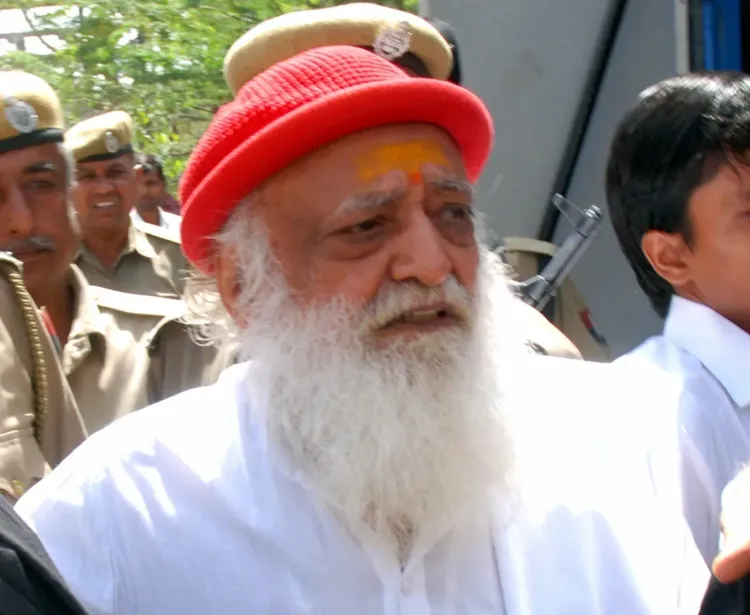
Synopsis
The Rajasthan High Court has confirmed Asaram's life imprisonment in the POCSO minor assault case — ending over a decade of legal proceedings and closing the door on his interim medical bail. Already serving a life term in a Gujarat case, the 86-year-old now faces surrender with no immediate relief in sight.
Key Takeaways
The Rajasthan High Court's Jodhpur Bench upheld Asaram's life imprisonment on 27 May 2026 in the POCSO minor sexual assault case.
Co-accused Shilpi and Sharatchand were acquitted by the same bench.
The verdict was delivered by Justice Arun Monga and Justice Yogendra Kumar Purohit .
Asaram was originally convicted by a Special POCSO Court, Jodhpur on 25 April 2018 ; he was arrested in August 2013 .
He is already serving a life sentence in a separate case out of Gandhinagar, Gujarat (convicted January 2023 ).
The 86-year-old , currently on interim medical bail, must now surrender to authorities.
The Rajasthan High Court's Jodhpur Bench on Wednesday, 27 May upheld the life imprisonment sentence awarded to self-styled godman Asaram in the sexual assault case involving a minor student at his ashram. The Division Bench, comprising Justice Arun Monga and Justice Yogendra Kumar Purohit, affirmed the conviction while acquitting co-accused Shilpi and Sharatchand. Asaram, currently out on interim medical bail, is now required to surrender to authorities.
Background of the Case
Asaram was arrested in August 2013 following allegations of sexually assaulting a minor student at his ashram in Jodhpur, Rajasthan. After a prolonged trial, a Special POCSO Court in Jodhpur convicted him on 25 April 2018 and sentenced him to life imprisonment. The High Court conducted day-to-day hearings in the appeal from 16 February to 20 April 2026, reserved its judgment on 20 April, and pronounced the verdict on 27 May.
What the Defence and Prosecution Argued
Asaram's defence described the case as fabricated, pointing to alleged inconsistencies in the statements of the victim's parents and asserting that no call records established communication between Asaram and the victim on the night of the incident. Invoking the principle of parity, defence lawyers contended that since certain co-accused had been acquitted on the same evidence, Asaram too could not be held guilty.
The prosecution and the victim's counsel, P.C. Solanki, countered that under the Protection of Children from Sexual Offences (POCSO) Act, the testimony of the victim alone constitutes sufficient evidence for conviction — a principle they noted has been repeatedly upheld by the Supreme Court of India. They further argued that attacks on and killings of witnesses reflected attempts to destroy evidence and influence the proceedings.
The Bail Question and Surrender Order
The 86-year-old had repeatedly sought bail, citing advanced age and deteriorating health. Acting on directions of the Supreme Court, the High Court had granted interim medical bail, extended on multiple occasions. With the latest verdict affirming his conviction, that relief is now effectively extinguished and he must surrender.
Second Conviction and Broader Context
This is not Asaram's first conviction. He is already serving a life sentence in a separate sexual assault case involving a female devotee at his ashram in Gandhinagar, Gujarat, in which he was convicted in January 2023. The Jodhpur ruling reinforces what has become one of India's most high-profile cases under the POCSO framework, spanning over a decade from arrest to final appellate confirmation. Notably, the case has been marked by witness intimidation concerns, underscoring the broader challenge of prosecuting crimes involving powerful religious figures.
What Happens Next
With the High Court's verdict now on record, Asaram must formally surrender. Any further legal recourse would lie with the Supreme Court of India. Legal observers say the ruling is a significant affirmation of the POCSO Act's evidentiary standards and could set a precedent for similar cases involving influential accused who challenge victim testimony on grounds of corroboration.
Point of View
Credibility attacks on the victim's family, and a decade-long bail strategy built on age and health. The court's confirmation that victim testimony alone suffices under POCSO, without corroborative call records, reinforces a critical evidentiary principle. What the case also exposes is the systemic vulnerability of witness protection: the prosecution's own reference to witness killings during arguments is a detail that deserves far more scrutiny than it has received. With two life sentences now confirmed across two states, the legal chapter may be closing — but the institutional questions about how such cases are prosecuted, and how witnesses are protected, remain open.
NationPress
17 Sept 2026
Frequently Asked Questions
What did the Rajasthan High Court rule in the Asaram case?
The Rajasthan High Court's Jodhpur Bench upheld Asaram's life imprisonment sentence on 27 May 2026 in the POCSO case involving the sexual assault of a minor student at his Jodhpur ashram. The court acquitted co-accused Shilpi and Sharatchand while affirming his conviction.
When was Asaram first convicted in this case?
Asaram was first convicted by a Special POCSO Court in Jodhpur on 25 April 2018 and sentenced to life imprisonment. He was originally arrested in August 2013 following the allegations.
Does Asaram have any other criminal convictions?
Yes. Asaram is already serving a life sentence in a separate sexual assault case involving a female devotee at his ashram in Gandhinagar, Gujarat, in which he was convicted in January 2023. The Rajasthan verdict is his second confirmed life sentence.
Why was Asaram out on bail if he had a life sentence?
Asaram had been granted interim medical bail by the High Court, acting on directions of the Supreme Court, on grounds of advanced age and deteriorating health. That bail arrangement is now nullified by the High Court's confirmation of his conviction, requiring him to surrender.
What is the significance of the POCSO argument in this case?
The prosecution successfully argued that under the POCSO Act, the victim's testimony alone is sufficient for conviction without requiring corroborative evidence such as call records. This principle, repeatedly upheld by the Supreme Court, was central to defeating the defence's parity and inconsistency arguments.