Rajasthan HC dismisses revision plea in religious conversion case, Sri Ganganagar

Synopsis
The Rajasthan High Court has refused to quash proceedings against three accused in a Sri Karanpur religious conversion case, ruling that prima facie grounds are established under the state's 2025 anti-conversion law. The bench also settled a key point: the law restricts coercive or fraudulent conversions — it does not ban religious conversion outright. An important early judicial test of how far the new law reaches.
Key Takeaways
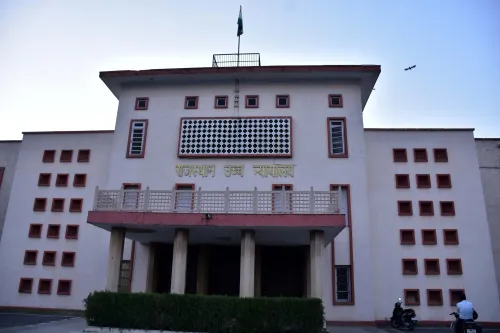
The Rajasthan High Court dismissed a criminal revision petition filed by three accused in a religious conversion case from Sri Karanpur, Sri Ganganagar .
The FIR was registered on 19 December 2025 under the Rajasthan Prohibition of Unlawful Conversion of Religion Act, 2025 , the Foreigners Act, and the BNS.
Justice Ashok Kumar Jain ruled that police material establishes a prima facie case sufficient for cognisance at this stage.
The court clarified the 2025 Act does not prohibit all conversions — only those conducted through coercion, fraud, allurement, or other specified unlawful means under Section 3 .
A reference to 'Section 3/25' in the trial court order was treated as a clerical error and directed to be read as 'Section 3/5.' The accused may still file a discharge application before the trial court under Section 250 of the BNS .
The Rajasthan High Court has dismissed a criminal revision petition filed by three accused persons in a religious conversion case originating from Sri Karanpur, Sri Ganganagar district, ruling that sufficient prima facie grounds exist for the trial to proceed. The bench's order reaffirms the scope of the Rajasthan Prohibition of Unlawful Conversion of Religion Act, 2025 and clarifies what constitutes a lawful exercise of religious rights under Article 25 of the Constitution.
Background of the Case
The case traces back to an FIR registered on 19 December 2025 at Sri Karanpur police station under Sections 3/5 of the Rajasthan Prohibition of Unlawful Conversion of Religion Act, 2025, Section 14(A) of the Foreigners Act, and Section 223(B) of the Bharatiya Nyaya Sanhita (BNS). Complainant Sharad Gumbar alleged that certain individuals, including foreign nationals, were attempting to convert people to another religion by making objectionable remarks about Hindu deities and engaging in alleged supernatural activities. Following a police investigation, a chargesheet was filed against the three accused.
Arguments Before the Court
Counsel for the petitioners contended that the accused had merely conducted religious prayers in small groups twice a week, read the Bible, and imparted religious teachings — and that no evidence existed showing they had induced, coerced, or provided misleading information to anyone with the intent of facilitating a religious conversion. The defence also flagged what it described as a legal error: the trial court's cognisance order cited 'Section 3/25' of the Act, even though no such provision exists in the legislation.
Key Observations by Justice Ashok Kumar Jain
A single-judge bench led by Justice Ashok Kumar Jain observed that the material submitted by police establishes a prima facie basis for the alleged offences, and that at the stage of taking cognisance, the court need only determine whether a prima facie case exists — not adjudicate guilt. The bench noted that the 2025 Act prohibits religious conversion carried out through misrepresentation, misinformation, force, undue influence, coercion, allurement, online solicitation, marriage or under the pretext of marriage, or other fraudulent means. Critically, the court clarified that the law does not prohibit religious conversion entirely — it criminalises only those conversions effected through the specific means listed under Section 3.
On the question of Article 25, the bench acknowledged that every person enjoys freedom of conscience and the right to profess, practise, and propagate religion, but noted that these rights are expressly subject to considerations of public order, morality, and health.
The Clerical Error Argument
Regarding the reference to 'Section 3/25' in the trial court's cognisance order, the bench treated it as a typographical or clerical error and directed that it be read as 'Section 3/5.' The court held that such an error alone could not constitute sufficient grounds to allow the revision petition, effectively closing this procedural objection.
What Happens Next
With the revision petition dismissed, the matter will proceed before the trial court. The bench also clarified that the accused are at liberty to file an application for discharge before the trial court under Section 250 of the BNS, preserving their right to challenge the proceedings at the appropriate stage. The case is being watched as one of the early judicial tests of Rajasthan's 2025 anti-conversion law, and how trial courts interpret 'unlawful' conversion under it could set important precedents going forward.
Point of View
Not conversion per se — is legally important, but the threshold for what constitutes 'allurement' or 'undue influence' remains undefined and contestable. Critics of such laws have consistently argued that vagueness in these definitions creates space for misuse against minority religious communities. The involvement of foreign nationals in the FIR adds a layer that could attract scrutiny under international human rights frameworks. How the trial court eventually rules on the discharge application will be the real test of whether the 2025 law is applied with constitutional precision.
NationPress
30 Sept 2026
Frequently Asked Questions
What is the Rajasthan religious conversion case about?
The case involves three accused persons alleged to have attempted to convert individuals to another religion in Sri Karanpur, Sri Ganganagar district. An FIR was registered on 19 December 2025 under the Rajasthan Prohibition of Unlawful Conversion of Religion Act, 2025, the Foreigners Act, and the BNS, following a complaint by Sharad Gumbar.
Why did the Rajasthan High Court dismiss the revision petition?
The court dismissed it because police material established a prima facie case sufficient for the trial court to take cognisance. At this stage, the court is not required to determine guilt — only whether enough material exists to proceed — and the bench found that threshold met.
Does the Rajasthan 2025 anti-conversion law ban all religious conversions?
No. The Rajasthan High Court explicitly clarified that the Act does not prohibit religious conversion outright. It criminalises only conversions carried out through misrepresentation, coercion, allurement, fraudulent means, or other unlawful methods listed under Section 3 of the law.
What happens to the accused after the revision petition was dismissed?
The case will proceed before the trial court. The High Court also clarified that the accused retain the right to file a discharge application under Section 250 of the Bharatiya Nyaya Sanhita, allowing them to challenge the proceedings at the trial stage.
What was the clerical error issue raised in the case?
The trial court's cognisance order incorrectly cited 'Section 3/25' of the 2025 Act, a provision that does not exist in the legislation. The High Court treated this as a typographical error and directed it to be read as 'Section 3/5,' ruling that the error alone was not grounds to allow the revision petition.