Rajasthan HC backs border anti-encroachment drive, cites national security

Synopsis
The Rajasthan High Court has drawn a firm line: no unauthorised structure — religious or otherwise — can stand within India's border zones on grounds of faith alone. Justice Sameer Jain's ruling endorses Operation Clean, constitutes a 50-km border review committee, and hands the administration a clear legal mandate to act — with due process built in.
Key Takeaways
Rajasthan High Court ruled on 13 July that national security takes precedence over all other considerations, including religion, in border areas.
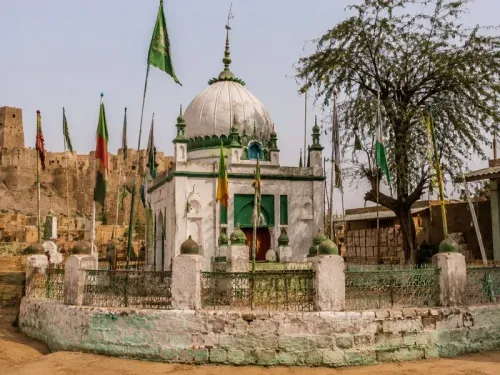
Justice Sameer Jain dismissed petitions by the Peer Mohammad Shah Jilani Dargah Committee, Ramgarh, Jaisalmer and other petitioners challenging removal notices.
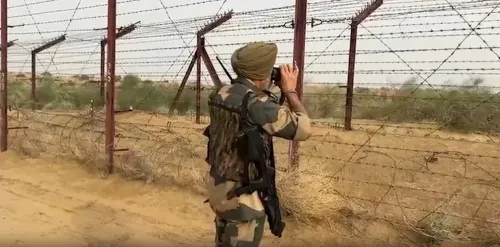
A committee comprising the District Collector , SP , and BSF representatives has been directed to inspect all structures within 50 kilometres of the India-Pakistan border .
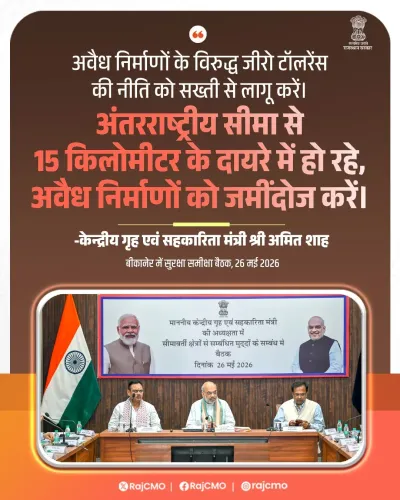
The ruling backs Operation Clean , launched by the Union Ministry of Home Affairs , under which unauthorised structures in Barmer and Jaisalmer were removed in June 2026 .
The court clarified that the action targets illegal construction on security grounds — not any particular religion or community.
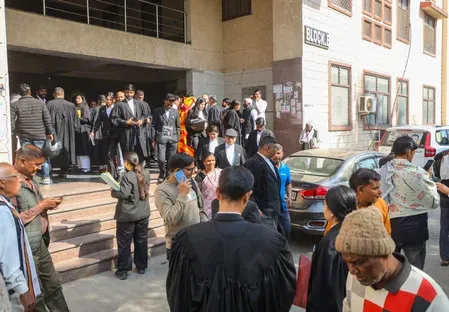
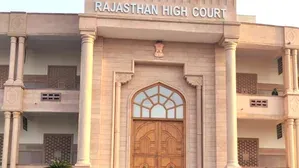
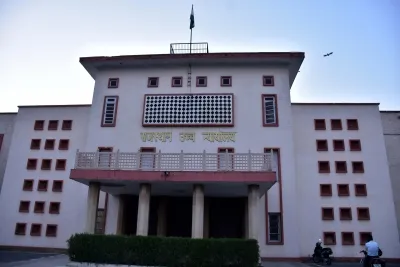
The Rajasthan High Court has ruled that national security takes precedence over all other considerations, holding that unauthorised religious structures in sensitive border areas cannot be permitted in violation of the law. A single-judge bench of Justice Sameer Jain on Monday, 13 July dismissed petitions challenging removal notices issued for religious structures allegedly built without authorisation near the India-Pakistan international border.
What the Court Ruled
The bench held that any structure erected illegally in border areas — regardless of its religious character — is subject to action under the law. The court made clear that the administration's drive is not directed against any particular religion or community, but is grounded solely in legal and security considerations. Justice Sameer Jain underscored the primacy of national interest while pronouncing the verdict, reciting a poem on the importance of safeguarding the country.
Notably, the court observed that violations of the law cannot be justified in the name of religion when national security is at stake — a pointed articulation that sets a firm precedent for border-area governance.
Committee Constituted for Case-by-Case Review
The Rajasthan High Court directed the formation of a committee to inspect all structures located within 50 kilometres of the India-Pakistan international border. The panel will comprise the concerned District Collector, Superintendent of Police (SP), and representatives of the Border Security Force (BSF).
The committee has been tasked with examining each case individually, taking into account security concerns, land ownership, and legal permissions. Where necessary in the interest of national security, it may recommend removal or demolition of structures.
Background: Operation Clean and BSF Jurisdiction
The petitions were filed by the Peer Mohammad Shah Jilani Dargah Committee in Ramgarh, Jaisalmer, and other petitioners, against notices issued by the district administration. The case is linked to Operation Clean, a border encroachment removal drive launched by the Union Ministry of Home Affairs in coordination with the Rajasthan administration.
As part of the operation, authorities removed unauthorised structures in several border villages across Barmer and Jaisalmer districts during June 2026, citing national security concerns and encroachments on government land — including gochar (grazing land) and oran (sacred grove) land. Security agencies had conducted surveys in border areas following directions from the Union Ministry of Home Affairs, during which several structures were found to have been built without permission on government land.
The court also referenced the Union Ministry of Home Affairs' decision to extend the BSF's jurisdiction up to 50 kilometres from the international border — a policy move aimed at strengthening border security that now has direct judicial endorsement in its application.
What Happens Next
With Monday's ruling, the Rajasthan High Court has upheld the administration's authority to examine and act against unauthorised structures in border areas, subject to the case-by-case assessment mandated for the newly constituted committee. The ruling effectively places the onus on the panel to balance security imperatives with due process — a framework that could serve as a template for similar drives in other border states.
Point of View
The court has closed a litigation avenue that had, in practice, delayed enforcement actions. The constitution of a case-by-case committee is the court's hedge against bulldozer-justice optics — but the burden of proof now rests with petitioners, not the state. The BSF's expanded 50-km jurisdiction, now judicially acknowledged, signals a broader securitisation of India's western frontier that will face its real test in implementation, not in courtrooms.
NationPress
12 Oct 2026
Frequently Asked Questions
What did the Rajasthan High Court rule on the border anti-encroachment drive?
The Rajasthan High Court upheld the administration's authority to act against unauthorised structures near the India-Pakistan border, ruling that national security takes precedence over all other considerations, including religion. Justice Sameer Jain dismissed petitions challenging removal notices and directed a committee to review all structures within 50 kilometres of the international border.
What is Operation Clean and where was it carried out?
Operation Clean is a border encroachment removal drive launched by the Union Ministry of Home Affairs in coordination with the Rajasthan administration. Authorities removed unauthorised structures in border villages across Barmer and Jaisalmer districts during June 2026, citing national security concerns and encroachments on government land.
Who filed the petitions that were dismissed?
The petitions were filed by the Peer Mohammad Shah Jilani Dargah Committee in Ramgarh, Jaisalmer, and other petitioners, challenging notices issued by the district administration for removal of religious structures allegedly built without authorisation near the India-Pakistan border.
What is the composition and mandate of the committee ordered by the court?
The court-directed committee will comprise the concerned District Collector, Superintendent of Police (SP), and BSF representatives. It will inspect each structure within 50 kilometres of the India-Pakistan border individually, weighing security concerns, land ownership, and legal permissions, and may recommend removal or demolition where necessary.
Does the ruling target a specific religion or community?
No. The Rajasthan High Court explicitly clarified that the action is not directed against any particular religion or community, but is based solely on legal and security considerations. The court noted that the law applies equally to all citizens and institutions.