Kanhaiyalal murder case: Rajasthan HC rejects all 8 accused appeals on charges

Synopsis
The Rajasthan High Court has dismissed all eight appeals in the Kanhaiyalal murder case, keeping UAPA terror charges firmly in place. The ruling — which rejected defence claims about lack of direct conspiracy evidence and no links to banned outfits — sends the case back to the Special NIA Court for full trial, marking a critical milestone in one of India's most high-profile communal violence prosecutions.
Key Takeaways
The Rajasthan High Court's Jaipur Bench dismissed all appeals against charge-framing in the Kanhaiyalal murder case on 6 November 2026 .
A Division Bench of Chief Justice Sanjay K.
Agarwal and Justice Samir Jain upheld Special NIA Court orders dated 12 January 2024 and 13 February 2024 .
The 8 accused — including Mohammad Riyaz Attari , Mohammad Gaus , and others — will face trial under UAPA Sections 16, 18, and 20 .
The court held that absence of direct conspiracy evidence is not sufficient grounds for discharging an accused.
The defence argument of no direct links to banned terror organisations was rejected as insufficient to drop UAPA charges.
The Special NIA Court will now proceed with the full trial, assessing evidence and hearing witnesses independently.
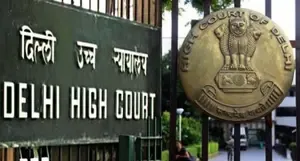
The Rajasthan High Court on 6 November 2026 dealt a significant legal blow to the accused in the high-profile Kanhaiyalal murder case, dismissing all appeals filed against the framing of charges by the Special NIA Court. The ruling clears the way for the trial to proceed under stringent anti-terror provisions.
Key Ruling and Bench Observations
A Division Bench comprising Chief Justice Sanjay K. Agarwal and Justice Samir Jain of the Jaipur Bench upheld the charge-framing orders passed by the Special NIA Court on 12 January 2024 and 13 February 2024. The court made several pointed observations, clarifying that the question of guilt or innocence cannot be conclusively determined at the charge-framing stage.
The bench further noted that the absence of direct or eyewitness evidence of a conspiracy does not, by itself, justify discharging an accused. According to the court, a criminal conspiracy may be established through the cumulative weight of surrounding circumstances — a principle that proved decisive in rejecting the defence's arguments.
Charges the Eight Accused Will Face
Following the High Court's ruling, the trial against all eight accused will proceed under Sections 16 (terrorist act), 18 (conspiracy), and 20 (membership of a terrorist organisation) of the Unlawful Activities (Prevention) Act (UAPA), along with other serious provisions of the Indian Penal Code (IPC). The accused whose appeals were dismissed are Mohammad Riyaz Attari, Mohammad Gaus, Mohsin Khan, Asif Hussain, Mohammad Mohsin, Wasim Ali, and Mohammad Javed Khan.
Defence Arguments Rejected
The court rejected multiple defence submissions. Explanations offered by the accused regarding videos they allegedly recorded and online threats issued were not deemed sufficient to warrant relief. The defence argument that the accused had no direct links with any banned terrorist organisation was similarly dismissed as insufficient grounds to drop the UAPA charges.
What Happens Next
With all eight appeals dismissed, the charge-framing orders remain fully intact. The Special NIA Court will now independently assess all evidence and hear witness testimonies before delivering its final verdict. The final determination of guilt or innocence rests solely with the trial court. This ruling is widely seen as a significant step toward substantive judicial accountability in one of Rajasthan's most closely watched criminal cases in recent years.
Point of View
And this case — given its communal sensitivity — demands both rigour and speed.
NationPress
6 Nov 2026
Frequently Asked Questions
What is the Kanhaiyalal murder case?
The Kanhaiyalal murder case refers to the killing of tailor Kanhaiyalal Teli in Udaipur, Rajasthan, in June 2022. The case drew national attention due to its alleged communal dimensions and links to terror networks, leading to an NIA investigation and charges under UAPA.
What did the Rajasthan High Court decide on 6 November 2026?
The Rajasthan High Court dismissed all appeals filed by eight accused persons challenging the framing of charges against them in the Kanhaiyalal murder case. The Division Bench upheld the Special NIA Court's charge-framing orders and cleared the way for the trial to proceed.
What charges will the accused face at trial?
The eight accused will face trial under Sections 16 (terrorist act), 18 (conspiracy), and 20 (membership of a terrorist organisation) of the UAPA, along with serious provisions of the Indian Penal Code.
Why did the High Court reject the defence's arguments?
The court held that the absence of direct or eyewitness evidence of conspiracy is not sufficient to discharge an accused, and that a conspiracy can be established through surrounding circumstances. It also rejected the argument that having no direct links to a banned organisation was grounds to drop UAPA charges.
What happens next in the Kanhaiyalal murder case?
The case will now proceed to full trial before the Special NIA Court, which will independently examine all evidence and hear witness testimonies before delivering its verdict on the guilt or innocence of the accused.