Rajasthan heavy rain alert: Mount Abu logs 195 mm, IMD issues Orange Warning
Synopsis
Mount Abu's 195 mm downpour on Friday was the single highest reading in Rajasthan's latest monsoon surge — but the bigger story is the split: while hill stations flood and 40 dry dams refill, 27 of the state's districts remain below seasonal average, exposing the structural unevenness that defines Rajasthan's monsoon every year.
Key Takeaways
IMD has issued an Orange and Yellow Alert for Rajasthan on 26 July 2025 .
Mount Abu (Sirohi) recorded the highest rainfall at 195 mm on Friday.
The monsoon is expected to stay active through 27 July , with heaviest rain in Udaipur and Jodhpur divisions.
More than 40 previously dry dams have received water since 2 July ; Morel and Mansagar dams are now full.
Only 5 districts have above-normal rainfall this season; 27 districts remain below average.
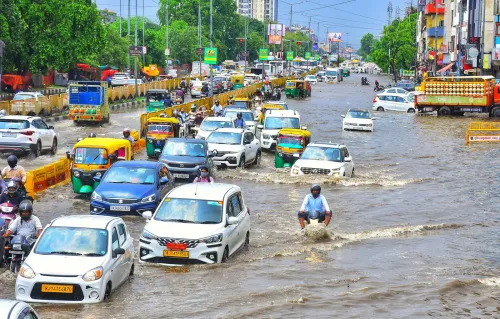
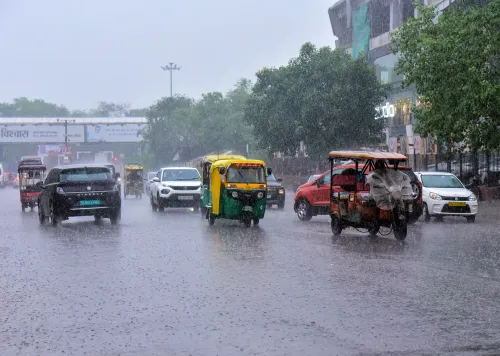
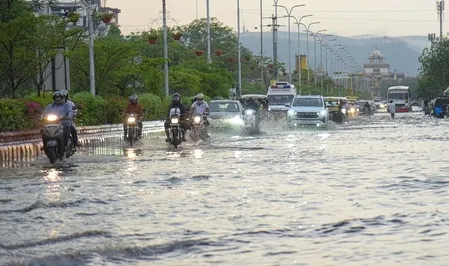
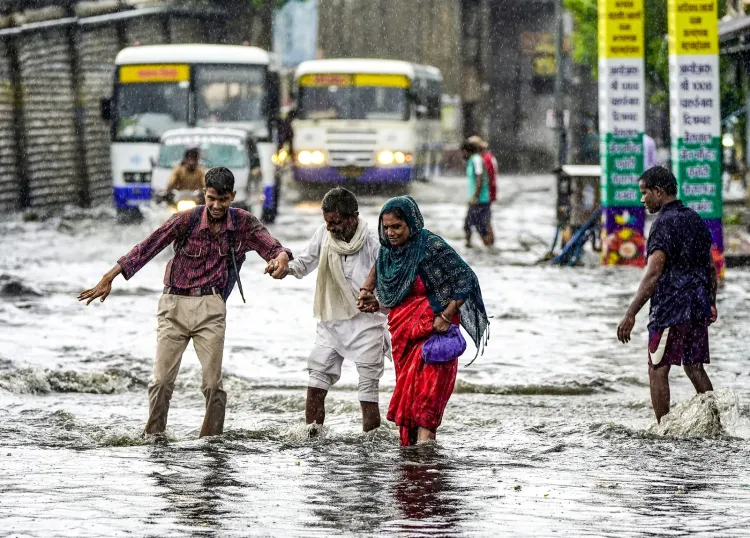
The India Meteorological Department (IMD) has issued an Orange and Yellow Alert for heavy rainfall across Rajasthan on Saturday, 26 July 2025, as a vigorous monsoon spell continues to pound the state. Mount Abu in Sirohi district recorded the highest single-station rainfall of 195 mm on Friday, while knee-deep waterlogging paralysed several roads in Jodhpur.
Rainfall Recorded Across Districts
Friday's downpour was widespread, with significant accumulations logged at multiple stations. Jawai (Pali) received 97 mm, Bapini (Jodhpur) recorded 81 mm, and Karanpur (Sri Ganganagar) got 66 mm. Other notable figures include Kalyanpur (Barmer): 57 mm, Balotra: 56 mm, Jawaja (Ajmer): 52 mm, Sarwar (Ajmer): 50 mm, Garhbor (Rajsamand): 47 mm, Desuri (Pali): 38 mm, Kumbhalgarh: 28 mm, and Pali city: 27 mm.
IMD Forecast: Active Monsoon Through July 27
Jaipur Meteorological Centre Director Radheshyam Sharma said the monsoon will remain particularly active over parts of Udaipur and Jodhpur divisions for the next two days, with heavy to extremely heavy rainfall likely at isolated locations. Moderate to heavy rain is also expected across Bikaner, Ajmer, Kota, Jaipur, and Bharatpur divisions. Rainfall activity is expected to ease slightly from 28 July onwards.
Water Situation Improves After Early Dry Spell
After a delayed monsoon onset and a prolonged dry phase in the early season, recent rains have markedly improved the state's water position. Since 2 July, water has flowed into more than 40 dams that had previously run dry. The Morel Dam in Dausa and Mansagar Dam in Tonk have both reached full capacity following the latest spell.
Uneven Distribution Remains a Concern
Despite the recent surge, monsoon distribution across Rajasthan remains patchy. Only five districts — Beawar, Bikaner, Didwana-Kuchaman, Phalodi, and Salumbar — have received above-normal rainfall so far this season. As many as 27 districts have logged below-average totals, while 12 districts including Dausa, Dungarpur, Jaisalmer, Jalore, Karauli, Pali, Sirohi, and Udaipur continue to face deficient rainfall. This uneven spread underscores a recurring challenge for Rajasthan — where geography and monsoon track variations routinely leave desert districts parched even as hill stations like Mount Abu receive torrential showers. All eyes now remain on whether the active spell through 27 July can further narrow the seasonal deficit across the state's rain-shadow zones.
Point of View
Yet 27 districts remain below seasonal average — a disparity that recurs annually and exposes the limits of using state-wide alerts to communicate localised risk. The refilling of 40 dams is genuine relief after a prolonged dry spell, but with the active phase expected to taper after 27 July, the window for deficit districts to catch up is narrowing. The IMD's Orange Alert is operationally important, but the harder policy question is preparedness asymmetry: flood response in Jodhpur and drought contingency in Jaisalmer need to run simultaneously, and that dual burden rarely gets the administrative attention it deserves.
NationPress
23 Oct 2026
Frequently Asked Questions
What is the IMD alert issued for Rajasthan today?
The India Meteorological Department has issued an Orange and Yellow Alert for heavy rainfall across Rajasthan on 26 July 2025. The alert covers multiple divisions, with the heaviest rain expected in Udaipur and Jodhpur divisions.
How much rainfall did Mount Abu receive?
Mount Abu in Sirohi district recorded 195 mm of rainfall on Friday, 25 July 2025 — the highest single-station reading in Rajasthan during this spell. That is approximately 8 inches of rain in a single day.
How long will the active monsoon spell last in Rajasthan?
According to the IMD, the monsoon will remain active across Rajasthan until 27 July 2025, after which rainfall activity is likely to weaken slightly from 28 July onwards.
Which districts in Rajasthan are still facing below-normal rainfall?
As many as 27 districts have recorded below-average rainfall this season due to the delayed monsoon onset and a prolonged mid-season dry spell. Twelve districts — including Dausa, Dungarpur, Jaisalmer, Jalore, Karauli, Pali, Sirohi, and Udaipur — continue to face particularly deficient rainfall.
Has the recent rain improved water storage in Rajasthan's dams?
Yes, significantly. Since 2 July 2025, water has flowed into more than 40 dams that had previously gone dry. The Morel Dam in Dausa and Mansagar Dam in Tonk have both reached full capacity following the latest monsoon spell.