Rajasthan runs 65 Anti-Romeo Squads to curb public harassment
Synopsis
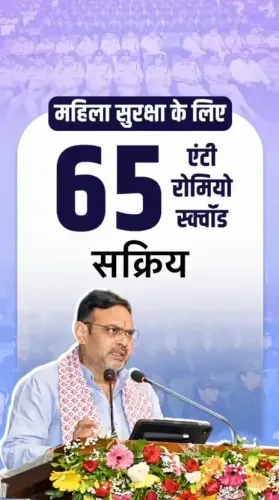
The Chief Minister's Office of Rajasthan announced that 65 Anti-Romeo Squads are deployed across the state to curb eve-teasing and public harassment of women, part of CM Bhajan Lal Sharma's broader women-safety agenda.
Key Takeaways
65 Anti-Romeo Squads are currently operational across Rajasthan, the state's Chief Minister's Office confirmed on 18 October 2026 .
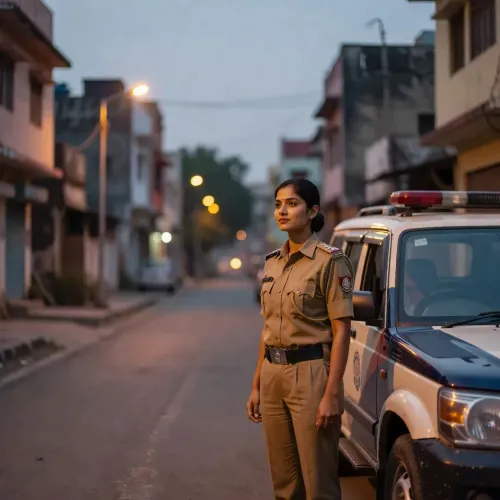
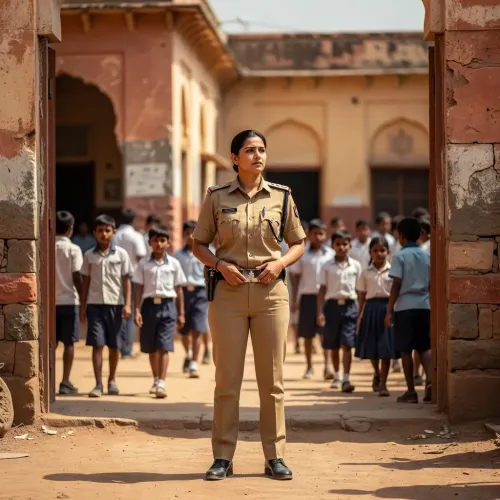
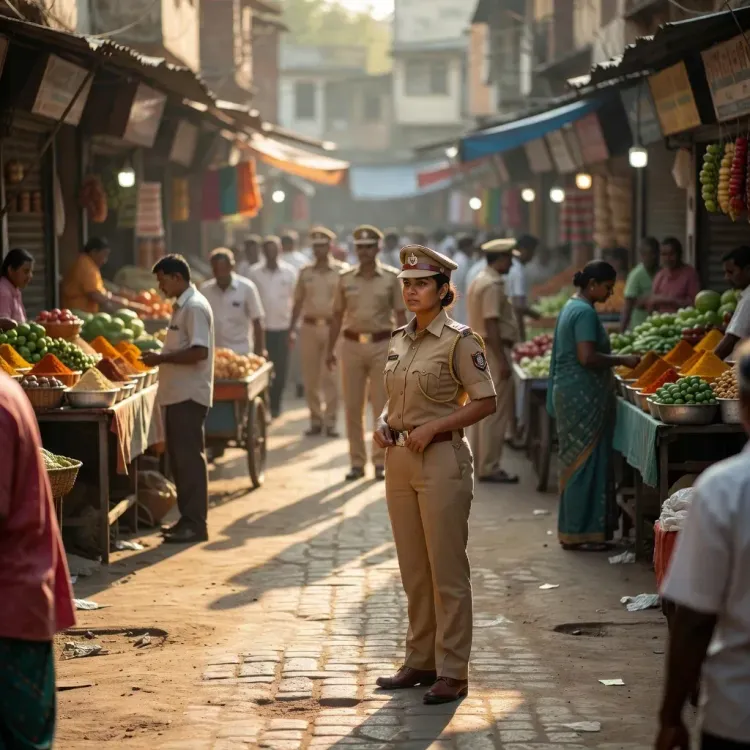
The squads target eve-teasing and public harassment of women at schools, markets, bus stands, and other public gathering points.
The initiative is part of the broader women-safety agenda of Chief Minister Bhajan Lal Sharma , in office since December 2023 .
The BJP-led Rajasthan government has positioned dedicated police units as a front-facing deterrence mechanism for gender-based harassment.
Performance data — intervention rates, complaints resolved, and rural coverage — has not yet been made public, leaving squad effectiveness unverified.
Sixty-five dedicated police units are now patrolling public spaces across Rajasthan, tasked with stopping eve-teasing and harassment of women — a quiet but concrete expansion of the Bhajan Lal Sharma government's women-safety architecture. The Chief Minister's Office of Rajasthan confirmed the deployment on Sunday, 18 October 2026, framing the squads as part of a broader state push under the hashtag #आपणो_अग्रणी_राजस्थान ('Our Progressive Rajasthan').
What the Anti-Romeo Squads actually do
Anti-Romeo Squads are specialised police units positioned at schools, colleges, bus stands, markets, and other public gathering points where women face the highest risk of street harassment. Their mandate is preventive as much as punitive — a visible presence designed to deter would-be offenders before an incident escalates into a formal complaint. The model has been used in several BJP-governed states as a law-and-order response to gender-based harassment in everyday public life.
With 65 squads now operational across the state, Rajasthan is signalling a scaled, systematic rollout rather than a token deployment in a handful of cities.
Sharma government's women-safety push
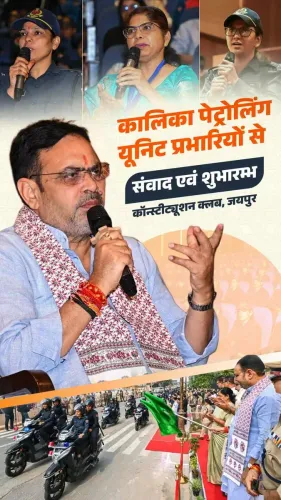
Chief Minister Bhajan Lal Sharma, in office since December 2023, has positioned women's security as a visible priority of his administration. The Anti-Romeo Squad deployment sits alongside other state-level initiatives aimed at improving safety for women in public spaces — an agenda the CMO has repeatedly amplified on official channels. The post directly tags @BhajanlalBjp, linking the initiative to the Chief Minister personally.
The broader pattern is clear: the BJP-led Rajasthan government is using dedicated, uniformed units as a front-facing signal of intent, ensuring that the state's commitment to women's safety is visible on the ground — not just on paper.
What the squad numbers still need to show
Announcing squad strength is one step. The harder question — how often these units intervene, how many complaints they prevent or resolve, and how women in smaller towns and rural areas experience their presence — remains unanswered by the post. Performance metrics and integration with helplines or digital safety tools would give the public a fuller picture of whether 65 squads are translating into measurably safer streets.
For now, the number stands as a marker. The measure that matters is what happens next.
Point of View
On-ground police units as both a deterrence mechanism and a political signal on women's safety. For the Sharma government, which entered office in December 2023, publicising squad strength builds a law-and-order credential ahead of longer-term governance assessments. The real test, however, is operational: without transparent data on interventions, complaints resolved, and geographic spread, squad numbers risk becoming a headline metric rather than a measurable safety outcome. Connecting these units to broader schemes — helplines, legal aid, fast-track courts — would determine whether the initiative graduates from optics to impact.
NationPress
19 Oct 2026
Frequently Asked Questions
What are Anti-Romeo Squads in Rajasthan?
Anti-Romeo Squads are specialised police units deployed at public spaces such as schools, colleges, bus stands, and markets to prevent eve-teasing and harassment of women. Rajasthan currently operates 65 such squads.
How many Anti-Romeo Squads are active in Rajasthan?
According to the Chief Minister's Office of Rajasthan, 65 Anti-Romeo Squads are currently operational across the state as of October 2026.
Who launched Anti-Romeo Squads in Rajasthan?
The squads are operating under the Bhajan Lal Sharma-led BJP government, which has been in office since December 2023, as part of its women-safety initiatives.
What is the purpose of Anti-Romeo Squads?
Their primary purpose is to deter and prevent eve-teasing and gender-based harassment in public places through a visible police presence, acting before incidents escalate into formal crimes.
What is the hashtag #आपणो_अग्रणी_राजस्थान about?
The hashtag translates to 'Our Progressive Rajasthan' and is used by the Rajasthan government's official accounts to highlight development and governance initiatives under the current administration.