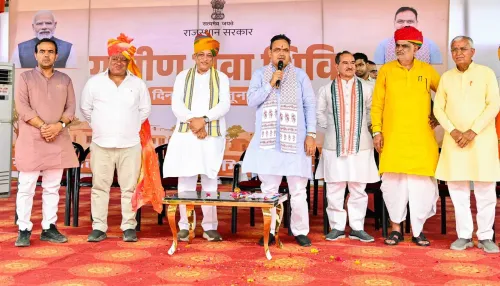
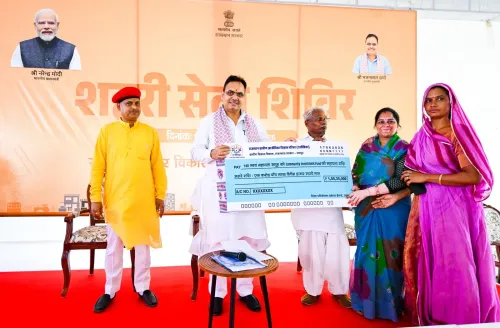
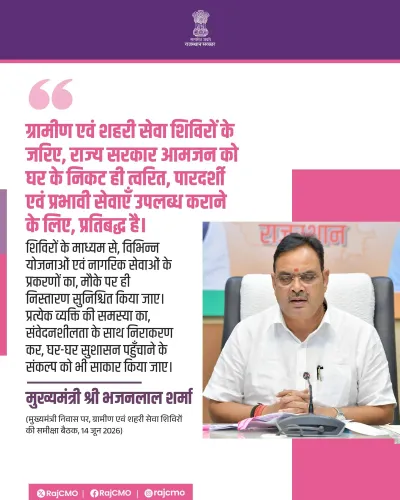
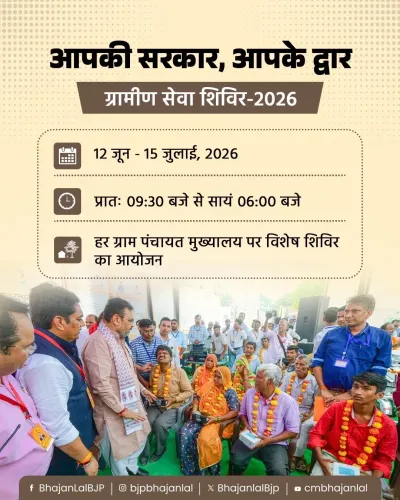
CM Bhajanlal's Gramin Seva Shivirs tackle land, pension, NFSA cases
Synopsis
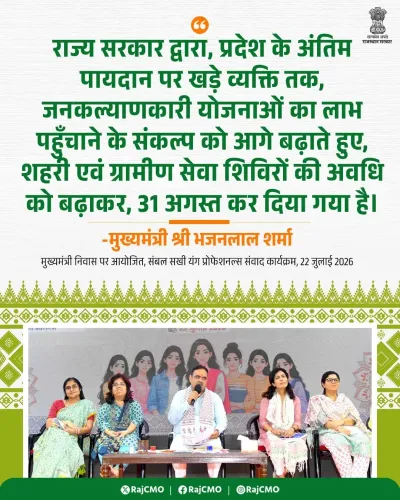
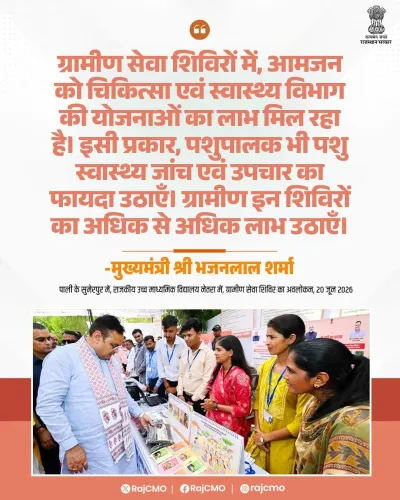
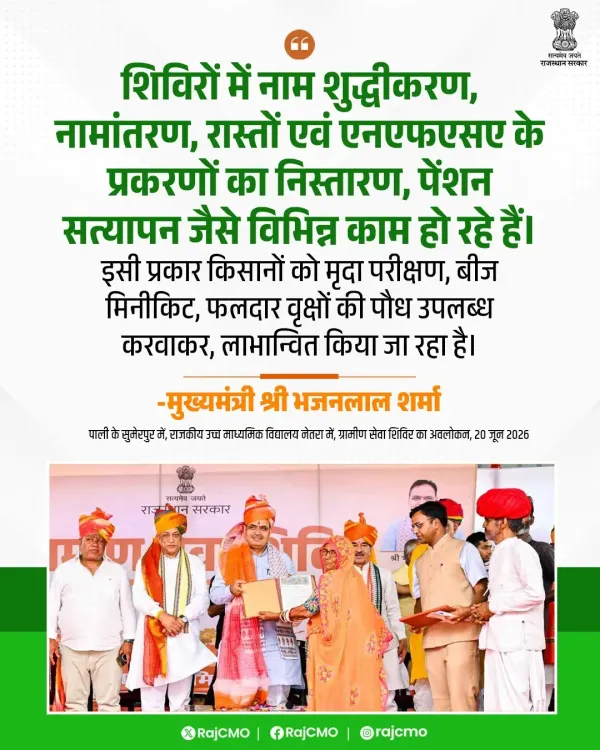
Rajasthan's Gramin Seva Shivirs, flagged by CM Bhajanlal Sharma's office on 21 June 2026, are resolving name corrections, land mutations, NFSA grievances and pension verifications at the village level — part of the BJP government's post-2023 push for camp-based rural service delivery.
Key Takeaways
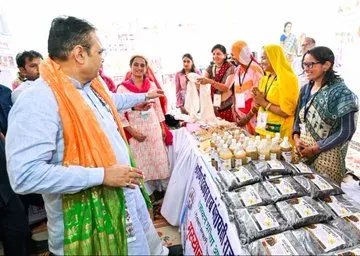
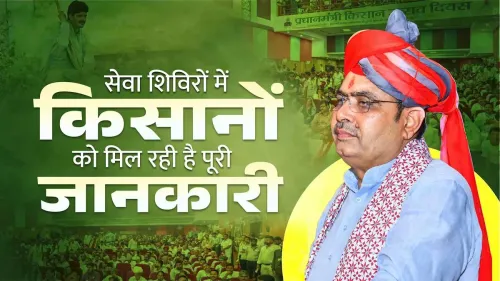
The Chief Minister's Office of Rajasthan confirmed on 21 June 2026 that Gramin Seva Shivirs are operational across rural areas.
Services being delivered include name corrections ( naam shudhikaran ), land mutation ( namantaran ), road-access dispute resolution, and NFSA case clearance.
Pension verification for rural beneficiaries is also being conducted at the camps.
The initiative is tagged to Chief Minister Bhajanlal Sharma , who has led the BJP government in Rajasthan since December 2023 .
The camps aim to reduce citizen travel to tehsil offices and improve last-mile access to central and state schemes.
The Chief Minister's Office of Rajasthan announced on Sunday, 21 June 2026 that Gramin Seva Shivirs are actively resolving a range of citizen services across the state's rural areas, including name corrections, land mutation, pathway disputes, National Food Security Act (NFSA) cases, and pension verification.
Context
The official post, tagged to Chief Minister Bhajanlal Sharma and carrying the hashtag #ग्रामीण_सेवा_शिविर_2026 ('Gramin Seva Shivir 2026'), describes camps where citizens can get name corrections (naam shudhikaran), mutation entries (namantaran), road-access disputes, and NFSA grievances resolved — alongside pension verification — all in one place.
The BJP government led by Bhajanlal Sharma, which came to power in December 2023, has made camp-based rural service delivery a visible governance priority in its early years.
Policy Backdrop
The National Food Security Act, 2013 entitles priority households across India to subsidised foodgrains, but errors in beneficiary names or records frequently block access. Name corrections and mutation entries in land records are similarly long-pending issues that force rural citizens to make repeated trips to tehsil offices.
Indian states have increasingly used temporary service camps to address such backlogs, aiming to cut administrative leakages and bring last-mile delivery closer to citizens. Rajasthan's post-2023 push aligns with this broader national pattern of e-governance and doorstep service models.
Stakeholders and Impact
The primary beneficiaries are rural households in Rajasthan — particularly those dependent on subsidised rations under NFSA, pensioners requiring periodic verification, and landowners with disputed or incorrectly recorded mutation entries.
By consolidating multiple services under one camp roof, the initiative reduces the burden on citizens who would otherwise navigate separate government offices for each grievance. Pensioners, often elderly and with limited mobility, stand to benefit significantly from on-site verification.
What's Next
District-wise coverage reports from the Gramin Seva Shivirs will be a key indicator of the programme's reach and effectiveness. Any follow-up government orders extending the camps beyond the current phase will signal how deeply the administration intends to embed this model into routine service delivery.
As Rajasthan's rural population awaits resolution of long-pending land and ration records, the scale and consistency of these camps will determine whether the initiative translates into measurable improvements in last-mile governance.
Point of View
Camp-based delivery to signal administrative responsiveness in its first full year. By bundling land, ration and pension services under one roof, the Bhajanlal administration is targeting grievances that have historically fuelled rural voter discontent. The initiative mirrors similar camp models deployed in other BJP-governed states, suggesting a coordinated party-wide template for demonstrating governance dividends ahead of local body elections. Whether the camps achieve lasting impact will depend on backend digitisation of resolved cases, not just the optics of the shivir itself.
NationPress
20 Sept 2026
Frequently Asked Questions
What is Gramin Seva Shivir 2026 in Rajasthan?
Gramin Seva Shivir 2026 is a camp-based rural service initiative by the Rajasthan government where citizens can get name corrections, land mutations, NFSA grievances and pension verification resolved at a single location, without visiting multiple government offices.
What services are available at Rajasthan's Gramin Seva Shivirs?
The camps handle naam shudhikaran (name corrections in records), namantaran (land mutation), resolution of road-access disputes, National Food Security Act (NFSA) case clearance, and pension verification for rural beneficiaries.
Who is running the Gramin Seva Shivir programme in Rajasthan?
The programme is run by the Rajasthan state government under Chief Minister Bhajanlal Sharma, who has led the BJP administration in the state since December 2023.
What is NFSA and why are its cases being resolved at these camps?
The National Food Security Act (NFSA) 2013 provides subsidised foodgrains to priority households. Name or record errors frequently block access to these benefits, and the camps aim to resolve such cases on the spot for rural citizens.
How does the Gramin Seva Shivir benefit pensioners in Rajasthan?
Pensioners, especially elderly residents with limited mobility, can get their pension verification done at the local camp rather than travelling to a tehsil or government office, making the process significantly more accessible.