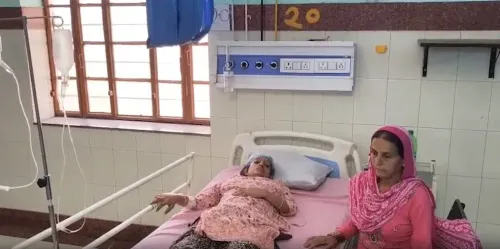
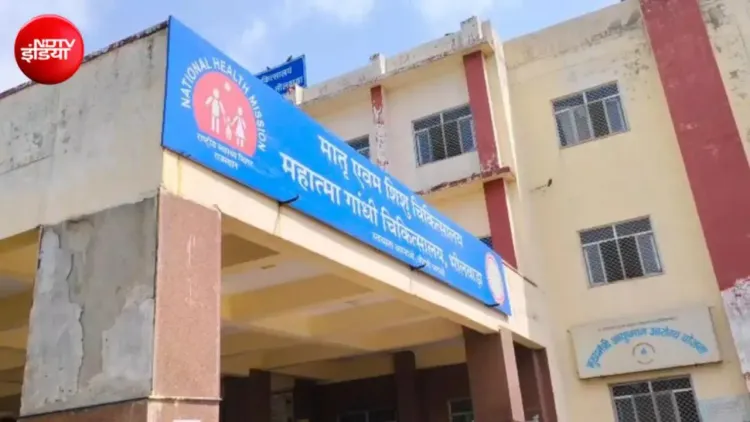
Bhilwara hospital maternal deaths rise to 7 in July after two more new mothers die
Synopsis
Seven new mothers are now dead at a single government hospital in Bhilwara in one month — and both of the latest victims had normal deliveries with no high-risk flags. That detail is the most damning: Rajasthan's maternal death crisis is not confined to identifiable at-risk pregnancies, exposing a systemic failure in post-delivery emergency care.
Key Takeaways
Seven maternal deaths have been recorded at Mahatma Gandhi Hospital, Bhilwara in July 2025 , including two on Wednesday night .
Both latest victims — Sugna Mohan Bairwa (22) and Rani Bhura Banjara (18) — had normal deliveries and were not classified as high-risk pregnancies.
Sugna's haemoglobin fell from 10 g/dL to 1.8 g/dL due to severe postpartum haemorrhage; Rani deteriorated too rapidly for emergency surgery.
An official inquiry has been ordered by CMHO Dr Sanjeev Sharma to examine treatment records and causes of death.
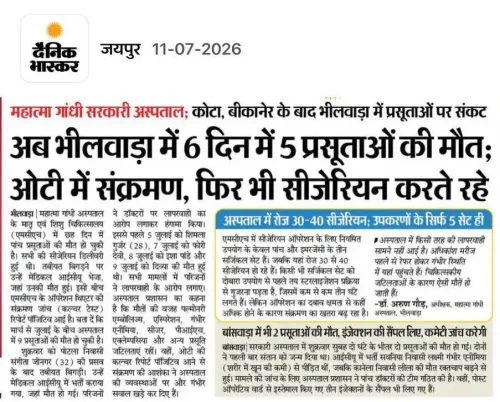
Rajasthan has seen a broader pattern: 5 deaths in Kota (May) , 2 deaths in Bikaner (June) , and 2 deaths in Banswara (July) in addition to the Bhilwara toll.
A district screening drive found 500 of 2,210 pregnant women (about 23% ) to be high-risk — yet several deaths involved women not flagged by that system.
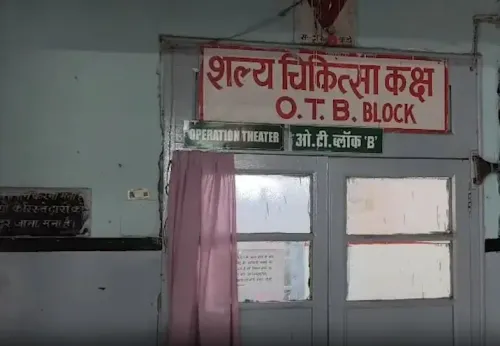
Two more new mothers died at Mahatma Gandhi Hospital (MGH), Bhilwara, on late Wednesday night, pushing the total number of maternal deaths at the district's largest government facility to seven in July alone. Both women had undergone normal deliveries and were not flagged as high-risk pregnancies, yet succumbed to severe postpartum haemorrhage — a pattern now repeating with alarming frequency across Rajasthan.
Who the Victims Were
The first victim, Sugna Mohan Bairwa (22), a resident of Kotri, was referred to MGH from Shahpura after her blood pressure dropped sharply following a normal delivery at a smaller facility. She was admitted to the Intensive Care Unit (ICU), where she later died. Principal Medical Officer Dr Arun Gaur confirmed that Sugna suffered excessive postpartum haemorrhage, with her haemoglobin crashing from 10 g/dL to 1.8 g/dL — a near-total blood loss that proved fatal.
The second victim, Rani Bhura Banjara (18), a resident of Patel Nagar in Bhilwara city, delivered normally at MGH itself. According to doctors, she developed sudden, severe postpartum bleeding so rapidly that neither medication nor the surgical fallback — a hysterectomy — could be performed in time to save her life.
What Hospital Authorities Said
Chief Medical and Health Officer (CMHO) Dr Sanjeev Sharma stated that neither woman had been identified as high-risk during antenatal care and that both developed unexpected complications after delivery. He confirmed that an inquiry has been initiated to determine why the deaths occurred despite the availability of post-delivery monitoring and emergency treatment at the facility. Investigators will examine medical histories, sonography reports, treatment records, and the precise causes of death.
The Screening Gap
During a recent week-long screening drive across Bhilwara district, health officials examined 2,210 pregnant women, of whom 500 — roughly 23 per cent — were identified as high-risk. Risk factors included severe anaemia, hypertension, diabetes, heart and kidney diseases, previous caesarean deliveries, twin pregnancies, and other complications. Notably, officials acknowledged that several of the recent maternal deaths involved women who had not been classified as high-risk, raising questions about whether current screening protocols can detect all vulnerable cases before complications arise.
A Widening Pattern Across Rajasthan
The Bhilwara deaths are not isolated. In May, five women died after childbirth at a government hospital in Kota. In June, six women developed kidney failure following caesarean sections in Bikaner, with two subsequently dying during treatment. In July, in addition to the seven deaths in Bhilwara, two more women died during treatment in Banswara. The clustering of incidents across multiple districts within weeks of each other has intensified concerns over the systemic management of postpartum complications and emergency obstetric care in Rajasthan's public health infrastructure.
With an official inquiry now under way and no immediate policy response announced, the pressure on the state's health administration to account for the recurring failures is set to grow.
Point of View
But the harder question is structural: if normal-delivery patients are dying of haemorrhage faster than surgical teams can respond, the failure lies in post-delivery monitoring protocols, staffing ratios, and blood-bank readiness, not individual clinical decisions. Rajasthan's string of incidents across Kota, Bikaner, Banswara, and now Bhilwara within three months suggests a state-wide gap in emergency obstetric care — one that record-keeping reviews alone will not close.
NationPress
31 Jul 2026
Frequently Asked Questions
How many women have died at Mahatma Gandhi Hospital Bhilwara in July 2025?
Seven new mothers have died at Mahatma Gandhi Hospital in Bhilwara during July 2025, with the two latest deaths occurring on Wednesday night. All fatalities involved postpartum complications at the district's largest government hospital.
What caused the deaths of the two women who died on Wednesday night?
Both women died from severe postpartum haemorrhage following normal deliveries. In the first case, Sugna Mohan Bairwa's haemoglobin dropped from 10 g/dL to 1.8 g/dL; in the second, Rani Bhura Banjara's condition deteriorated so rapidly that emergency surgery could not be performed in time.
Were the victims considered high-risk pregnancies?
No. According to CMHO Dr Sanjeev Sharma, neither woman had been identified as high-risk during antenatal care. Both developed unexpected complications after delivery, which is a key concern now under investigation.
What action has the Rajasthan government taken after these deaths?
An official inquiry has been initiated by the Chief Medical and Health Officer to examine the patients' medical histories, sonography reports, treatment records, and exact causes of death. No broader policy response has been announced as yet.
Is this part of a larger maternal health crisis in Rajasthan?
Yes. Beyond Bhilwara's seven deaths in July, Rajasthan has recorded five maternal deaths in Kota in May, two deaths in Bikaner in June following post-caesarean kidney failure, and two more deaths in Banswara in July. The pattern points to systemic gaps in emergency obstetric care across the state's public hospitals.