Rajnath Singh Attends Defence Investiture Ceremony 2026 Phase-1
Synopsis
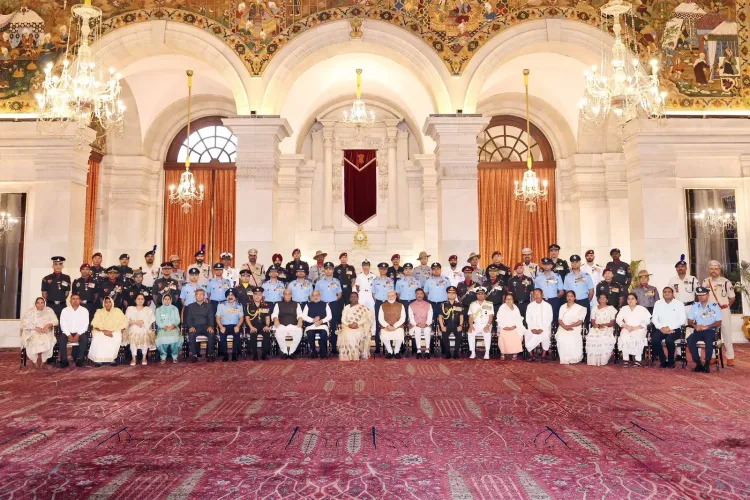
Union Defence Minister Rajnath Singh attended the Defence Investiture Ceremony-2026 Phase-1 on June 8, where the President of India conferred Gallantry Awards on Armed Forces and CAPF personnel. Singh praised their courage, dedication, and sacrifice as the highest ideals of national service.
Key Takeaways
Union Defence Minister Rajnath Singh attended the Defence Investiture Ceremony-2026 (Phase-1) on June 8, 2026 .
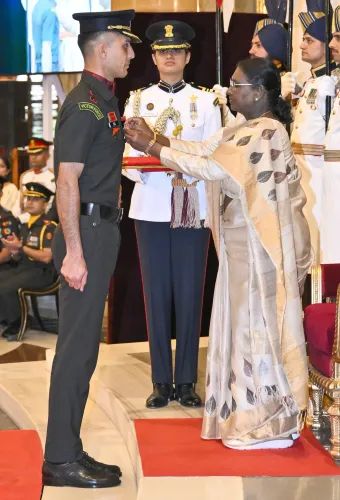
The President of India , as Supreme Commander of the Armed Forces, personally presented the Gallantry Awards at the ceremony.
Awardees included personnel from the Indian Armed Forces (Army, Navy, Air Force) and the Central Armed Police Forces .
India's gallantry awards — including the Param Vir Chakra , Mahavir Chakra , and Ashoka Chakra — were instituted in 1950 .
The ceremony is conducted in multiple phases; Phase-2 recipients are yet to be announced.
Singh described the awardees' acts of valour as 'inspiring every citizen' and a reflection of the highest ideals of duty and patriotism.
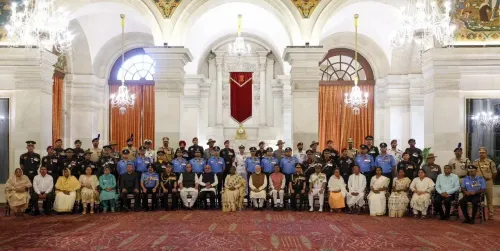
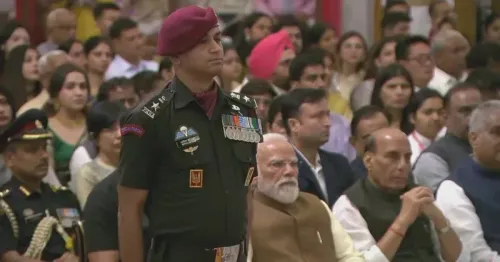
Union Defence Minister Rajnath Singh attended the Defence Investiture Ceremony-2026 (Phase-1) on Monday, June 8, 2026, where the President of India presented Gallantry Awards to personnel from the Indian Armed Forces and the Central Armed Police Forces (CAPF). The ceremony marked a formal national recognition of extraordinary acts of courage and sacrifice by the country's security forces.
Context
Taking to X after the ceremony, Rajnath Singh wrote that 'India will always be grateful to our Armed Forces and the Central Armed Police Forces personnel whose extraordinary courage, unwavering dedication and supreme sacrifice exemplify the highest ideals of service to the nation.' He added that 'their acts of valour in the face of adversity embody the finest traditions of duty and patriotism, inspiring every citizen.'
The Defence Investiture Ceremony is a periodic formal event at which the President of India, as the constitutional Supreme Commander of the Armed Forces, personally confers gallantry and distinguished service awards. It is conducted in multiple phases to honour recipients across the three services and the CAPF.
Policy Backdrop
India's gallantry awards — including the Param Vir Chakra, the Mahavir Chakra, and the Ashoka Chakra — were instituted by the Government of India in 1950 to recognise both wartime and peacetime valour. The awards span a hierarchy from the highest battlefield honour to recognitions for distinguished service and bravery in the face of the enemy.
The Central Armed Police Forces, which include the BSF, CRPF, ITBP, and SSB, operate under the Ministry of Home Affairs and are deployed on India's borders and in internal security roles. Their inclusion alongside the tri-services in investiture ceremonies reflects the government's recognition of paramilitary contributions to national security.
Stakeholders and Impact
The ceremony directly honours the awardees and their families, providing formal national recognition for acts of bravery that often occur in difficult operational conditions — including deployments along the Line of Actual Control (LAC) and the Line of Control (LoC). For the families of personnel who made the supreme sacrifice, the investiture represents the state's public acknowledgement of their loss and service.
Broader civil society and the citizenry are also stakeholders: investiture ceremonies serve as a public reminder of the human cost and commitment behind India's national security posture. Rajnath Singh's post, framing the awardees as an inspiration to 'every citizen,' underscores the government's intent to keep this recognition visible in public discourse.
What's Next
With Phase-1 of the Defence Investiture Ceremony-2026 now concluded, attention will turn to the announcement of Phase-2 recipients. Observers will also watch for any accompanying policy statements from the Ministry of Defence on welfare measures, rehabilitation support, or modernisation initiatives linked to the awardees' units. The ceremony reinforces an established protocol that successive governments have maintained as a cornerstone of civil-military relations in India.
Point of View
And Rajnath Singh's attendance and public tribute signal the government's continued emphasis on honouring the human dimension of national security. Coming amid sustained deployments along the LAC and LoC, the ceremony carries operational resonance beyond its ceremonial function. Singh's framing of the awardees as an inspiration to 'every citizen' is consistent with the BJP-led government's broader political messaging around nationalism and military valour. The focus on both Armed Forces and CAPF personnel reflects an inclusive approach to recognising the full spectrum of India's security apparatus.
NationPress
20 Sept 2026
Frequently Asked Questions
What is the Defence Investiture Ceremony in India?
The Defence Investiture Ceremony is a formal periodic event at which the President of India, as Supreme Commander of the Armed Forces, personally presents gallantry and distinguished service awards to personnel from the Indian Armed Forces and Central Armed Police Forces. It is held in multiple phases each year.
What gallantry awards are given at the Defence Investiture Ceremony?
Awards presented include the Param Vir Chakra, Mahavir Chakra, Vir Chakra, Ashoka Chakra, Kirti Chakra, and Shaurya Chakra, among others. These were instituted by the Government of India in 1950 to recognise both wartime and peacetime acts of bravery.
Who attended the Defence Investiture Ceremony 2026 Phase-1?
Union Defence Minister Rajnath Singh attended the Defence Investiture Ceremony-2026 Phase-1, at which the President of India presented Gallantry Awards to Armed Forces and CAPF personnel.
What are the Central Armed Police Forces (CAPF) in India?
The Central Armed Police Forces include the BSF, CRPF, ITBP, and SSB, among others. They operate under the Ministry of Home Affairs and are deployed on India's borders and in internal security roles, and their personnel are also eligible for gallantry awards.
When will the Defence Investiture Ceremony 2026 Phase-2 be held?
The date for Phase-2 of the Defence Investiture Ceremony-2026 has not been announced yet. Phase-2 will honour a further set of recipients from the Armed Forces and CAPF.