Rajnath Singh calls for structured civil-military joint training
Synopsis
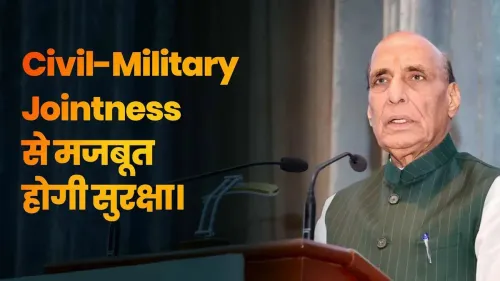
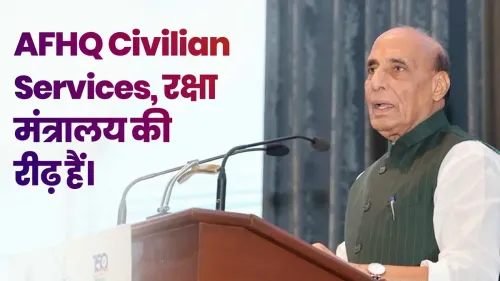
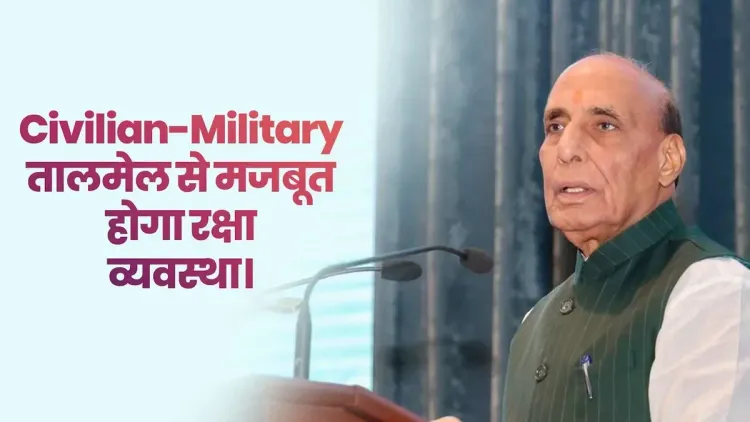
Union Defence Minister Rajnath Singh on 3 August 2026 called structured cross-exposure and joint training between civilian and military officers 'the need of the hour', arguing shared learning would build better decision-making and a stronger Defence Ecosystem — extending the civil-military integration drive launched with the CDS and DMA in 2019-20.
Key Takeaways
Rajnath Singh on 3 August 2026 called for structured cross-exposure and joint training between civilian and military officers.
He argued such integration would produce better decision-making and a more empowered Defence Ecosystem .
The Department of Military Affairs was created in December 2019 and the first Chief of Defence Staff appointed in January 2020 to drive civil-military integration.
The Kargil Review Committee (1999) first formally identified civil-military coordination gaps as a structural weakness.
The call aligns with ongoing work on integrated theatre commands , which require civilians and military officers to plan jointly.
Operational pressures on India's northern and western borders give the reform direct strategic urgency.
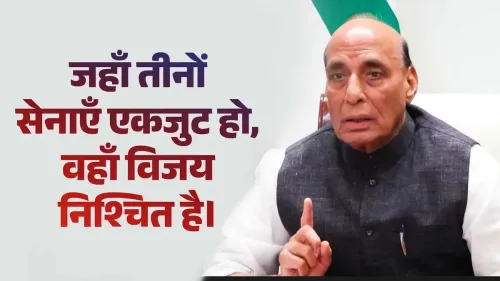
The walls between uniform and bureaucracy have long been one of Indian defence's most stubborn fault lines. On Monday, 3 August 2026, Union Defence Minister Rajnath Singh moved to address that directly, calling for structured cross-exposure and joint training between civilian and military officers — framing it not as a nice-to-have, but as a necessity of the times.
In his post, the Minister wrote: 'Civilian aur Military Officers ke beech structured cross-exposure aur joint training ko badhawa dena samay ki aavashyakta hai' — 'Promoting structured cross-exposure and joint training between civilian and military officers is the need of the hour. By learning from each other's experiences and expertise, we can build better decision-making and a more empowered Defence Ecosystem.'
The gap that has persisted since Kargil
This is not a new diagnosis. The Kargil Review Committee of 1999 flagged civil-military coordination gaps as a structural weakness in India's higher defence management. The subsequent Group of Ministers report echoed those concerns. Yet for two decades, the silos largely held.
The most consequential structural response came in December 2019, when the Department of Military Affairs (DMA) was carved out within the Ministry of Defence — placing military affairs under a dedicated department headed by the Chief of Defence Staff (CDS). The first CDS was appointed in January 2020, tasked with driving inter-service jointness and acting as the principal military adviser to the government. The DMA was designed precisely to bridge the civilian-military divide at the institutional level.
Why training is the next frontier
Institutional architecture is one thing; human integration is another. Officers who have never worked alongside each other — never shared a classroom, a planning exercise, or a field exposure — tend to default to institutional instinct when the pressure is on. Singh's call for joint training targets exactly this gap: the informal knowledge, mutual trust, and shared vocabulary that no org chart can mandate.
The push also fits within the broader momentum toward integrated theatre commands, a project that demands civilian administrators and military commanders think and plan as one. Theatre command structures collapse the traditional service-specific chains — and they only work if the people inside them already understand each other's constraints, cultures, and capabilities.
What a stronger Defence Ecosystem would look like
Singh's phrase 'Defence Ecosystem' is deliberate. It signals a systems-level ambition — not just better coordination on a specific file, but a permanent shift in how Ministry of Defence civilians and armed forces officers relate across the career lifecycle. Joint training curricula, rotational postings, and shared exercises between the services and the MoD bureaucracy are among the mechanisms that could give that ambition operational form.
The operational pressures along India's northern and western borders make this more than a management reform. Faster, better-integrated decision-making at the top of the defence hierarchy is a direct force-multiplier — and it starts with people who actually understand each other's world.
The architecture has been built. Now comes the harder work: building the people to fill it.
Point of View
' he is building political and institutional pressure for a curriculum and posting reform that has been discussed but not codified. It also telegraphs that the theatre command project — which stalled partly because of civil-military trust deficits — remains a live priority. The timing, well into his second consecutive term as Defence Minister, suggests the political capital exists to push harder on integration than any predecessor has.
NationPress
17 Sept 2026
Frequently Asked Questions
What did Rajnath Singh say about civil-military training?
Rajnath Singh said that promoting structured cross-exposure and joint training between civilian and military officers is 'the need of the hour,' arguing it would improve decision-making and build a stronger Defence Ecosystem.
What is the Department of Military Affairs in India?
The Department of Military Affairs is a department within the Ministry of Defence created in December 2019. It is headed by the Chief of Defence Staff and was established to integrate military affairs more closely with civilian defence administration.
What is the Chief of Defence Staff and when was it created?
The Chief of Defence Staff is a four-star military position established in India in early 2020. The first CDS was appointed in January 2020 to promote jointness among the three armed services and serve as the principal military adviser to the government.
Why is civil-military coordination important for India's defence?
Civil-military coordination is critical for faster, better-integrated decision-making at the top of India's defence hierarchy, especially given operational pressures on the northern and western borders and the ongoing push to establish integrated theatre commands.
What are India's integrated theatre commands?
Integrated theatre commands are proposed joint structures that would place army, navy, and air force assets under unified geographic commands, requiring civilian administrators and military commanders to plan and operate together — a model that depends heavily on prior civil-military familiarity.