Rajnath Singh hails Army-NDRF rescue of 300+ Gulmarg tourists
Synopsis
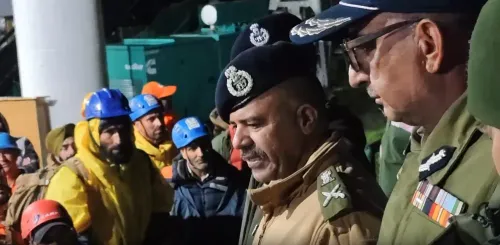
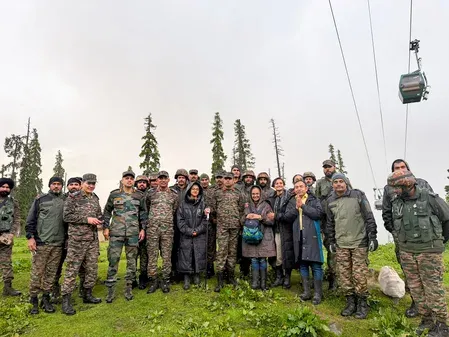
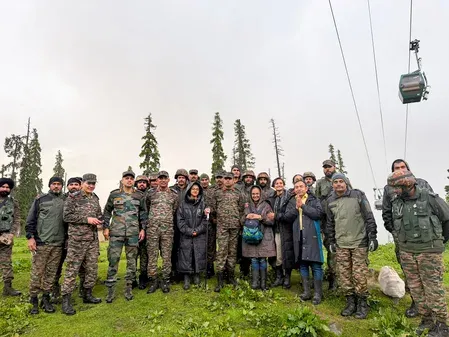
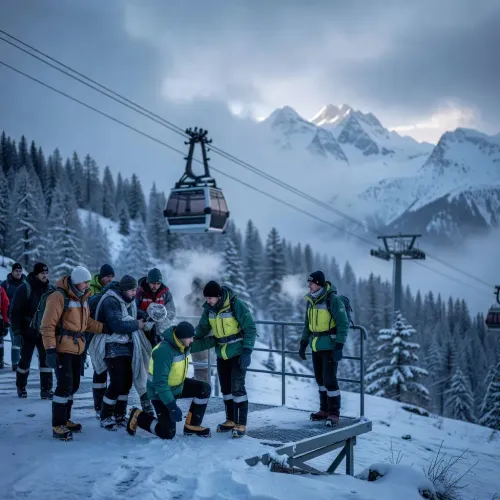
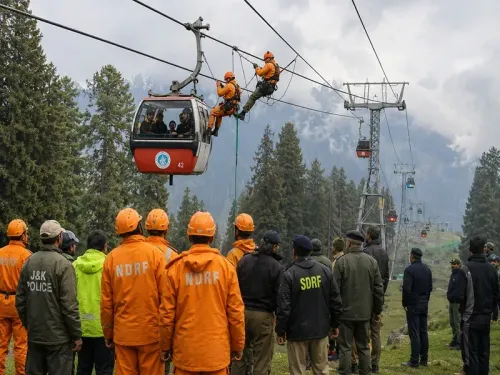
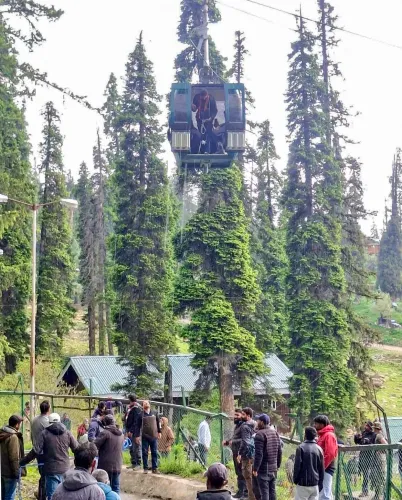
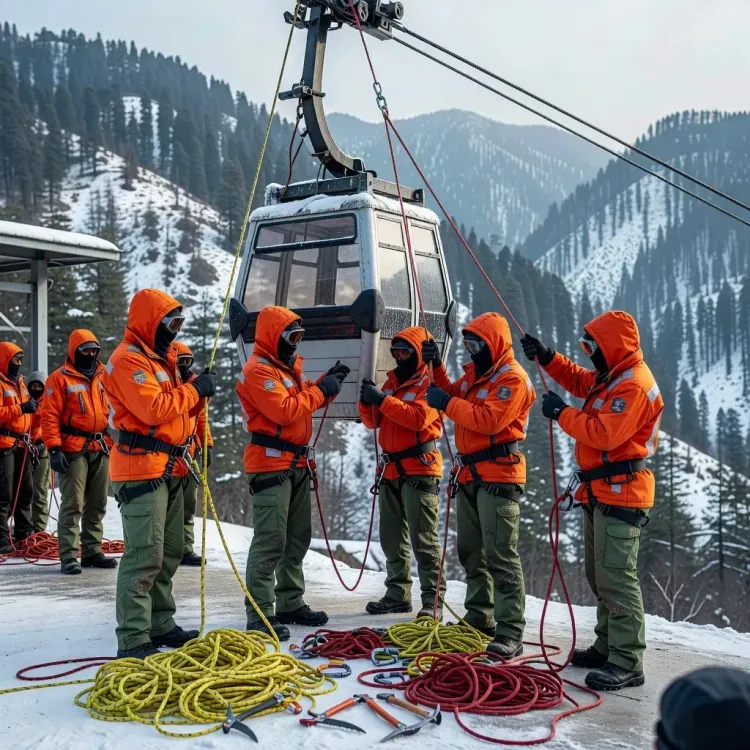
Union Defence Minister Rajnath Singh on 26 May 2026 lauded a joint Indian Army, NDRF, SDRF, J&K Police and civil administration team for rescuing more than 300 tourists stranded in cable cars at Gulmarg, calling the operation a demonstration of 'swiftness, professionalism, courage, and coordination.'
Key Takeaways
More than 300 tourists stranded in cable cars at Gulmarg , Jammu and Kashmir, were successfully rescued.
The joint rescue team comprised the Indian Army , J&K Police , NDRF , SDRF , and the civil administration .
Union Defence Minister Rajnath Singh publicly commended all personnel involved, calling the response swift and professional.
The operation was conducted under the multi-agency framework established by the Disaster Management Act of 2005 .
Gulmarg 's high-altitude gondola system is one of Asia's highest and is prone to weather-related disruptions affecting tourists.
An after-action review of cable-car safety protocols and SOPs for the 2026-27 winter season is expected to follow.
Union Defence Minister Rajnath Singh on Tuesday, 26 May 2026, praised a joint multi-agency operation that successfully rescued more than 300 tourists stranded in cable cars at Gulmarg, the high-altitude resort in Jammu and Kashmir. The minister commended the 'swiftness, professionalism, courage, and coordination' of the disaster response teams involved in the challenging operation.
Context
Gulmarg, located in Baramulla district of Jammu and Kashmir, is home to one of Asia's highest gondola cable-car systems and draws large volumes of tourists year-round. Its high-altitude terrain makes it vulnerable to sudden weather disruptions, and stranded-visitor incidents have historically required rapid multi-agency intervention. The scale of this rescue — involving more than 300 tourists — underscores the operational demands placed on emergency services at such locations.
Rajnath Singh stated that a joint rescue team comprising the Indian Army, J&K Police, NDRF, SDRF, and the civil administration carried out the operation 'with efficiency and resolve.' He added that 'the nation acknowledges and applauds the dedication and service of all personnel involved.'
Policy Backdrop
The multi-agency response framework activated in Gulmarg is rooted in the Disaster Management Act of 2005, which created the National Disaster Management Authority (NDMA) and mandated coordinated responses involving the armed forces, the National Disaster Response Force (NDRF), and state-level units. The NDRF, established in 2006, was specifically designed to provide specialised search-and-rescue capability across India's diverse and often difficult terrain.
The Indian Army has a long record of civilian rescue operations in Jammu and Kashmir, most notably during the devastating 2014 Srinagar floods, which set a benchmark for civil-military coordination in the region. State Disaster Response Force (SDRF) units raised by Jammu and Kashmir supplement NDRF capacity at the local level, enabling faster initial response in remote or high-altitude zones.
Stakeholders and Impact
The most immediate beneficiaries are the more than 300 tourists who were stranded, many of whom are likely to have been visitors from across India and potentially abroad, given Gulmarg's profile as a major domestic and international tourism destination. The swift resolution of the incident also protects the broader tourism economy of Jammu and Kashmir, which has seen significant investment and visitor growth following the region's reorganisation as a Union Territory.
For the agencies involved — the Indian Army, J&K Police, NDRF, SDRF, and civil administration — the successful operation reinforces the value of joint-command drills and inter-agency communication protocols. The Defence Minister's public acknowledgement also serves to boost the morale of field personnel operating in physically demanding, high-stakes conditions.
What's Next
Attention is likely to turn to a formal after-action review of cable-car safety systems at Gulmarg and the possible framing of updated standard operating procedures for the gondola network ahead of the 2026-27 winter tourism season. Authorities may also examine whether existing passenger-capacity and weather-monitoring protocols are adequate for the volume of visitors the resort currently handles.
Broader scrutiny of high-altitude tourist infrastructure across Jammu and Kashmir and other Himalayan states could follow, as the incident highlights the systemic risks that accompany rapid tourism expansion in terrain where emergency access remains inherently challenging.
Point of View
Police, NDRF, SDRF and civil administration — the minister signals institutional jointness rather than crediting any single service, which is consistent with the Disaster Management Act's whole-of-government design. The post also arrives at a politically sensitive moment for J&K tourism, where any prolonged or mishandled emergency could dent investor and visitor confidence. Longer term, the incident is likely to accelerate scrutiny of high-altitude tourism infrastructure, an issue that has gained urgency as visitor numbers to Himalayan resorts have grown faster than safety systems.
NationPress
10 Oct 2026
Frequently Asked Questions
What happened at Gulmarg cable car on 26 May 2026?
More than 300 tourists were stranded in cable cars at the Gulmarg gondola in Baramulla district, Jammu and Kashmir. A joint team of the Indian Army, J&K Police, NDRF, SDRF and civil administration carried out a rescue operation and successfully brought all of them to safety.
Which agencies were involved in the Gulmarg rescue operation?
The rescue was conducted jointly by the Indian Army, Jammu and Kashmir Police, the National Disaster Response Force (NDRF), the State Disaster Response Force (SDRF), and the J&K civil administration.
What did Rajnath Singh say about the Gulmarg rescue?
Defence Minister Rajnath Singh praised the operation for its 'swiftness, professionalism, courage, and coordination,' and said the nation 'acknowledges and applauds the dedication and service of all personnel involved.'
What is the NDRF and why was it deployed at Gulmarg?
The National Disaster Response Force (NDRF) is a specialised search-and-rescue body created under the Disaster Management Act of 2006. It was deployed at Gulmarg because the high-altitude cable-car stranding required specialised rescue capability beyond routine police or civil administration capacity.
Is Gulmarg cable car safe for tourists?
The Gulmarg gondola is one of Asia's highest cable-car systems and generally operates under established safety protocols. However, the high-altitude location makes it vulnerable to sudden weather disruptions, and the May 2026 incident is expected to prompt a review of safety standards and standard operating procedures ahead of the next winter season.