Amit Shah hails rescue of 300 tourists stranded in Gulmarg cable cars
Synopsis
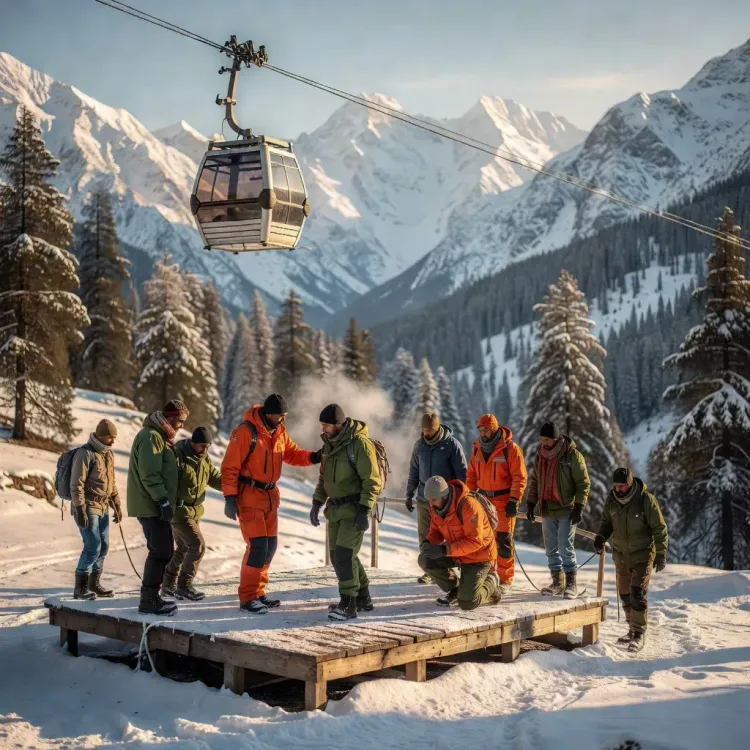
Union Home Minister Amit Shah on 25 May 2026 commended disaster response teams — NDRF, SDRF, Indian Army and local police — for rescuing 300 tourists stranded mid-air across 65 cable cars in Gulmarg, Kashmir, in a six-hour operation, calling it a display of national valour and skill.
Key Takeaways
300 tourists were rescued from 65 cable cars stranded mid-air at Gulmarg, Jammu and Kashmir .
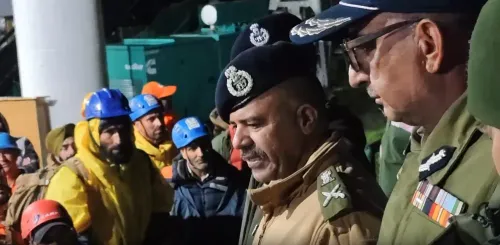
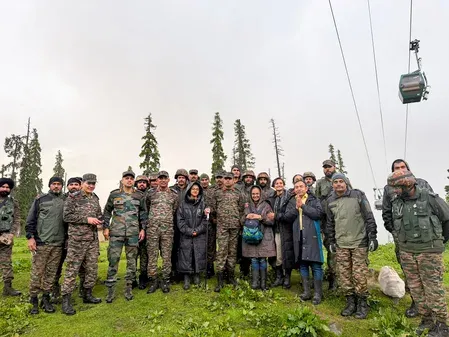
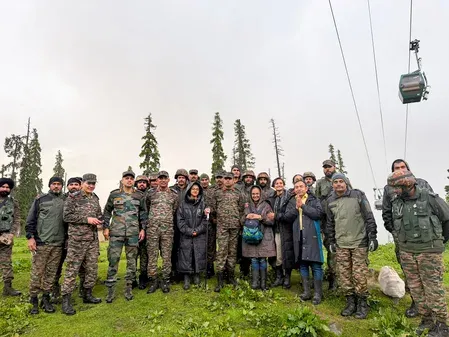
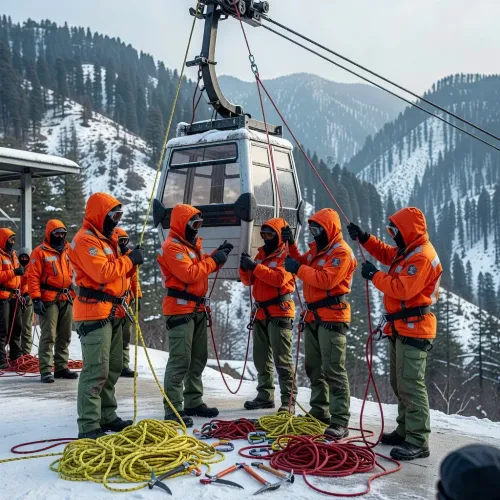
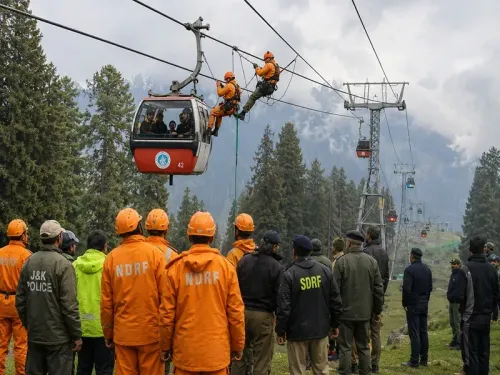
The rescue operation was completed in six hours by a joint team of NDRF, SDRF, Indian Army, and local police .
Union Home Minister Amit Shah publicly commended the forces on 25 May 2026 .
The operation drew on India's integrated disaster response framework established under the Disaster Management Act, 2005 .
The successful rescue reinforces tourist confidence in Jammu and Kashmir's safety infrastructure.
Experts and policymakers are expected to revisit cable car safety standards and NDRF deployment in Himalayan tourist zones.
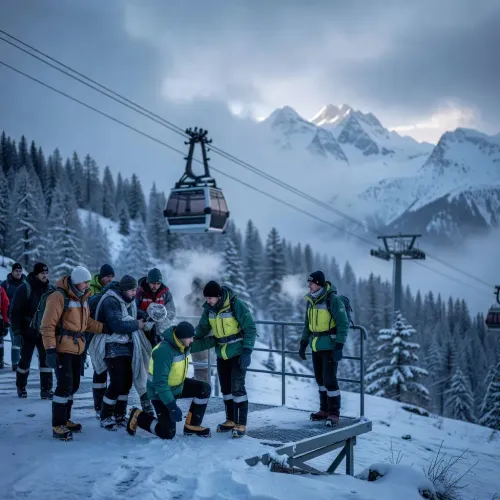
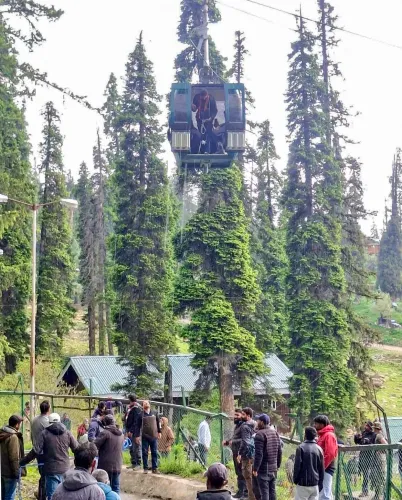
Union Home Minister Amit Shah on Monday, 25 May 2026, commended India's disaster response forces for successfully rescuing 300 tourists who were stranded mid-air in cable cars at Gulmarg, Jammu and Kashmir, calling the operation a demonstration of valour and skill.
Posting on X, Shah wrote: 'Applause to India's disaster response forces for safely rescuing 300 tourists stranded mid-air in cable cars in Gulmarg, Kashmir. The disaster response teams comprising the SDRF, NDRF, Army personnel, local police, and the administration swung into action and rescued all the passengers stranded in 65 cable cars through a six-hour-long operation. The nation salutes the forces for their valour and skill.'
Context
Gulmarg is one of India's premier high-altitude tourist destinations, known internationally for its gondola cable car system — among the highest and longest in Asia. The cable cars ferry thousands of tourists and skiers up the Apharwat ridge every season, making them a critical piece of the region's adventure tourism infrastructure. An emergency of this scale, with passengers suspended mid-air across 65 cars, required immediate multi-agency coordination in challenging mountain terrain.
The rescue operation, completed within six hours, brought all stranded passengers safely to the ground without reported casualties, drawing praise from the Union Home Minister who oversees both the National Disaster Response Force (NDRF) and broader internal security coordination.
Policy Backdrop
India's integrated disaster response framework draws its statutory foundation from the Disaster Management Act, 2005, which established the National Disaster Management Authority (NDMA) and gave legal backing to the NDRF and state-level SDRF units. The Act mandates coordinated response protocols between central and state agencies, a framework visibly activated in the Gulmarg operation.
The NDRF, which functions under the Ministry of Home Affairs, has built specialised capacity for high-altitude and technically complex rescues. The Jammu and Kashmir SDRF complements this with local terrain knowledge and rapid first-response capability. The Indian Army, with a permanent presence across Jammu and Kashmir, routinely integrates into civilian disaster operations under established civil-military protocols.
Stakeholders and Impact
The most immediate beneficiaries are the 300 tourists rescued, many of whom would have faced serious risk from exposure at high altitude, particularly if the situation had extended into nightfall. The Gulmarg tourism economy, a significant revenue driver for Jammu and Kashmir, also stands to benefit from a demonstration that emergency response infrastructure is robust and reliable.
For the J&K administration, the operation reinforces confidence in the region's safety systems at a time when the government has been actively promoting tourism in the Union Territory. Broader stakeholders include adventure tourism operators and the hospitality sector, whose business depends directly on tourist confidence in safety standards.
What's Next
The successful rescue is likely to prompt a review of cable car safety protocols and emergency preparedness standards at Gulmarg and comparable high-altitude tourist sites across Himachal Pradesh, Uttarakhand, and other Himalayan states. Discussions around expanding NDRF battalion presence in mountain tourism zones are expected to gain momentum ahead of the next monsoon preparedness cycle and budget consultations. The incident also underlines the case for mandatory real-time monitoring systems and faster evacuation mechanisms at high-footfall aerial installations.
Point of View
A Union Territory under direct central administration. By naming all four responding agencies — NDRF, SDRF, Army, and local police — the statement underscores the integrated, whole-of-government model the Home Ministry has championed since the reorganisation of J&K in 2019. The incident also quietly highlights the vulnerability of high-altitude tourism infrastructure and may accelerate long-pending conversations on mandatory safety audits for aerial ropeway systems. Politically, a swift and successful rescue in a high-visibility tourist destination allows the government to reinforce its narrative of improved governance and security normalcy in the region.
NationPress
9 Oct 2026
Frequently Asked Questions
What happened at Gulmarg cable car on 25 May 2026?
Around 300 tourists were stranded mid-air across 65 cable cars at Gulmarg, Kashmir. A joint team of NDRF, SDRF, Indian Army, and local police conducted a six-hour rescue operation and brought all passengers safely to the ground.
Who rescued the tourists stranded in Gulmarg cable cars?
The rescue was carried out by a combined team comprising the National Disaster Response Force (NDRF), the Jammu and Kashmir State Disaster Response Force (SDRF), Indian Army personnel, and local police, coordinated by the district administration.
How long did the Gulmarg cable car rescue operation take?
The operation lasted six hours, after which all 300 tourists stranded across 65 cable cars were successfully rescued.
What did Amit Shah say about the Gulmarg rescue?
Union Home Minister Amit Shah praised the disaster response teams on X, saying 'the nation salutes the forces for their valour and skill' after they rescued all passengers stranded mid-air in the cable cars.
What is the NDRF and who controls it?
The National Disaster Response Force (NDRF) is a specialised federal agency created under the Disaster Management Act, 2005, and operates under the Union Ministry of Home Affairs, which is headed by Amit Shah.