Rajnath Singh hails Gulmarg cable-car rescue of 300 tourists
Synopsis
Union Defence Minister Rajnath Singh on 26 May 2026 commended a swift joint rescue by the Indian Army, NDRF, SDRF, J&K Police and civil administration that freed 300 tourists stranded in cable cars at Gulmarg, Jammu and Kashmir, calling it a testament to India's disaster-response professionalism.
Key Takeaways
300 tourists stranded in cable cars at Gulmarg , Jammu and Kashmir were successfully rescued.
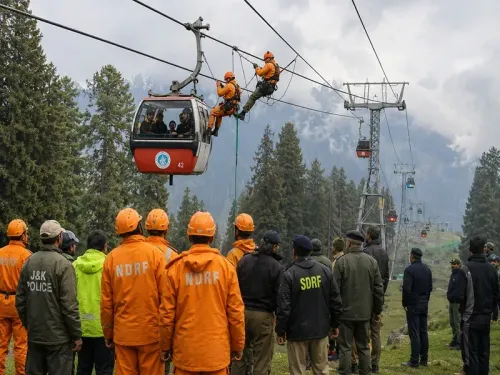
The rescue was carried out by a joint team of the Indian Army , J&K Police , NDRF , SDRF , and the civil administration .
Union Defence Minister Rajnath Singh publicly commended the operation on 26 May 2026 .
The operation highlights India's integrated disaster-response architecture under the Disaster Management Act, 2005 .
Gulmarg hosts one of Asia's highest gondola systems and is a flagship tourism asset of Jammu and Kashmir .
A review of cable-car safety standards and infrastructure upgrades is expected to follow.
Union Defence Minister Rajnath Singh on Tuesday, 26 May 2026, commended the successful rescue of 300 tourists stranded in cable cars at Gulmarg, Jammu and Kashmir, praising the joint operation as a demonstration of India's disaster-response capabilities.
What happened
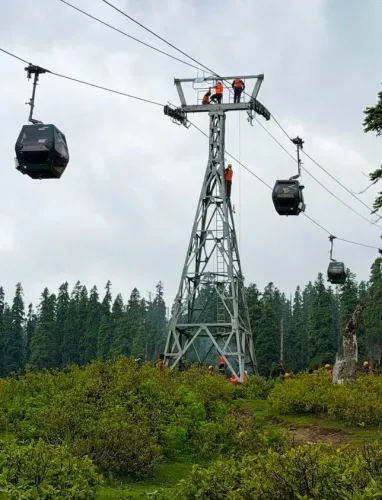
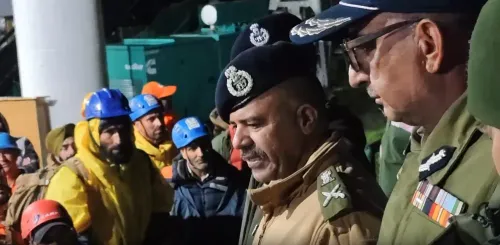
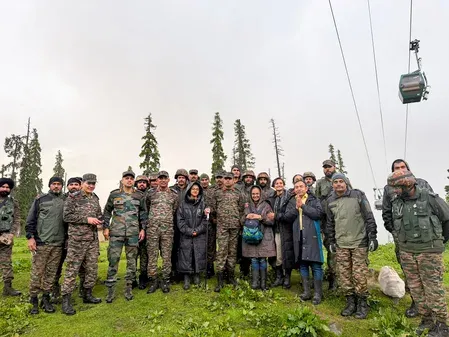
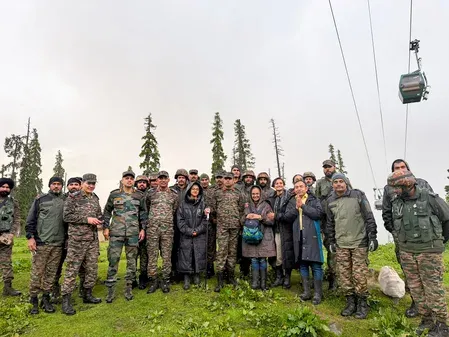
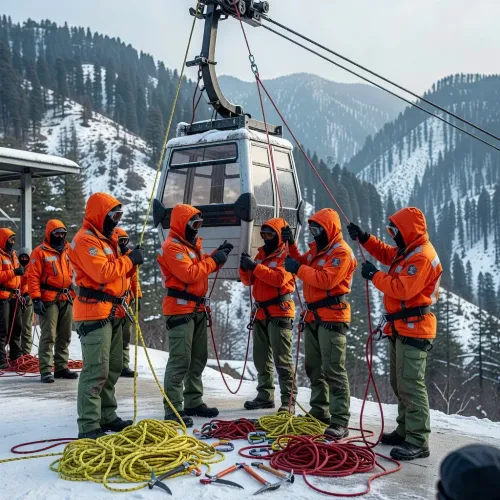
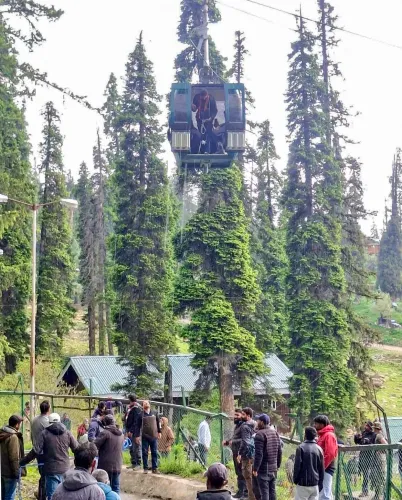
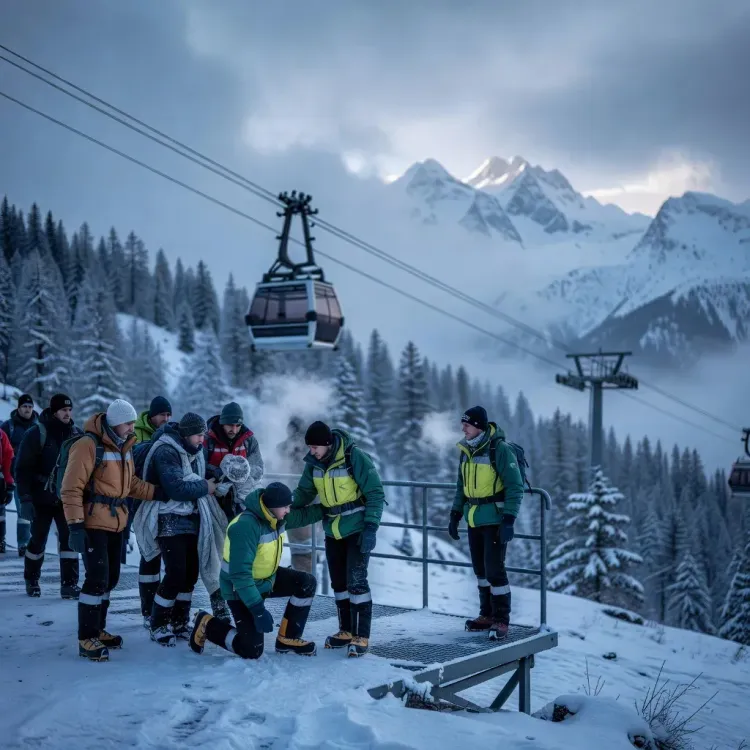
Tourists were left stranded in cable cars at Gulmarg, the high-altitude ski and tourism destination in Baramulla district of Jammu and Kashmir. A joint rescue team comprising the Indian Army, J&K Police, the National Disaster Response Force (NDRF), the State Disaster Response Force (SDRF), and the civil administration mobilised swiftly to bring all stranded persons to safety.
Rajnath Singh stated that the operation 'reflects the swiftness, professionalism, courage, and coordination of our disaster response agencies,' and said 'the nation acknowledges and applauds the dedication and service of all personnel involved.'
Context
Gulmarg is home to one of Asia's highest gondola cable-car systems and draws hundreds of thousands of tourists annually. The terrain — steep, snow-prone, and remote — makes any infrastructure failure a potentially life-threatening emergency requiring specialised response.
Jammu and Kashmir has seen repeated weather-related incidents affecting tourism infrastructure, making the union territory a frequent theatre for India's integrated disaster-response architecture. The Disaster Management Act, 2005 formalised multi-agency coordination for precisely such scenarios.
Policy backdrop
The National Disaster Response Force, constituted in 2006 under the Ministry of Home Affairs, was designed for specialised response to natural and man-made disasters and has since conducted numerous joint operations with the Indian Army across Himalayan states. State Disaster Response Forces were established as a complementary tier, enabling faster local mobilisation.
India's integrated model — combining armed forces, central and state disaster forces, and civil administration — has been tested repeatedly in mountain and border regions. Successive governments have emphasised inter-agency drills and rapid mobilisation protocols in high-altitude tourist zones.
Stakeholders and impact
The 300 tourists rescued were the immediate beneficiaries of the operation. The broader tourism ecosystem in Jammu and Kashmir, which has seen sustained recovery in visitor numbers in recent years, depends heavily on confidence in the safety of its signature attractions, including the Gulmarg Gondola.
Personnel from at least five agencies — the Indian Army, J&K Police, NDRF, SDRF, and civil administration — were involved, underlining the depth of coordination required for high-altitude rescue missions.
What's next
The successful rescue is likely to prompt a review by the National Disaster Management Authority (NDMA) and the Jammu and Kashmir administration of safety protocols at cable-car installations and other tourist-site infrastructure. Parliamentary scrutiny of tourist-site safety standards in the union territory and possible announcements on cable-car infrastructure upgrades are among the developments to watch in the coming weeks.
Point of View
Reinforcing the government's narrative of a capable and responsive security-civil apparatus in Jammu and Kashmir. The public commendation of the Indian Army alongside civilian disaster forces signals a deliberate effort to project seamless civil-military cooperation in the union territory. Coming at a time when the J&K administration is working to sustain tourism momentum, the minister's intervention also serves to reassure visitors about the safety ecosystem at flagship destinations. The episode adds to a pattern of the Defence Ministry visibly endorsing disaster-relief missions as part of a broader 'nation-building' role for the armed forces.
NationPress
26 Sept 2026
Frequently Asked Questions
What happened at Gulmarg cable car on 26 May 2026?
Around 300 tourists were stranded in cable cars at Gulmarg in Jammu and Kashmir. A joint rescue team of the Indian Army, J&K Police, NDRF, SDRF, and civil administration carried out the rescue operation successfully.
What did Rajnath Singh say about the Gulmarg rescue?
Rajnath Singh said the rescue 'reflects the swiftness, professionalism, courage, and coordination of our disaster response agencies' and stated that 'the nation acknowledges and applauds the dedication and service of all personnel involved.'
Which agencies were involved in the Gulmarg cable car rescue?
The rescue involved five agencies: the Indian Army, J&K Police, the National Disaster Response Force (NDRF), the State Disaster Response Force (SDRF), and the civil administration of Jammu and Kashmir.
What is the NDRF and what role does it play in rescues?
The National Disaster Response Force is a central force under the Ministry of Home Affairs, constituted in 2006 for specialised response to natural and man-made disasters. It regularly conducts joint operations with the Indian Army in Himalayan and other difficult terrains.
Is the Gulmarg gondola safe for tourists?
The Gulmarg Gondola is one of Asia's highest cable-car systems and a flagship tourist attraction. The May 2026 incident is expected to prompt a review of safety protocols and possible infrastructure upgrades by the NDMA and the J&K administration.