Rajnath Singh Reviews IAF Graduation Parade at Dundigal
Synopsis
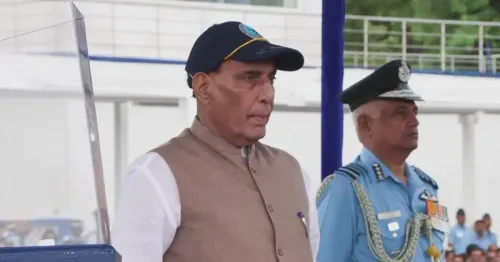
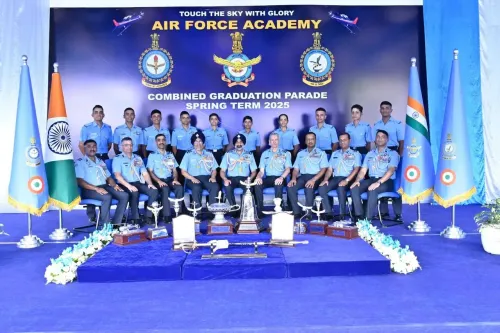
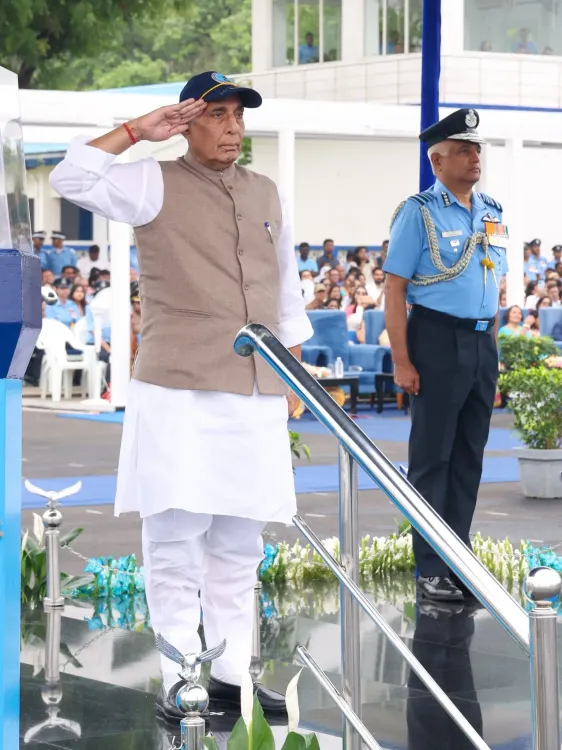
Defence Minister Rajnath Singh reviewed the 217 Course graduation parade at Air Force Academy, Dundigal on June 13, commissioning 231 flight cadets — including the historic first batch of women NDA entrants — as Indian Air Force officers, urging them to embrace futuristic technology and stay vigilant to emerging threats.
Key Takeaways
231 Flight Cadets of the 217 Course were commissioned as officers in the Indian Air Force at Air Force Academy, Dundigal on June 13, 2026 .
The batch included the first-ever women cadets to enter through the National Defence Academy route, a pathway opened in 2021 .
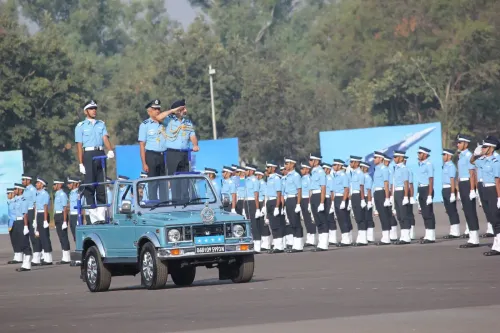
Union Defence Minister Rajnath Singh presided over and reviewed the Combined Graduation Parade.
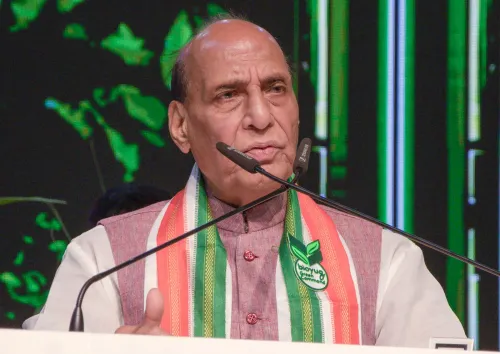
Singh urged the new officers to remain vigilant to emerging challenges and to 'adapt, adopt and modify futuristic tech and strategies.' The commissioning marks a landmark in India's defence inclusion policy, placing women on equal institutional footing with male officers from the start of their careers.
The IAF continues to modernise with advanced aircraft, unmanned systems, and networked warfare concepts amid heightened border security concerns.
Union Defence Minister Rajnath Singh on Saturday, June 13, 2026, reviewed the Combined Graduation Parade of the 217 Course at the Air Force Academy, Dundigal, Telangana, where 231 Flight Cadets were commissioned as officers into the Indian Air Force — including the first batch of women who entered through the National Defence Academy.
Context
The commissioning parade at Dundigal marked a historic milestone: for the first time, women cadets who joined the NDA through the pathway opened in 2021 completed their full training arc and were formally commissioned as IAF officers. The government's 2021 decision to admit women to the NDA — a tri-service academy at Khadakwasla, Pune — was a landmark shift in India's defence policy, extending permanent commission opportunities to women across the three services.
Rajnath Singh, presiding over the parade, urged the newly commissioned officers to 'remain vigilant to emerging challenges and re-calibrate responses as the situation demands.' He also asked them to 'adapt, adopt and modify the futuristic tech and strategies to gain decisive edge.'
Policy Backdrop
The IAF has been progressively integrating women into its officer cadre over the past decade, initially in non-combat streams before expanding to fighter and transport roles. The NDA route now creates a structured pipeline that places women on an equal institutional footing with their male counterparts from the very beginning of their military career.
Simultaneously, the Indian Air Force has been accelerating the induction of advanced aircraft, unmanned aerial systems, and networked warfare concepts — a modernisation push shaped significantly by the security environment along India's northern and western borders. The Defence Minister's call to embrace 'futuristic tech and strategies' aligns directly with this ongoing transformation of the IAF's operational doctrine.
Stakeholders and Impact
The 231 newly commissioned officers will join an IAF that is simultaneously managing fleet upgrades, absorbing new platforms, and recalibrating tactical doctrines. For the women officers from the first NDA batch, the commissioning represents the culmination of a journey that began with a Supreme Court-backed policy change and continued through years of rigorous tri-service training.
Defence planners and gender-policy advocates will both watch this cohort closely — the former for operational integration benchmarks, the latter for the pace at which women officers are assigned to frontline and combat roles. The Air Force Academy at Dundigal has historically been the finishing institution that shapes the professional identity of IAF officers, making each passing-out parade a statement of institutional values as much as a military ceremony.
What's Next
Subsequent NDA and Air Force Academy batches will be closely tracked to assess the pace of women's induction and any further policy evolution on combat-role deployment. Parliamentary discussions on broader defence service reforms are also expected to reference this milestone as evidence of incremental but tangible progress.
The Defence Minister's emphasis on technological adaptability signals that future commissioning cohorts will face an IAF increasingly defined by artificial intelligence-enabled systems, drone warfare, and multi-domain operations — demanding not just flying proficiency but a broader strategic and technological literacy from its officers from day one.
Point of View
Not competing, goals. The IAF's modernisation arc, under sustained budgetary and geopolitical pressure, makes the quality and orientation of each commissioning cohort a strategic variable. How quickly these new officers, including the women from the NDA batch, are integrated into frontline roles will be the real test of whether the policy shift has translated into structural change.
NationPress
20 Sept 2026
Frequently Asked Questions
Who reviewed the Air Force Academy graduation parade at Dundigal in June 2026?
Union Defence Minister Rajnath Singh reviewed the Combined Graduation Parade of the 217 Course at the Air Force Academy, Dundigal, Telangana, on June 13, 2026.
How many cadets were commissioned at the IAF Dundigal parade in 2026?
231 Flight Cadets were commissioned as officers in the Indian Air Force at the 217 Course graduation parade at Dundigal.
Who are the first women NDA cadets commissioned into the IAF?
The 217 Course at Air Force Academy, Dundigal included the first batch of women who entered through the National Defence Academy route, which was opened to women in 2021 following a government policy change.
When did India allow women to join the NDA?
The Government of India announced in 2021 that women would be admitted to the National Defence Academy for the first time, opening the pathway for permanent commission in the armed forces including the IAF.
What did Rajnath Singh say at the IAF commissioning parade at Dundigal?
Rajnath Singh urged the newly commissioned officers to remain vigilant to emerging challenges, re-calibrate responses as the situation demands, and to 'adapt, adopt and modify futuristic tech and strategies to gain decisive edge.'