Rajnath Singh: AI Can't Replace a Doctor's Compassion
Synopsis
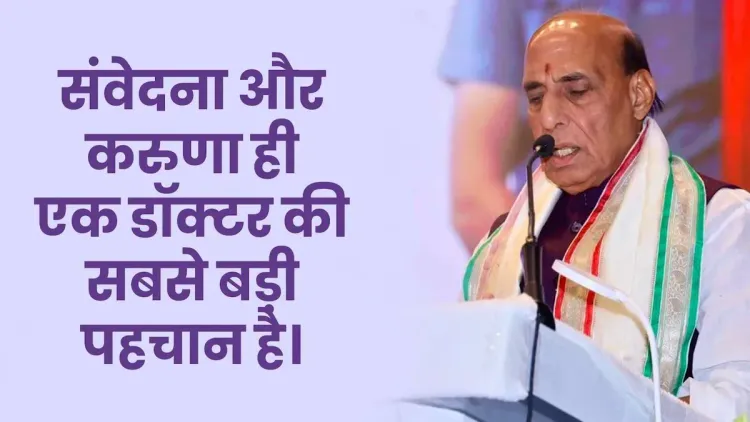
Union Defence Minister Rajnath Singh on 13 July 2026 said AI can enhance medicine but cannot deliver the human reassurance only a compassionate doctor can offer. He urged doctors to make empathy and compassion the foundation of their professional lives, echoing India's responsible AI philosophy.
Key Takeaways
Rajnath Singh posted on 13 July 2026 that AI can make medicine more capable but cannot assure patients that 'everything will be alright.' He said only a 'sensitive and compassionate doctor' can provide that emotional reassurance to patients.
He urged doctors to make empathy and compassion the foundation of their lives and professional practice.
India's National Strategy for AI (#AIforAll) , released in 2018 , already calls for ethical, human-centred AI deployment in healthcare.
The Ministry of Defence oversees a wide network of armed forces hospitals where AI integration is actively advancing.
The remarks may add political momentum to discussions on AI ethics guidelines in both civilian and defence medical training.
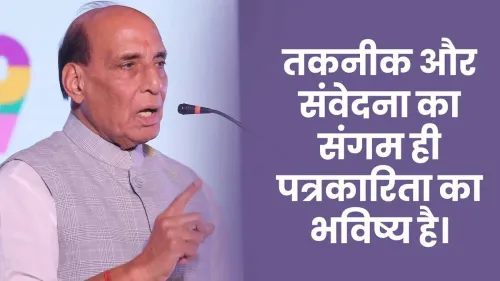
Union Defence Minister Rajnath Singh on Monday, 13 July 2026, weighed in on the expanding role of Artificial Intelligence in medicine, asserting that while AI can make healthcare more capable, it cannot replace the human reassurance that only a compassionate doctor can provide.
Posting in Hindi on X, Singh wrote: 'Artificial Intelligence चिकित्सा को अधिक सक्षम बना सकता है, लेकिन मरीज को यह विश्वास नहीं दिला सकता कि "सब ठीक हो जाएगा।"' — ('Artificial Intelligence can make medicine more capable, but it cannot give the patient the assurance that everything will be alright.') He added that this confidence can only come from a sensitive and compassionate doctor, and urged the medical community to make empathy and compassion the foundation of their lives.
Context
Singh's post arrives as AI-driven tools — ranging from diagnostic imaging algorithms to predictive treatment models — are being adopted at a growing pace across both civilian and defence medical facilities in India. The remark draws a clear line between what technology can optimise and what remains irreducibly human in the doctor-patient relationship. The minister did not reference a specific event or policy announcement, framing his statement as a broader philosophical reflection on medicine and technology.
Policy Backdrop
India has been navigating AI integration in public services since releasing its National Strategy for Artificial Intelligence — branded #AIforAll — in 2018. The strategy explicitly called for ethical and inclusive AI deployment across sectors including healthcare, emphasising that technology must augment rather than displace human judgment. Singh's remarks align closely with this stated government philosophy of responsible AI adoption that preserves human oversight and values. The armed forces, which fall under the Ministry of Defence, also operate an extensive network of hospitals and medical services where AI integration is an active area of modernisation.
Stakeholders and Impact
The post directly addresses India's medical community — doctors, medical students, and healthcare administrators — urging them to treat sensitivity and compassion not as soft skills but as core professional values. For patients, particularly those navigating serious illness, the message reinforces that human connection in clinical care carries therapeutic weight that no algorithm can replicate. The statement is also likely to resonate within defence medical circles, where personnel and their families often rely on armed forces hospitals for care.
What's Next
The intervention by a senior cabinet minister on AI ethics in healthcare may add political weight to ongoing discussions around framing formal guidelines for AI use in medical training curricula — both civilian and defence. Parliamentary conversations on broader AI ethics legislation remain a space to watch, as India moves toward codifying responsible AI norms across sectors. Whether Singh's remarks translate into a specific policy push from the Ministry of Defence for its medical services remains to be seen.
As AI becomes further embedded in diagnostics and patient management, the debate over where machine efficiency ends and human compassion must begin is set to intensify — and ministerial voices entering that debate signal it is no longer confined to academic or medical circles alone.
Point of View
He subordinates it to human values, which is consistent with the government's long-standing 'AI for All' positioning. Coming from the Defence Minister, whose ministry runs one of the country's largest captive healthcare networks, the statement carries institutional weight beyond rhetoric. It also positions the BJP's senior leadership as morally engaged with technology governance, a space increasingly contested in Indian public discourse.
NationPress
13 Jul 2026
Frequently Asked Questions
What did Rajnath Singh say about AI and doctors?
Rajnath Singh said on 13 July 2026 that while AI can make medicine more capable, it cannot give patients the assurance that 'everything will be alright' — only a sensitive and compassionate doctor can do that.
Why is the Defence Minister commenting on healthcare and AI?
The Ministry of Defence oversees a large network of armed forces hospitals across India , making AI in medical services a direct concern for the minister. Singh also appears to be contributing to the broader national conversation on responsible AI adoption.
What is India's policy on AI in healthcare?
India released its National Strategy for Artificial Intelligence (#AIforAll) in 2018 , which calls for ethical and inclusive AI deployment in healthcare, emphasising that technology should augment rather than replace human judgment.
Can AI replace doctors in India?
The Indian government's position, reflected in statements like Rajnath Singh's July 2026 post, is that AI is an efficiency tool and cannot replace the empathy and compassion that human doctors provide to patients.
What does Rajnath Singh's AI statement mean for medical training in India?
Singh's remarks may add political weight to calls for embedding AI ethics and human-centred care values into medical training curricula in both civilian and defence healthcare institutions in India .