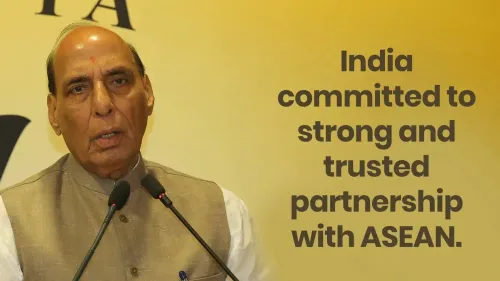
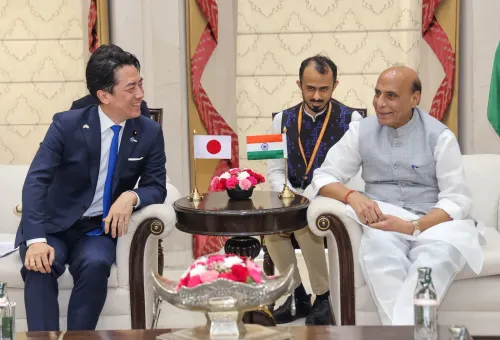
Rajnath Singh: ASEAN Central to India's Indo-Pacific Vision
Synopsis
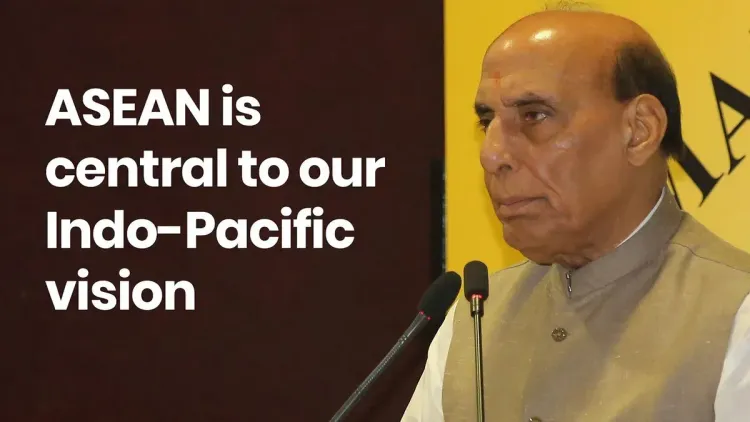
Defence Minister Rajnath Singh on October 14 declared ASEAN central to India's Indo-Pacific vision, invoking the Act East Policy, SAGAR, and MAHASAGAR frameworks as pillars of inclusive, multipolar cooperation with Southeast Asia.
Key Takeaways
Rajnath Singh reaffirmed on October 14, 2026 that ASEAN is central to India's Indo-Pacific vision.
India's engagement rests on three frameworks: Act East Policy (2014), SAGAR (2015), and MAHASAGAR .
Singh emphasised India's commitment to 'inclusive, multipolar cooperation' through ASEAN-led mechanisms.
India has consistently upheld ASEAN centrality at East Asia Summits since 2018 .
The statement comes from the Defence Ministry , signalling the security dimension of Indo-Pacific engagement alongside diplomacy.
Next India-ASEAN Summit and ADMM-Plus meeting will be watched for concrete maritime and connectivity deliverables.
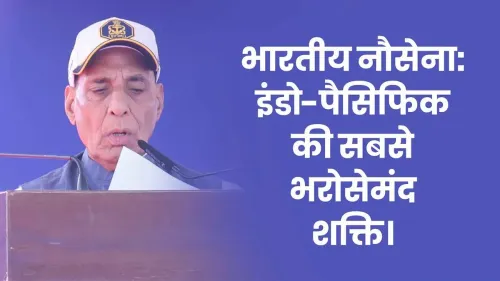
From the Strait of Malacca to the eastern rim of the Indian Ocean, India's strategic gaze is fixed firmly on Southeast Asia — and Union Defence Minister Rajnath Singh made that unmistakable on Wednesday, October 14, 2026, reaffirming that ASEAN sits at the very centre of India's Indo-Pacific vision.
The architecture behind the statement
Singh's post laid out three interlocking pillars of India's regional engagement: the Act East Policy, the SAGAR vision, and the MAHASAGAR framework. Together, they form a layered diplomatic and maritime architecture that successive governments have built over more than a decade. The framing was deliberate — 'equal partner', not patron; 'inclusive', not transactional.
Act East Policy was formally unveiled by Prime Minister Narendra Modi at the 2014 India-ASEAN Summit in Myanmar, replacing the earlier Look East Policy with a more action-oriented, economically and strategically ambitious framework. It signalled that India's relationship with Southeast Asia's ten-nation bloc would be driven by delivery, not just declaration.
SAGAR, MAHASAGAR, and the maritime logic
SAGAR — Security and Growth for All in the Region — was announced by Modi during his 2015 visit to Mauritius, anchoring India's Indian Ocean posture in cooperative security rather than coercive dominance. The MAHASAGAR vision extends that logic outward: Mutual and Holistic Advancement for Security and Growth Across the Regions, widening the circle of maritime cooperation beyond the Indian Ocean littoral.
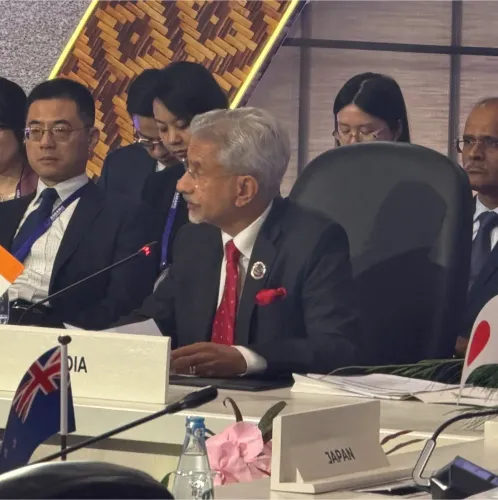
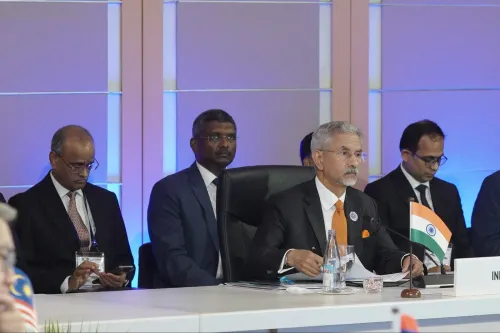
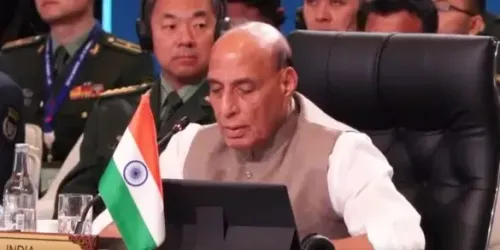
What Singh is articulating is a coherent geometry — not a patchwork of bilateral deals, but a multilateral commitment routed through ASEAN-led mechanisms such as the East Asia Summit, the ASEAN Regional Forum, and the ADMM-Plus defence ministers' platform. India has consistently used these forums since 2018 to assert that ASEAN centrality is non-negotiable in any credible Indo-Pacific framework.
Why a Defence Minister is carrying this message
It is worth noting that this statement comes from the Defence Ministry, not the External Affairs Ministry. That choice of voice matters. The Indo-Pacific is no longer only a diplomatic conversation — it is a theatre of naval posture, maritime domain awareness, and defence industry partnership. Singh's articulation of 'open, inclusive' cooperation carries institutional weight precisely because it comes from the minister who oversees India's military engagements with ASEAN states through joint exercises, port calls, and capacity-building programmes.
India's pitch is also a pointed contrast to more zero-sum framings of the region. By invoking 'multipolar cooperation', New Delhi is positioning itself as a stabilising force — one that neither demands alignment nor tolerates exclusion.
With the next India-ASEAN Summit and an ADMM-Plus meeting on the horizon, the question now is whether this vision translates into concrete deliverables on maritime connectivity, joint patrolling frameworks, or defence supply chains — the metrics by which equal partnership is ultimately measured.
Point of View
Not rhetorically reactive — routing ambition through ASEAN-led multilateralism rather than bilateral alignments. The deployment of a Defence Minister, rather than a foreign policy voice, to carry this message underscores that New Delhi views the Indo-Pacific as a security architecture, not merely a trade corridor. Invoking MAHASAGAR alongside SAGAR suggests an effort to project continuity and expanding geographic reach in India's maritime diplomacy. Collectively, the framing of 'equal partner' is a direct counter-narrative to any perception that India's Indo-Pacific vision is merely an adjunct to Western-led frameworks.
NationPress
14 Oct 2026
Frequently Asked Questions
What is India's Act East Policy?
Act East Policy is India's upgraded foreign policy framework launched in 2014 to deepen strategic, economic, and cultural ties with Southeast Asia. It replaced the earlier Look East Policy and was unveiled at the India-ASEAN Summit in Myanmar.
What does SAGAR stand for in Indian foreign policy?
SAGAR stands for 'Security and Growth for All in the Region.' It is India's maritime vision for the Indian Ocean, announced by Prime Minister Modi during his 2015 visit to Mauritius, emphasising cooperative security and shared economic development.
What is the MAHASAGAR vision?
MAHASAGAR stands for 'Mutual and Holistic Advancement for Security and Growth Across the Regions.' It extends India's maritime cooperation framework beyond the Indian Ocean to broader regional engagement.
Why is ASEAN central to India's Indo-Pacific vision?
India views ASEAN as the institutional anchor of a stable, multipolar Indo-Pacific. Through ASEAN-led mechanisms like the East Asia Summit and ADMM-Plus, India pursues maritime security, economic connectivity, and rules-based order without demanding bilateral alignment from partner states.
What is ADMM-Plus and how is India involved?
ADMM-Plus is the ASEAN Defence Ministers' Meeting Plus framework, which includes dialogue partners like India. It is a key platform through which India engages ASEAN states on defence cooperation, maritime security, and humanitarian assistance.