Rajnath Singh: Doctors Strengthen Nation's Human Capital
Synopsis
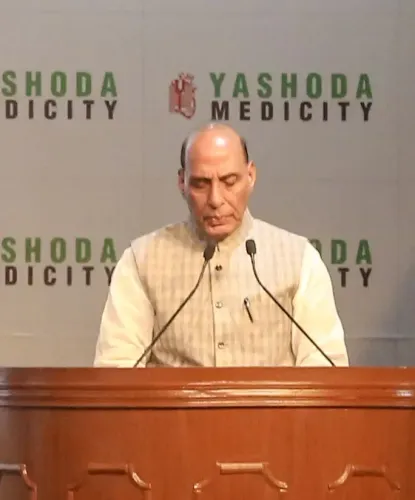
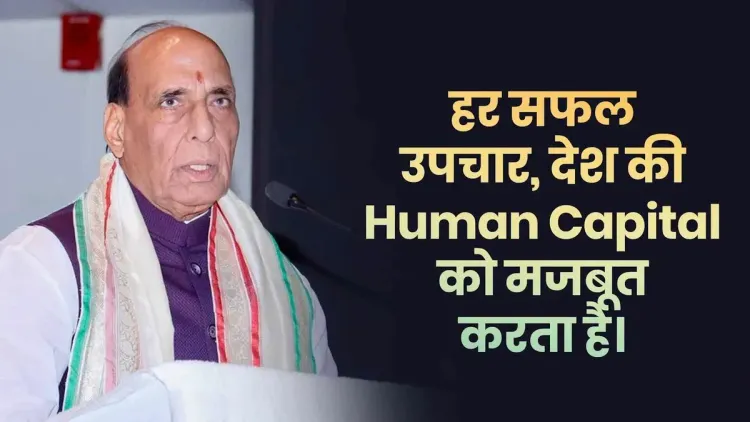
Union Defence Minister Rajnath Singh on July 13, 2026, posted on X that physicians hold a divine status in Indian tradition and that every successful treatment strengthens the nation's human capital. He called on doctors to go beyond clinical care and embody compassion, sensitivity, and a spirit of service.
Key Takeaways
Union Defence Minister Rajnath Singh posted on X on July 13, 2026 , paying tribute to India's medical profession.
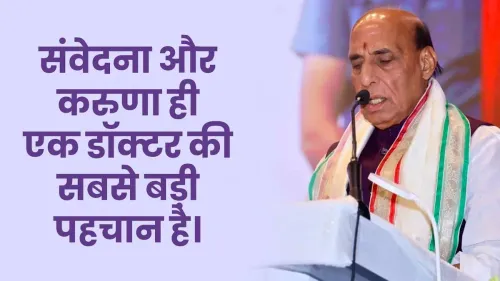
He described doctors as 'a form of God' in Indian tradition — ईश्वर का स्वरूप — and said every successful treatment strengthens the nation's human capital .
Singh distinguished between 'patient care' (clinical treatment) and 'caring for the patient' (compassion, sensitivity, service-mindset), calling the latter medicine's greatest identity.
His remarks align with the National Health Policy 2017 , which linked a strong health workforce to broader economic productivity.
The post comes as Parliament is expected to take up medical education reforms and ethics guidelines in upcoming sessions.
The framing positions the character and ethics of physicians as a matter of national strategic importance, not merely a professional concern.
Union Defence Minister Rajnath Singh on Monday, July 13, 2026, posted a tribute to the medical profession on X, describing doctors as divine figures in Indian tradition and calling on them to combine clinical skill with compassion and a spirit of service.
What Singh Said
Writing in Hindi, the senior BJP leader stated: 'भारतीय परंपरा में चिकित्सक को ईश्वर का स्वरूप माना गया है' ('In Indian tradition, the physician is regarded as a form of God'). He added that every successful treatment does not merely heal one patient but also strengthens the nation's human capital. Singh drew a distinction between 'patient care' — the clinical dimension — and 'caring for the patient', which he described as encompassing compassion, sensitivity, and a service-oriented mindset.
The post, which carried a video, concluded that knowledge paired with empathy and a spirit of service is a doctor's greatest strength, and that this combination is the defining identity of medicine itself.
Context
The framing of healthcare as a pillar of human capital formation is not new to Indian policy discourse. The National Health Policy 2017 explicitly linked a strong health workforce and patient-centred care to broader economic productivity goals. Singh's remarks echo that policy language, situating the individual physician within a national developmental framework rather than limiting the discussion to clinical outcomes alone.
India's medical community has faced recurring public debate over professional ethics, doctor-patient relationships, and the pressures of an overstretched health system. Statements from senior political figures that foreground compassion and service alongside technical competence are read within that ongoing conversation.
Policy Backdrop
The Ayushman Bharat programme, launched in 2018, extended health coverage to hundreds of millions of Indians and placed renewed emphasis on the quality of care delivered at primary and secondary levels. Medical education reforms currently under discussion in Parliament seek to revise curricula to include ethics and communication skills alongside biomedical training.
The National Medical Commission, which replaced the Medical Council of India in 2020, has introduced competency-based medical education frameworks that explicitly incorporate professional values — mirroring the ethos Singh articulated in his post.
Stakeholders and Impact
Singh's message is directed at the medical community but carries resonance for patients, medical students, and health-policy administrators alike. For practising doctors, it is a public acknowledgement of the non-clinical dimensions of their role. For policymakers, it reinforces the argument that investing in medical ethics and soft-skills training is inseparable from building a productive national workforce.
Healthcare advocacy groups have long argued that systemic pressures — high patient loads, infrastructure gaps, and administrative burdens — make it difficult for physicians to deliver the empathetic care that both tradition and policy demand. Singh's framing implicitly places a moral responsibility on the profession while leaving structural questions unaddressed.
What's Next
The Health Ministry is expected to table updates on medical education reforms and ethics guidelines in upcoming parliamentary sessions. Whether Singh's remarks translate into a specific policy initiative from the Defence Ministry's purview — such as reforms in the Armed Forces Medical Services — remains to be seen. The post nonetheless signals that the broader political leadership views the quality and character of the medical profession as a matter of national strategic importance, not merely a sectoral concern.
Point of View
Compassion, the doctor-as-divine) within modern development frameworks. The timing, ahead of expected parliamentary debate on medical education reforms, suggests the political leadership is laying a normative groundwork for those changes. Notably, the message comes from the Defence Minister rather than the Health Minister, signalling that the theme of medical service has cross-portfolio political salience.
NationPress
13 Jul 2026
Frequently Asked Questions
What did Rajnath Singh say about doctors on July 13 2026?
Rajnath Singh posted on X that in Indian tradition doctors are regarded as a form of God, and that every successful treatment strengthens the nation's human capital. He called on physicians to combine knowledge with compassion and a service-oriented mindset.
Why did the Defence Minister comment on healthcare?
Senior political leaders in India routinely comment on cross-sectoral themes. Singh's remarks connect healthcare quality to national human capital — a framing used across ministries — and may also relate to the Armed Forces Medical Services under his portfolio.
What is India's National Health Policy 2017?
The National Health Policy 2017 is the government's guiding framework for the health sector. It stressed strengthening the health workforce, promoting patient-centred care, and explicitly linked healthcare quality to human capital formation and economic productivity.
What are India's medical education reforms about?
Ongoing reforms, overseen by the National Medical Commission, are shifting medical education to a competency-based model that includes professional ethics, communication skills, and patient empathy alongside biomedical sciences.
What is Ayushman Bharat?
Ayushman Bharat, launched in 2018, is India's flagship health coverage programme providing financial protection to hundreds of millions of citizens. It also includes a health and wellness centre component aimed at improving primary care quality across the country.