Rajnath Singh hails India's 300 GW clean energy milestone
Synopsis
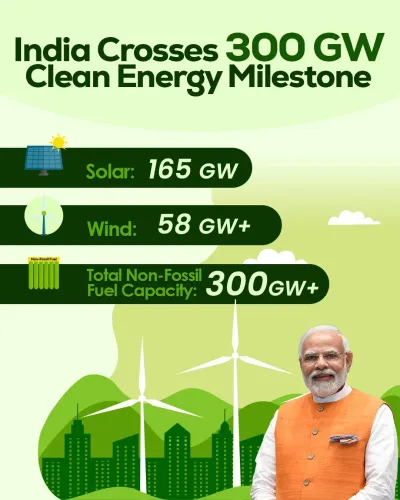
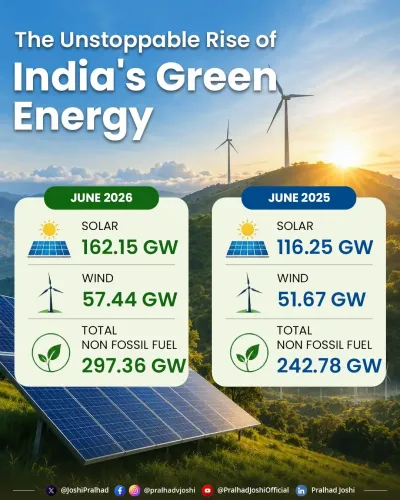
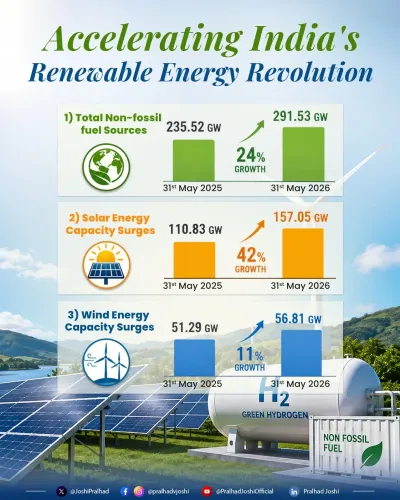
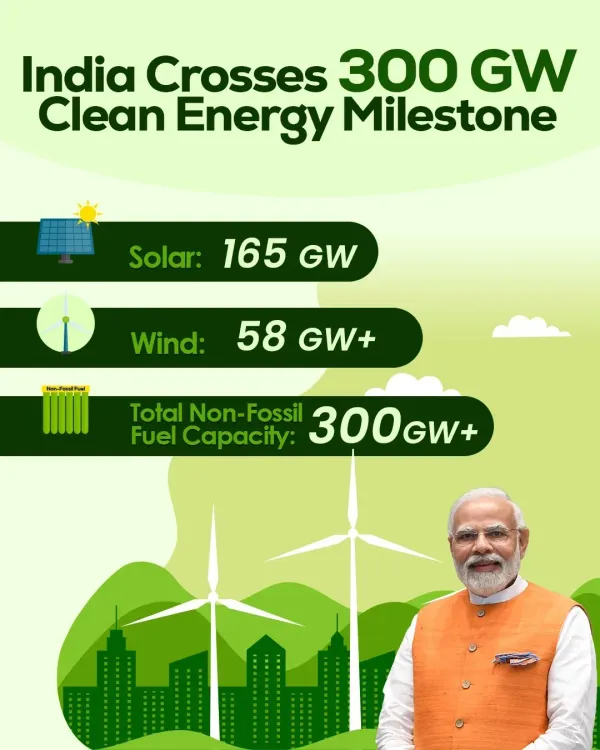
India has hit 300 GW of non-fossil fuel electricity capacity, three-fifths of its 2030 target of 500 GW. Defence Minister Rajnath Singh marked the milestone on 8 August 2026, crediting PM Modi's leadership and tying the achievement to India's Panchamrit climate commitments and Atmanirbhar Bharat vision.
Key Takeaways
India has achieved 300 GW of installed non-fossil fuel-based electricity capacity as of August 2026 .
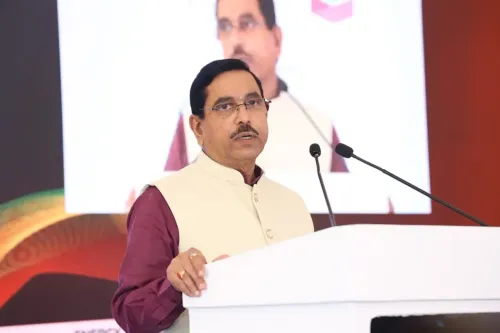
Union Defence Minister Rajnath Singh announced the milestone on X, attributing it to PM Narendra Modi's leadership.
The achievement represents three-fifths of India's 500 GW non-fossil capacity target by 2030 , announced at COP26 in 2021 .
India's 2022 updated NDC commits to 50 percent of cumulative installed power capacity from non-fossil sources by 2030 under the Paris Agreement.
The remaining 200 GW will require parallel scaling of storage, transmission, and grid integration infrastructure.
Singh framed the milestone within India's Atmanirbhar Bharat framework, linking energy self-reliance to economic strength and national security.
India has crossed 300 gigawatts of installed non-fossil fuel-based electricity capacity — a threshold that places the country firmly on the map as one of the world's major clean energy powers. Union Defence Minister Rajnath Singh marked the moment on Saturday, 8 August 2026, calling it 'a landmark moment in India's journey towards a cleaner and more sustainable future.'
300 GW and what it actually means
Non-fossil fuel capacity covers solar, wind, hydro, and nuclear — every kilowatt that does not burn coal, gas, or oil. Reaching 300 GW means three-fifths of the road to India's headline 500 GW non-fossil target by 2030 has been covered. That 500 GW figure was not plucked from thin air: Prime Minister Narendra Modi announced it at COP26 in Glasgow in November 2021 as the centrepiece of India's 'Panchamrit' five-point climate pledge, which also committed the country to net-zero emissions by 2070.
Singh credited the milestone directly to Modi's 'decisive leadership and development-focused vision,' framing it as proof that India is 'turning clean energy ambitions into tangible results.' The language tracks closely with the government's broader Atmanirbhar Bharat (self-reliant India) framework, which treats domestic energy production as both an economic and a strategic imperative.
From the 2010 Solar Mission to a 2026 milestone
The arc here is long. India's formal push into renewables began with the National Solar Mission in 2010, launched under the National Action Plan on Climate Change. Over the following decade, auction-driven procurement, state-level renewable purchase obligations, and international climate financing steadily built out capacity. By the time India updated its Nationally Determined Contributions under the Paris Agreement in 2022, it had locked in a formal target of drawing 50 percent of cumulative installed power capacity from non-fossil sources by 2030. The 300 GW mark is the latest waypoint on that line.
Singh's post frames the achievement in explicitly forward-looking terms — 'a stronger economy, a greener future and a more self-reliant India' — signalling that the government intends to treat this not as a finish line but as a launchpad for the final push to 500 GW.
What the 500 GW sprint still requires
The remaining 200 GW to reach the 2030 target will be the harder half. Grid integration, battery storage, transmission infrastructure, and renewable purchase obligations from power distribution companies all need to scale in parallel with generation capacity. The pace of progress on those enabling layers — more than raw installed capacity numbers — will determine whether India arrives at 2030 on schedule or with asterisks. The next major international climate stocktake will be a natural moment for India to either update its commitments or defend its trajectory.
A Defence Minister amplifying an energy milestone is itself a signal: clean energy is no longer siloed as an environment portfolio issue in New Delhi. It is national security. It is economic sovereignty. And on current evidence, it is becoming one of the BJP government's most insistently repeated proof-points.
Point of View
Delivered by a Defence Minister rather than the Power or Environment Minister, underscores how the Modi government has deliberately repositioned clean energy as a national security and sovereignty issue rather than a purely environmental one. Politically, it gives the BJP a concrete, quantifiable proof-point ahead of the 2030 deadline — harder to dispute than a policy promise. The Panchamrit framework announced at COP26 was India's most ambitious international climate commitment to date, and each milestone crossed strengthens India's hand in global climate diplomacy. The real test, however, will come in how the government addresses the grid, storage, and distribution bottlenecks that could slow the final 200 GW sprint.
NationPress
8 Aug 2026
Frequently Asked Questions
What is India's 300 GW non-fossil fuel electricity milestone?
India has reached 300 gigawatts of installed electricity capacity from non-fossil sources — including solar, wind, hydro, and nuclear — marking a major step toward its 500 GW target by 2030.
What is India's 500 GW renewable energy target and when was it set?
Prime Minister Narendra Modi announced the target of 500 GW of non-fossil fuel electricity capacity by 2030 at the COP26 climate summit in Glasgow in November 2021, as part of India's five-point Panchamrit climate pledge.
What is India's Panchamrit climate commitment?
Panchamrit is India's five-point climate strategy announced at COP26 in 2021, which includes achieving 500 GW non-fossil electricity capacity, sourcing 50 percent of energy from renewables, reducing carbon emissions by one billion tonnes, cutting carbon intensity of GDP by 45 percent — all by 2030 — and reaching net-zero emissions by 2070.
Why did Rajnath Singh, the Defence Minister, comment on an energy milestone?
Senior cabinet ministers across portfolios routinely amplify major national achievements on social media. Singh's post reflects the government's broader framing of energy self-reliance as a national security priority aligned with the Atmanirbhar Bharat vision.
How much more capacity does India need to reach its 2030 clean energy target?
With 300 GW achieved, India needs an additional 200 GW of non-fossil fuel capacity to reach the 500 GW target by 2030, requiring accelerated investment in solar, wind, storage, and grid infrastructure.