Rajnath Singh hails India's gold sweep at IChO 2026
Synopsis
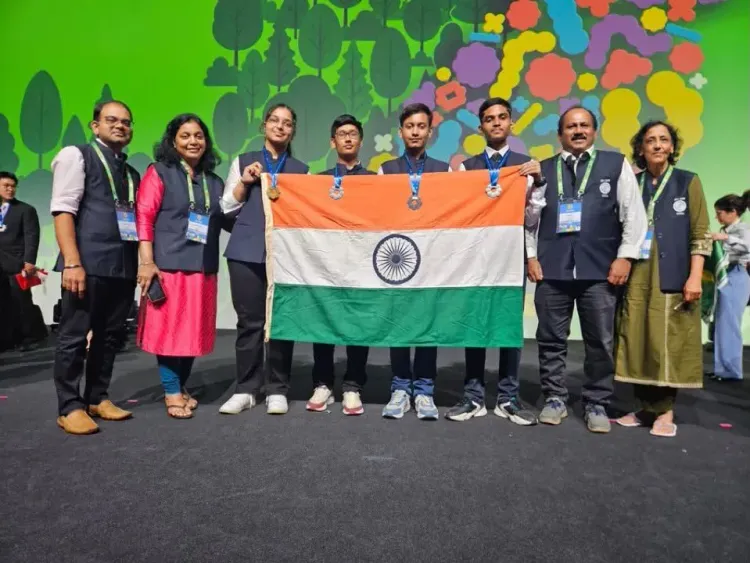
India swept all four Gold medals at the 58th International Chemistry Olympiad in Tashkent and won 1 Gold and 3 Silver at the 37th International Biology Olympiad in Vilnius. Union Defence Minister Rajnath Singh hailed the results as historic, linking them to India's broader push for scientific excellence under NEP 2020.
Key Takeaways
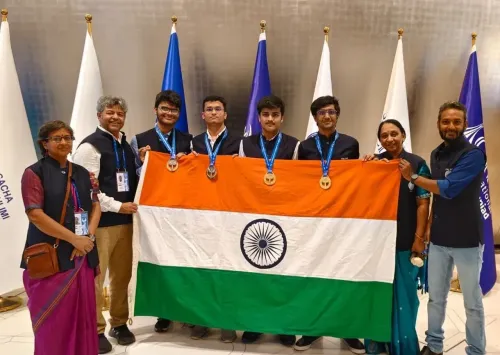
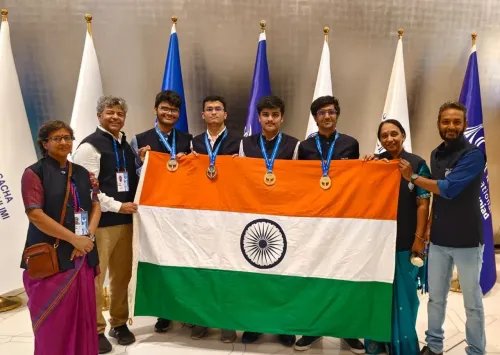
India won all four Gold medals at the 58th IChO 2026 in Tashkent, Uzbekistan , finishing first in the overall medals table.
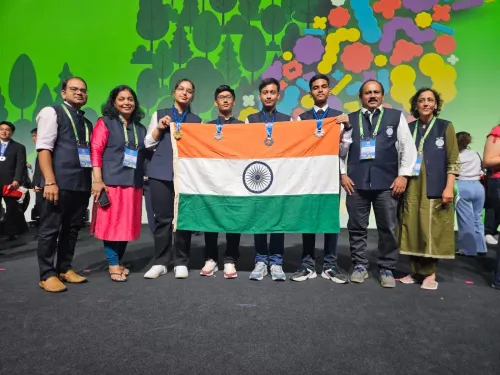
India secured 1 Gold and 3 Silver medals at the 37th IBO 2026 in Vilnius, Lithuania .
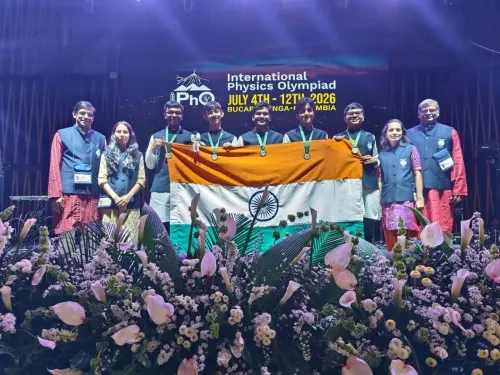
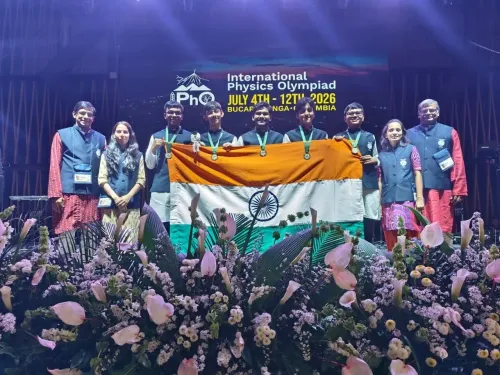
The wins follow India's earlier success at the International Physics Olympiad , completing a sweep across all three core natural-science olympiads in one season.
Union Defence Minister Rajnath Singh publicly congratulated the students on 19 July 2026 , calling the results a matter of 'immense pride.' The achievements are linked to the National Education Policy 2020 and the INSPIRE programme run by the Department of Science and Technology since 2008 .
Focus now shifts to the 2027 International Mathematical Olympiad and olympiad funding under the National Research Foundation .
Union Defence Minister Rajnath Singh on Sunday, 19 July 2026 congratulated Indian students for a historic double triumph at two premier international science competitions — the 58th International Chemistry Olympiad (IChO) 2026 in Tashkent, Uzbekistan, and the 37th International Biology Olympiad (IBO) 2026 in Vilnius, Lithuania, calling the results a matter of 'immense pride for the nation.'
Context
India's contingent at the IChO 2026 delivered what Singh described as a 'historic achievement' — sweeping all four Gold medals on offer and finishing first in the overall medals table. At the IBO 2026, the Indian team secured 1 Gold and 3 Silver medals, an 'impressive' haul in Singh's words. The back-to-back wins follow what the minister called India's 'stellar success' at the International Physics Olympiad, held earlier this season, completing a sweep across the three core natural-science olympiads in a single calendar year.
Singh framed the results as evidence of 'India's growing emphasis on scientific temper, innovation, and quality education,' adding that 'our young minds are setting new global benchmarks and reinforcing India's emergence as a powerhouse of scientific excellence.'
Policy backdrop
The wins arrive against the backdrop of the National Education Policy (NEP) 2020, which explicitly called for strengthening olympiad training and embedding scientific temper across school education. The Department of Science and Technology's INSPIRE programme, running since 2008, has served as a primary pipeline for identifying and mentoring olympiad-level talent from district to national level.
Nodal agencies, including the Homi Bhabha Centre for Science Education (HBCSE), coordinate India's participation in the biology olympiad and run rigorous selection and training camps. The pattern of medals improving steadily over the past decade reflects an expanding training infrastructure that cuts across state education boards and central scientific institutions.
Stakeholders and impact
The immediate beneficiaries are the student competitors themselves, whose gold and silver medals typically open doors to premier research programmes and university admissions globally. For the broader scientific community, the results reinforce the argument for sustained public investment in talent-search programmes and advanced laboratory training at the school level.
For the BJP-led government, the trifecta of physics, chemistry and biology medals in one season provides tangible evidence for its knowledge-economy narrative ahead of a period of heightened focus on India's global competitiveness in STEM. Singh, as a senior cabinet voice, lending public weight to the achievement signals that the government intends to amplify these results in its policy communication.
What's next
Attention will now turn to India's performance at the 2027 International Mathematical Olympiad, which would complete a clean sweep of the four major science-and-mathematics olympiads. Parliamentary discussions on olympiad funding under the newly constituted National Research Foundation are also expected to gain momentum, with these results likely cited as justification for increased allocations. The government's ability to sustain and scale the training ecosystem will be the key test of whether this season's results mark a structural shift or a high-water mark.
Point of View
Coming on the heels of a physics olympiad triumph, gives the ruling coalition a rare trifecta of non-political wins that transcend partisan lines. The framing — 'scientific temper,' 'innovation,' 'quality education' — maps directly onto NEP 2020's stated pillars, suggesting a deliberate effort to credit the policy architecture rather than individual students alone. Whether the government translates this momentum into measurable budget commitments for olympiad infrastructure will be the real indicator of intent.
NationPress
20 Jul 2026
Frequently Asked Questions
Did India win all gold medals at IChO 2026?
Yes. India won all four Gold medals at the 58th International Chemistry Olympiad 2026, held in Tashkent, Uzbekistan, and finished first in the overall medals table.
Where was the International Biology Olympiad 2026 held?
The 37th International Biology Olympiad 2026 was held in Vilnius, Lithuania, where India won 1 Gold and 3 Silver medals.
What did Rajnath Singh say about India's science olympiad results?
Union Defence Minister Rajnath Singh called the results a 'historic achievement' and a matter of 'immense pride,' saying India's young minds are 'setting new global benchmarks.'
Which government programme trains India's olympiad students?
The Homi Bhabha Centre for Science Education (HBCSE) coordinates olympiad training, supported by the Department of Science and Technology's INSPIRE programme, which has been running since 2008.
How does NEP 2020 relate to India's science olympiad success?
The National Education Policy 2020 explicitly prioritised strengthening olympiad training and scientific temper in school education, providing the policy framework under which current training programmes have expanded.