Rajnath Singh: Northeast is foundation of India's security and future

Synopsis
Union Defence Minister Rajnath Singh on 20 June 2026 declared that the Northeast is not merely a part of India's map but the foundation of its history, geography, security, and future, linking the region's importance to India's growing global role.
Key Takeaways
Rajnath Singh on 20 June 2026 stated the Northeast is the 'foundation of India's history, geography, security, and future.' He linked the region's rising importance to India's strengthening role on the global stage.
The Act East Policy , launched in 2014 , formally repositioned the Northeast as India's gateway to ASEAN nations.
The Northeast borders China , Myanmar , Bangladesh , and Bhutan , making it central to India's external strategic posture.
Defence allocations and border connectivity projects in the region have risen steadily since the mid-2010s.
Upcoming BIMSTEC and ASEAN-India sessions on multimodal connectivity will be key indicators of policy follow-through.
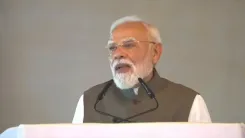
Union Defence Minister Rajnath Singh on Saturday, 20 June 2026, underscored the Northeast's centrality to India's history, geography, security, and future, asserting that its strategic importance has grown further as India strengthens its role on the global stage.
Context
Rajnath Singh posted in Hindi, stating: 'नॉर्थ ईस्ट केवल मैप का एक हिस्सा नहीं, बल्कि भारत के इतिहास, भूगोल, सुरक्षा और भविष्य का आधार है' — 'The Northeast is not merely a part of the map, but the foundation of India's history, geography, security, and future.' He added that as India asserts a stronger role on the world stage, the significance of the Northeast has grown even further. The post was accompanied by a video, signalling a broader communication effort around the region's strategic profile.
Policy Backdrop
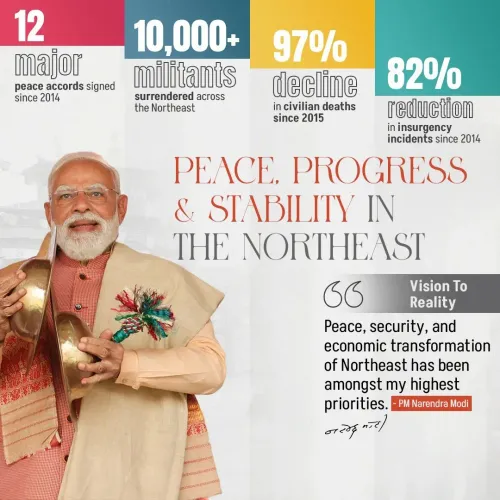
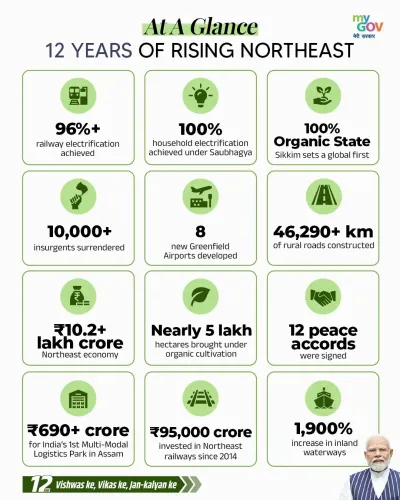
India's Act East Policy, formally unveiled in 2014, repositioned the Northeast as the country's gateway to Southeast Asia, deepening economic, cultural, and security ties with ASEAN nations. The Ministry of Development of North Eastern Region, established in 2001, has since coordinated a dual security-development approach, pairing border infrastructure upgrades with diplomatic outreach. Defence allocations and connectivity projects — spanning roads, tunnels, and rail lines in Arunachal Pradesh, Nagaland, and neighbouring states — have risen steadily through the mid-2010s and beyond.
The eight states of the Northeast share borders with China, Myanmar, Bangladesh, and Bhutan, making the region indispensable to both internal integration and India's external strategic posture. Successive governments have treated enhanced connectivity in this corridor as a counterbalance to expanding Chinese infrastructure influence along the Himalayan frontier.
Stakeholders and Impact
The primary stakeholders are the eight Northeastern states and their border communities, whose economic prospects and security conditions are directly shaped by national policy decisions. Indian defence forces deployed along sensitive frontiers depend on improved road and rail access for rapid mobilisation and logistics. For regional states, the framing of the Northeast as a 'foundation' — rather than a peripheral zone — carries significance for resource allocation, infrastructure investment, and political attention from New Delhi.
Diplomatic partners in ASEAN and the BIMSTEC grouping also watch Northeast connectivity closely, as multimodal land corridors through the region could reshape trade flows across the broader Indo-Pacific. Any acceleration of pending border-road and rail projects would directly affect timelines for realising India's connectivity ambitions.
What's Next
Attention will now turn to the pace of ongoing infrastructure projects in Arunachal Pradesh and Nagaland, and to outcomes at upcoming BIMSTEC or ASEAN-India summit sessions focused on multimodal connectivity. Rajnath Singh's framing of the Northeast as the 'foundation' of India's future suggests that defence and connectivity investment in the region will remain a flagship priority as India seeks to consolidate its global strategic standing.
Point of View
Particularly as Chinese infrastructure activity along the Himalayan frontier intensifies. By tying the region's importance to India's global ambitions, Singh is also building a political case for continued high defence and connectivity spending there. The post, backed by a video, suggests a coordinated messaging push rather than a casual observation.
NationPress
21 Jun 2026
Frequently Asked Questions
What did Rajnath Singh say about Northeast India?
On 20 June 2026 , Rajnath Singh said the Northeast is not merely a part of India's map but the foundation of its history, geography, security, and future, adding that its importance has grown as India strengthens its global role.
Why is Northeast India strategically important for India?
The Northeast borders China , Myanmar , Bangladesh , and Bhutan , making it vital for border security and India's land connectivity to Southeast Asia under the Act East Policy .
What is India's Act East Policy and how does it relate to the Northeast?
The Act East Policy , unveiled in 2014 , positions the Northeast as India's gateway to ASEAN nations, driving investment in border roads, rail links, and diplomatic outreach through the region.
What infrastructure projects are planned in Northeast India?
Ongoing projects include border roads and rail lines in Arunachal Pradesh and Nagaland , aimed at improving defence logistics and enabling multimodal trade connectivity with Southeast Asia .
How does China factor into India's Northeast security strategy?
India has steadily increased defence allocations and connectivity investment in the Northeast partly to counterbalance China 's expanding infrastructure presence along the Himalayan frontier.