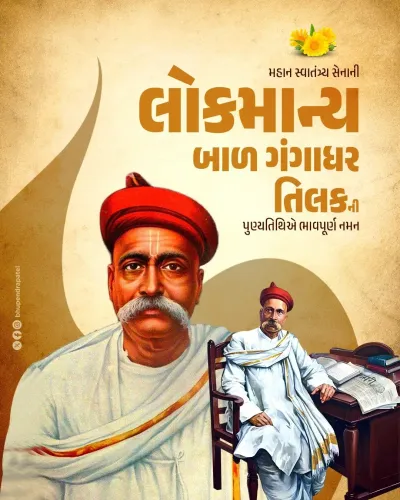
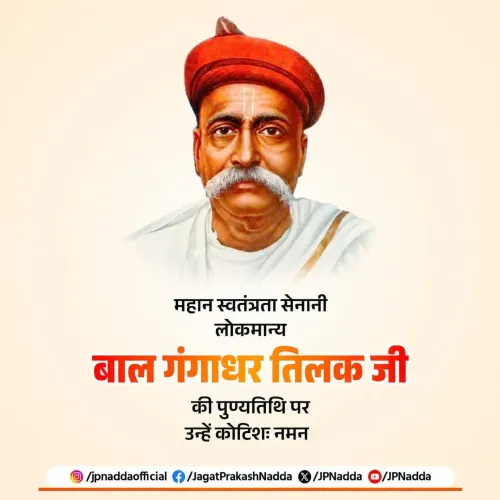
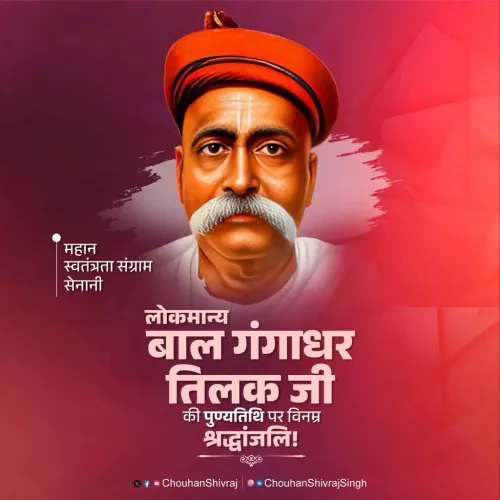
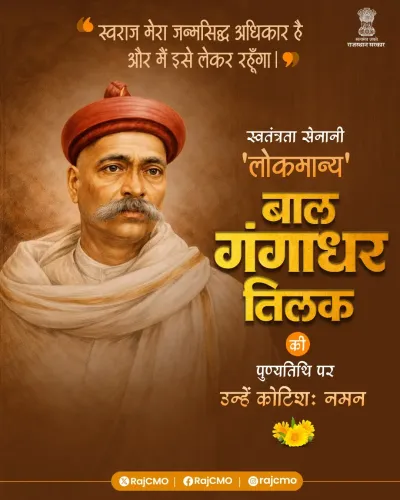
Rajnath Singh pays tribute to Lokmanya Tilak on death anniversary
Synopsis
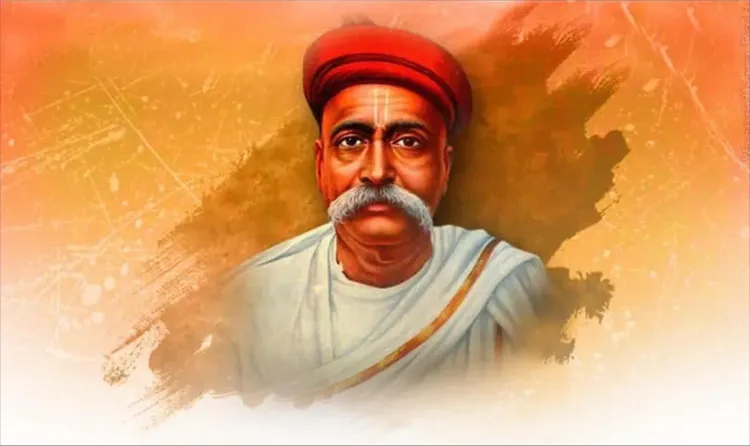
Union Defence Minister Rajnath Singh paid homage to Lokmanya Bal Gangadhar Tilak on his death anniversary, saluting his nationalist journalism through 'Kesari', his philosophical work 'Gita Rahasya', and his use of Ganesh Utsav and Shivaji Jayanti to forge national unity.
Key Takeaways
Union Defence Minister Rajnath Singh paid tribute to Lokmanya Bal Gangadhar Tilak on his punyatithi , observed on 1 August .
Tilak's newspapers 'Mahratta' and 'Kesari' were credited with spreading nationalist consciousness and the idea of swaraj across India.
His book 'Gita Rahasya' , written during imprisonment in Mandalay, reframed karmayoga as a call to national duty.
Tilak popularised public Ganesh Utsav celebrations and Chhatrapati Shivaji Maharaj Jayanti as tools of social unity and mass mobilisation.
His declaration — 'Swaraj is my birthright and I shall have it' — remains one of the most iconic phrases in Indian nationalist history.
Tilak died on 1 August 1920 ; annual tributes from leaders across the political spectrum mark his anniversary each year.
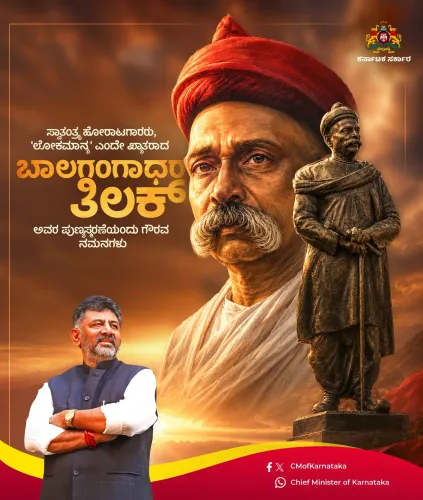
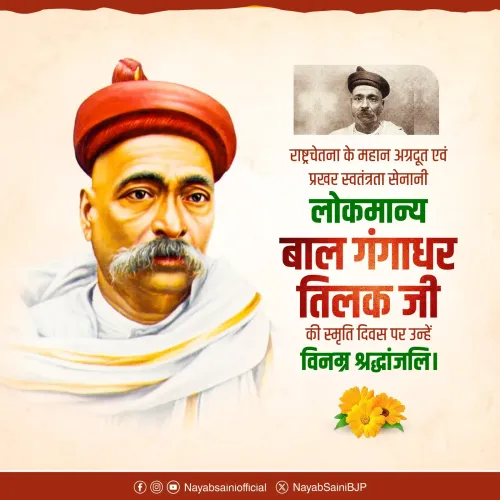
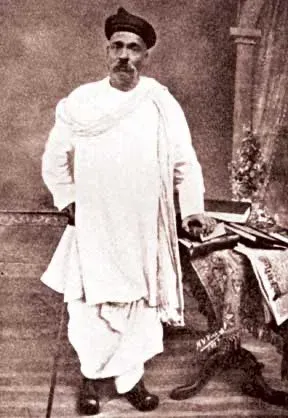
A century after his passing, Lokmanya Bal Gangadhar Tilak's battle cry still echoes across India — and on 1 August, Union Defence Minister Rajnath Singh joined millions in remembering the man who turned a newspaper and a festival into weapons of mass awakening.
Posting in Hindi, Singh offered his tribute to Tilak on the latter's punyatithi (death anniversary), honouring him as 'a great hero of the Indian independence movement and a fierce nationalist thinker.' He highlighted how Tilak's Marathi publications — the 'Mahratta' and 'Kesari' — became engines of national consciousness, carrying the idea of swaraj (self-rule) to ordinary Indians at a time when such words could land a man in prison.
The pen, the pulpit, and 'Gita Rahasya'
Tilak was not merely a political agitator — he was a philosopher who believed freedom had to be won in the mind before it could be claimed on the street. His landmark work 'Gita Rahasya', written during his imprisonment in Mandalay, reinterpreted the Bhagavad Gita's doctrine of karmayoga as a call to selfless action and duty — kartavya — in service of the nation. Singh's tribute specifically invoked this text, noting that it delivered 'the message of karmayoga, duty, and national dharma.'
Ganesh Utsav, Shivaji Jayanti, and the art of mass mobilisation
Perhaps Tilak's most enduring political masterstroke was his transformation of religious and cultural occasions into platforms for national solidarity. By organising public Ganesh Utsav celebrations and reviving Chhatrapati Shivaji Maharaj Jayanti as community events, he gave Indians — divided by caste, class, and language — a shared public space to gather, listen, and organise. Singh's post underscored this, crediting Tilak with giving 'new energy to social unity, cultural consciousness, and national self-respect.'
Tilak died on 1 August 1920, and his anniversary has been observed annually by political leaders across the spectrum ever since — a testament to how thoroughly his legacy transcends party lines.
His immortal declaration — 'Swaraj mera janmasiddh adhikar hai aur main ise lekar rahunga' ('Self-rule is my birthright and I shall have it') — remains perhaps the most galvanising sentence in the entire vocabulary of Indian nationalism. As Singh noted, it continues to 'inspire patriotism, self-respect, and a sense of duty in every Indian's heart.'
Over a hundred years on, the man who built a movement with ink and marigolds still has something to say to the republic he helped imagine into existence.
Point of View
With his emphasis on cultural pride, Hindu festival revival, and muscular self-rule, fits that framing particularly well. Rajnath Singh's detailed tribute, going beyond a perfunctory mention to cite specific texts and events, signals an effort to claim intellectual and emotional ownership of Tilak's legacy. The tribute also arrives in a period of heightened nationalist discourse, making the invocation of Tilak's 'birthright' declaration more than ceremonial. That said, Tilak's legacy is genuinely cross-partisan — his anniversary draws tributes from across the ideological spectrum, which limits the partisan charge of any single tribute.
NationPress
1 Aug 2026
Frequently Asked Questions
When did Lokmanya Bal Gangadhar Tilak die?
Lokmanya Bal Gangadhar Tilak died on 1 August 1920 . His death anniversary, known as his punyatithi , is observed every year on this date.
What is the meaning of Tilak's famous quote 'Swaraj is my birthright'?
The full declaration — 'Swaraj mera janmasiddh adhikar hai aur main ise lekar rahunga' — translates as 'Self-rule is my birthright and I shall have it.' Tilak used it to assert that Indians had an inherent, inalienable right to govern themselves, independent of British consent.
What was the 'Kesari' newspaper and why is it significant?
Kesari was a Marathi-language newspaper founded by Tilak to spread nationalist ideas and advocate for swaraj . It became one of the most influential publications of the Indian independence movement, reaching ordinary readers in Maharashtra and beyond.
What is 'Gita Rahasya' by Tilak?
'Gita Rahasya' is Tilak's philosophical commentary on the Bhagavad Gita, written during his imprisonment in Mandalay. It reinterprets the concept of karmayoga — selfless action — as a moral and national duty, and is considered one of the landmark texts of Indian nationalist thought.
Why did Tilak organise public Ganesh Utsav celebrations?
Tilak transformed Ganesh Utsav from a private household observance into a large public festival to bring Indians together across caste and class lines, creating a shared public space for nationalist ideas to circulate — effectively using culture as a vehicle for political mobilisation.