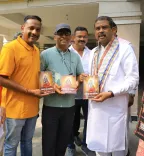
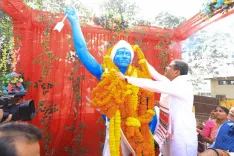
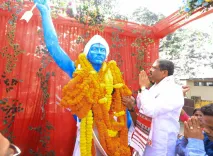
Rajnath Singh pays tribute to Vinoba Bhave on death anniversary
Synopsis
Union Defence Minister Rajnath Singh on 15 November 2026 paid homage to Acharya Vinoba Bhave on his death anniversary, honouring the Bhoodan movement founder's lifelong commitment to social justice, Antyodaya, and Gandhian Sarvodaya ideals.
Key Takeaways
Union Defence Minister Rajnath Singh paid tribute to Acharya Vinoba Bhave on his death anniversary on 15 November 2026 .
Singh highlighted Bhave's role in the freedom struggle and his dedication to human welfare and social service.
Bhave founded the Bhoodan movement in 1951 , walking across India to collect voluntary land donations for the landless poor.
The tribute specifically invoked the concept of Antyodaya — upliftment of the most marginalised — associated with Bhave's Gandhian philosophy.
Annual tributes to independence-era reformers like Bhave are a cross-party tradition in Indian politics, reinforcing the moral vocabulary of Sarvodaya in public discourse.
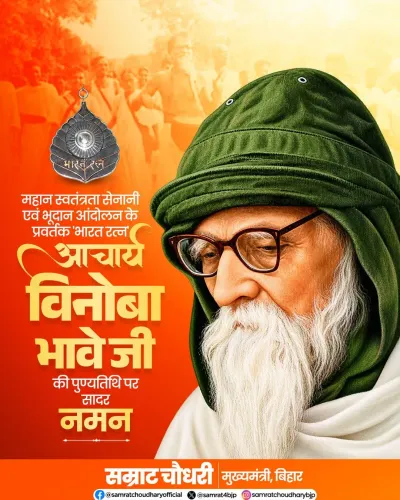
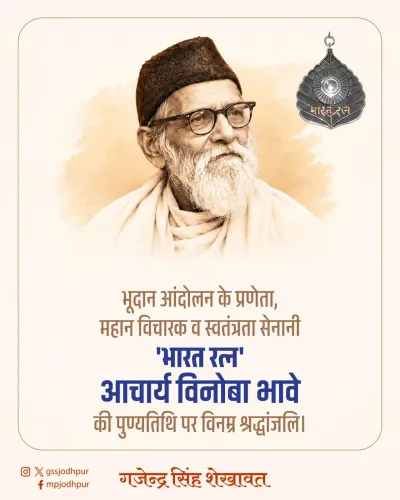
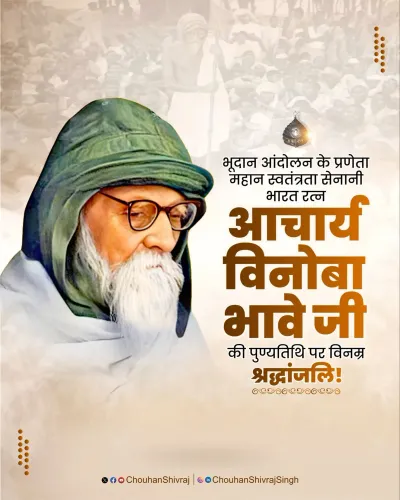
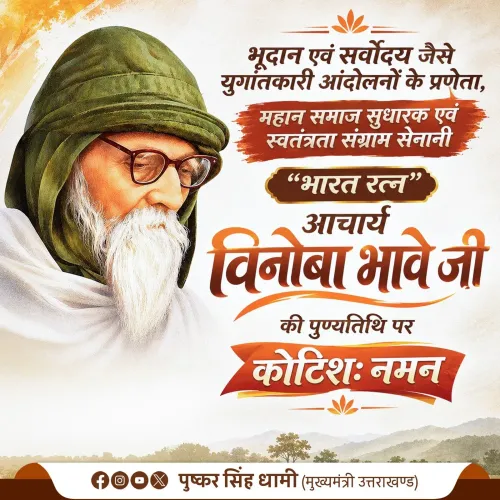
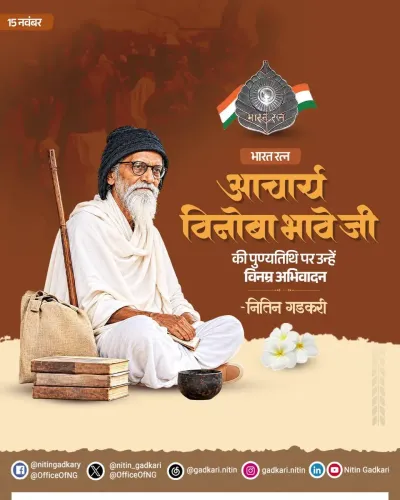
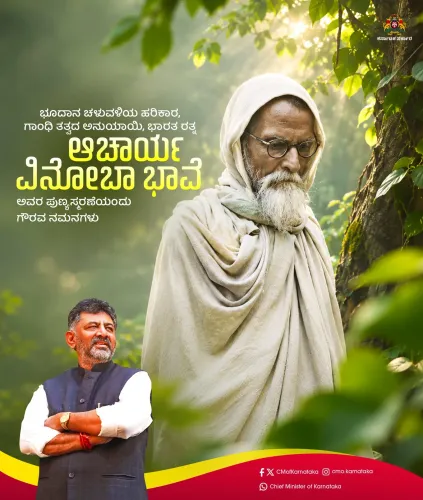
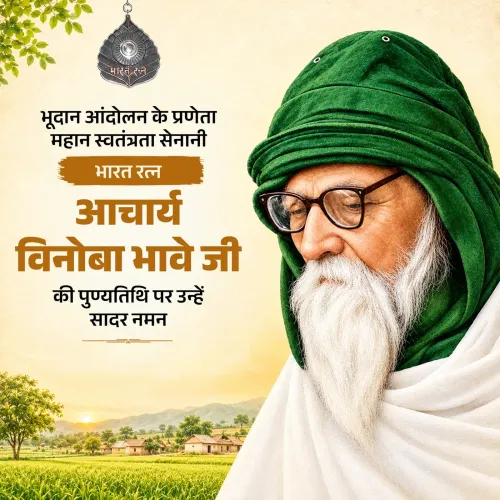
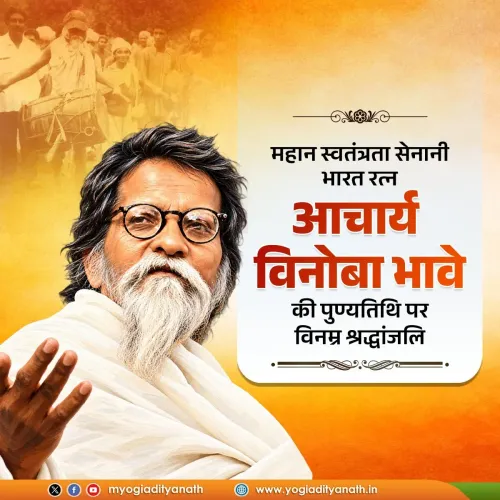
A life spent walking barefoot through Indian villages, convincing landlords to give away their land to the landless — Acharya Vinoba Bhave's legacy of radical, non-violent social reform endures more than four decades after his passing. On his death anniversary, Sunday, 15 November 2026, Union Defence Minister Rajnath Singh paid homage to the Gandhian reformer, remembering him as a guiding force for social justice and human welfare.
In his post, Rajnath Singh wrote: 'Bhoodan Andolan ke madhyam se samajik nyay aur Antyodaya ki bhavna ko aage badhane wale Acharya Vinoba Bhave ji ki punyatithi par unhe vinamra shraddhanjali.' — a humble tribute to the man who advanced the spirit of social justice and Antyodaya (upliftment of the last person in the line) through the Bhoodan movement. Singh also noted that Bhave 'dedicated his entire life to human welfare and social service' and that 'his thoughts, ideals and spirit of service will always guide us.'
The Bhoodan movement and Bhave's place in Indian history
Acharya Vinoba Bhave launched the Bhoodan (land gift) movement in 1951, walking thousands of kilometres across India to persuade landowners to voluntarily donate a portion of their land to the landless poor. Rooted firmly in Gandhian Sarvodaya — the welfare of all — it was one of independent India's most distinctive experiments in non-violent social transformation. Bhave had already earned his place in the freedom struggle as a close disciple of Mahatma Gandhi, and his post-independence work gave that idealism a concrete, grassroots form.
The concept of Antyodaya — prioritising those at the very bottom of the social ladder — that Bhave championed has since been absorbed into mainstream Indian policy vocabulary, invoked across party lines whenever land, rural development, or welfare programmes are discussed.
A cross-party ritual of remembrance
Tributes to independence-era social reformers like Bhave have become a steady, recurring feature of Indian political culture, with leaders from across the spectrum marking birth and death anniversaries. These commemorations rarely announce new policy measures — their power lies in the act of public acknowledgement itself, keeping the moral vocabulary of figures like Bhave alive in national discourse. For the BJP, invoking Bhave's Antyodaya ideal also resonates with the party's own stated commitment to welfare for the most marginalised.
Bhave's legacy belongs to no single party. His insistence on voluntary action, non-violence, and service to rural communities cuts across ideological lines — which is precisely why his death anniversary draws tributes from every corner of Indian politics, year after year.
The moral compass of a man who once persuaded the powerful to give away their most prized asset — land — without a single law being passed. That, as Rajnath Singh's words remind us today, is a standard Indian public life still measures itself against.
Point of View
Using figures like Bhave to signal ideological continuity with India's social-reform heritage. The deliberate invocation of 'Antyodaya' — a term the BJP has long integrated into its own welfare rhetoric — reinforces that alignment. At the same time, Bhave's cross-party reverence means such tributes rarely generate political friction, functioning instead as a soft exercise in nation-building symbolism. The consistent annual rhythm of these commemorations suggests their real purpose is cultural: keeping the vocabulary of non-violent social transformation visible in a fast-moving news cycle.
NationPress
15 Nov 2026
Frequently Asked Questions
Who was Acharya Vinoba Bhave?
Acharya Vinoba Bhave was a Gandhian social reformer and Indian freedom fighter best known for founding the Bhoodan movement in 1951, through which he walked thousands of kilometres across India persuading landowners to voluntarily donate land to the landless poor.
What is the Bhoodan movement?
The Bhoodan (land gift) movement was launched by Vinoba Bhave in 1951 as a voluntary land reform initiative inspired by Gandhian Sarvodaya principles, aiming to redistribute land to the rural landless without legislation or coercion.
What is Antyodaya and why is it associated with Vinoba Bhave?
Antyodaya means the upliftment of the last — the most marginalised — person in society. It is a core Gandhian ideal that Vinoba Bhave championed throughout his life and that has since been adopted widely in Indian policy and political rhetoric.
Why did Rajnath Singh pay tribute to Vinoba Bhave on 15 November?
15 November marks the death anniversary of Acharya Vinoba Bhave. Union Defence Minister Rajnath Singh posted a tribute on X honouring Bhave's contributions to social justice, the freedom struggle, and lifelong dedication to human welfare.
Is Vinoba Bhave remembered across all political parties in India?
Yes. Because of his non-violent, non-partisan approach to social reform and his close association with Mahatma Gandhi, Vinoba Bhave is revered across India's political spectrum, and leaders from various parties routinely mark his birth and death anniversaries.