Rajnath Singh: Sports Now a Field of Excellence, Not Just Entertainment
Synopsis
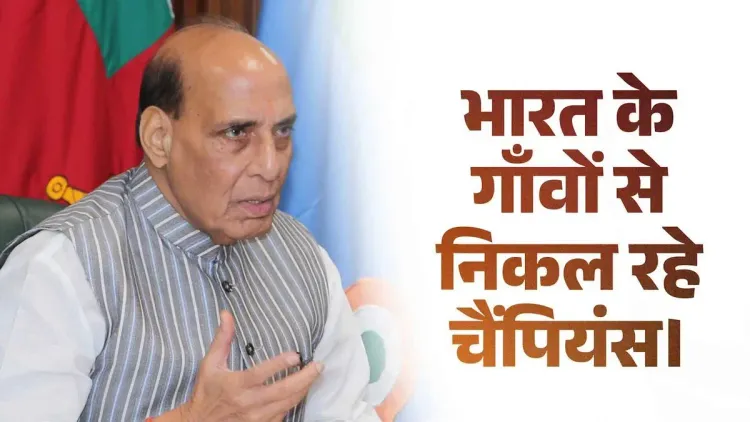
Union Defence Minister Rajnath Singh, posting on the eve of Independence Day 2026, declared that sports has evolved from entertainment into a field of success and national honour, highlighting how champions are now emerging from villages, small towns, and ordinary families across India.
Key Takeaways
Union Defence Minister Rajnath Singh posted on 14 August 2026 , the eve of Independence Day, on the transformation of Indian sports.
He stated that sports has become a field of 'success, excellence, and honour' — no longer merely entertainment.
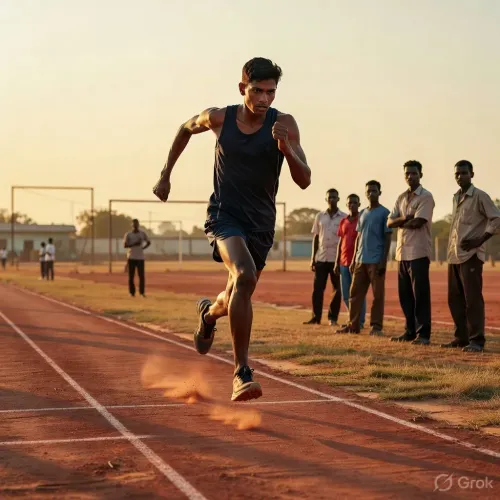
Singh highlighted that today's champions are emerging from villages, small towns, and ordinary families across every corner of India.
His remarks align with the Khelo India programme , launched in 2017 , to promote grassroots sports and rural talent identification.
Indian policy has increasingly positioned sports as a vehicle for national excellence and social mobility beyond metropolitan centres.
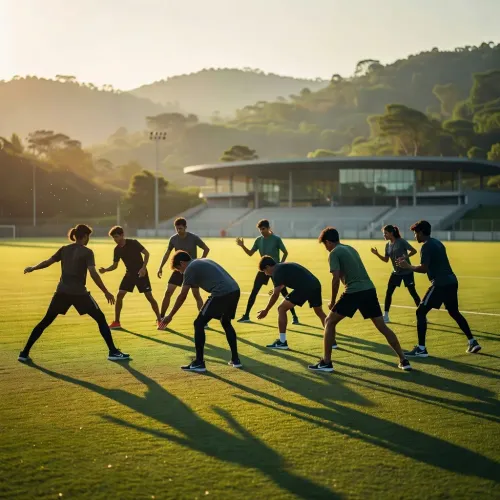
Champions are no longer born only in big cities — they are rising from villages, small towns, and ordinary homes across every corner of India. Union Defence Minister Rajnath Singh made that observation on 14 August 2026, the eve of Independence Day, framing sports as a transformed arena of national pride and social mobility.
From Villages to Victory Podiums
Posting in Hindi, Singh wrote: 'खेल आज केवल मनोरंजन नहीं, बल्कि सफलता, उत्कृष्टता और सम्मान का क्षेत्र बन चुका है।' — 'Sports today is no longer merely entertainment; it has become a field of success, excellence, and honour.' He pointed to what he called the movement's greatest strength: that today's champions are emerging from villages, small towns, and ordinary families from every corner of the country.
The timing is pointed. On the eve of Independence Day, the statement reads as both a celebration and a declaration — that India's sporting identity is being rewritten from the ground up.
Khelo India and the Grassroots Shift
Singh's remarks align with a policy direction that has been building for nearly a decade. The Khelo India programme, launched in 2017, was designed precisely to do what Singh describes — identify and nurture talent from rural and smaller urban areas, widening the talent pipeline far beyond metropolitan academies.
Indian policy has increasingly framed sports not as a leisure pursuit but as a vehicle for national excellence and upward mobility. The political logic is clear: when a wrestler from Haryana or a boxer from a northeastern hill town stands on an international podium, the story resonates across constituencies that rarely saw themselves in sport before.
Why the Independence Day Framing Matters
Delivered a day before 15 August, Singh's post carries deliberate weight. Linking sporting achievement to national honour on the eve of Independence Day is a well-worn rhetorical move — but the underlying data point is real. India's medal tallies at international competitions have grown steadily as the talent base has broadened beyond a handful of states and urban clubs.
The question now is whether grassroots infrastructure — coaching, facilities, nutrition support — keeps pace with the ambition the rhetoric promises.
India's champions are already coming from places the old sporting map barely acknowledged. The next chapter depends on whether the systems follow them there.
Frequently Asked Questions
What did Rajnath Singh say about sports on Independence Day eve 2026?
Rajnath Singh said sports has become a field of success, excellence, and honour — not just entertainment — and that champions are now emerging from villages, small towns, and ordinary families across India.
What is the Khelo India programme?
Khelo India is a government programme launched in 2017 to promote grassroots sports development and identify talent from rural and smaller urban areas across India.
Why did Rajnath Singh post about sports on 14 August?
The post was made on the eve of Independence Day 2026, linking India's growing sporting excellence to national pride and the idea of a rising, inclusive India.
How has Indian sports policy changed to support rural athletes?
Indian policy, anchored by schemes like Khelo India since 2017, has shifted focus toward identifying and funding talent from villages and small towns, moving beyond traditional metropolitan sports academies.
Is Rajnath Singh involved in sports policy?
As Union Defence Minister and a senior BJP leader, Rajnath Singh is not directly in charge of sports policy, but senior ministers frequently champion the government's sports narrative, especially around national occasions.