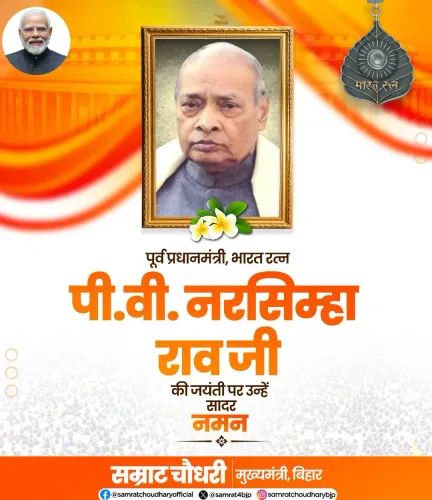
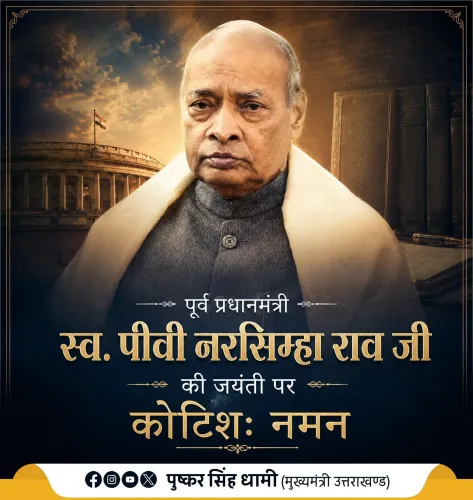
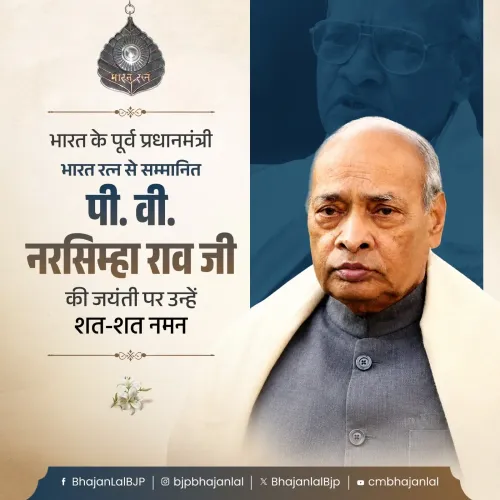
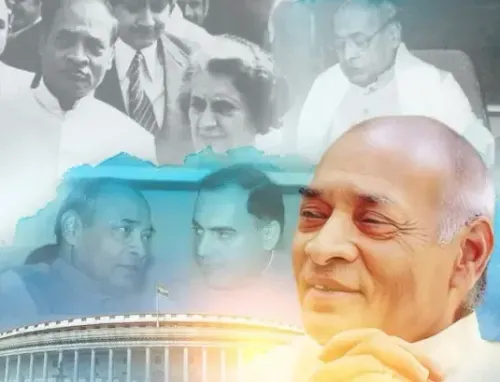
Congress deliberately sidelined PV Narasimha Rao's legacy, says grandson N.V. Subhash
Synopsis
PV Narasimha Rao's grandson and BJP leader N.V. Subhash has made a pointed charge: Congress did not merely overlook Rao — it systematically credited his wins to the Gandhi family while blaming him for controversies. His interview cuts to a long-simmering question about dynastic control of India's oldest party and what it costs leaders who operate outside the family circle.
Key Takeaways
Subhash , grandson of P.V.
Narasimha Rao and senior BJP leader, accused Congress of deliberately sidelining Rao's legacy to elevate the Gandhi family's image.
Subhash alleged that positive outcomes of Rao's tenure were attributed to the Gandhi family, while controversies such as the Babri Masjid demolition were pinned on Rao.
He described real power under both Manmohan Singh's government and the current Congress as residing at 10, Janpath , not with the official party or government leadership.
Subhash alleged that Congress, despite ruling India for nearly 60 years , failed to genuinely empower SC, ST, and OBC communities.
He dismissed the prospect of Rahul Gandhi becoming Prime Minister, citing his record from 2004 to 2024 and his exit from the Congress presidency.
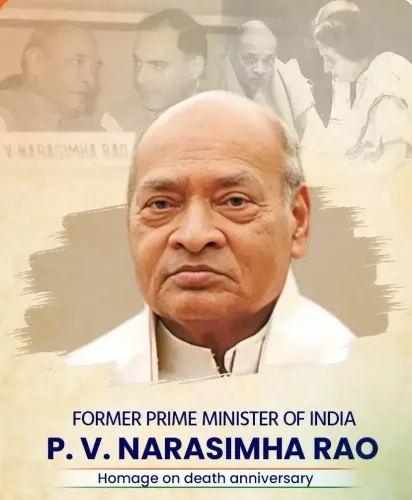
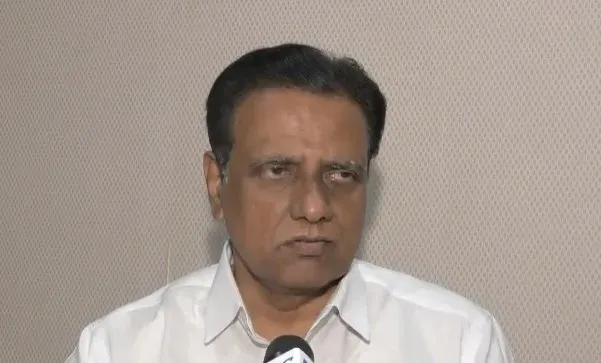
N.V. Subhash, grandson of former Prime Minister P.V. Narasimha Rao and a senior Bharatiya Janata Party (BJP) leader, has accused the Congress of deliberately marginalising his grandfather's contributions while crediting the Gandhi family for the late PM's achievements. Speaking in an interview in Hyderabad on 8 July, Subhash alleged that the party systematically attributed positive outcomes of Rao's tenure to the Gandhi family while pinning controversies on Rao's administration.
Congress 'Chose to Ignore' Rao's Contributions
Subhash argued that without P.V. Narasimha Rao, the Congress would have fractured following Rajiv Gandhi's assassination in 1991, given the intense internal competition for leadership at the time. He said Rao, as a 'true Congressman', held the party together through that crisis.
'The Congress deliberately chose to ignore Narasimha Rao ji's tenure and the schemes implemented during his government so that the Gandhi family's image would be elevated,' Subhash said. He alleged that achievements were attributed to the Gandhi family, while episodes such as the Babri Masjid demolition were laid at Rao's door.
Subhash added that Rao had been a senior adviser to Rajiv Gandhi and was close to Indira Gandhi, yet his family was never acknowledged. He contended that senior Congress leaders, speaking privately, would affirm that Rao was a leader who genuinely empowered Scheduled Castes (SCs), Scheduled Tribes (STs), and Other Backward Classes (OBCs) — and that Rao never favoured his own family or caste. Subhash cited the respect both Atal Bihari Vajpayee and Narendra Modi have shown for Rao as evidence of cross-party recognition.
Institutional Decline Under Gandhi Family Control
Comparing the Congress of Rao's era with its present form, Subhash described a structured decision-making process under Rao — a Core Committee, a Working Committee, and advisers from diverse fields whose frank opinions were actively sought. 'P.V. Narasimha Rao ji carefully considered all their views, even those of opponents,' he said.
He contrasted this with the current setup, alleging that Rahul Gandhi neither consults advisers nor maintains any institutional process. 'Whoever appeases the Gandhi family will get the post; this is not good for the party, nor for the nation,' Subhash said.
'Switch Was at 10, Janpath' — Even Under Manmohan Singh
On whether the Gandhi family controlled the government during Prime Minister Manmohan Singh's tenure, Subhash was unequivocal. He described Singh as 'a very good and educated person who always thought about the future of the country' and 'non-corrupt', but said the locus of power lay at 10, Janpath — Sonia Gandhi's official residence. 'I have seen more people at Sonia Gandhi's residence than at Prime Minister Manmohan Singh's house,' he said.
He argued that the same dynamic persists today, with Congress President Mallikarjun Kharge — a veteran leader — effectively sidelined while real authority rests with Sonia Gandhi, Rahul Gandhi, and Priyanka Gandhi Vadra.
Gandhi Family's Record on SC, ST, OBC Empowerment
Subhash was pointed in his criticism of the Gandhi family's record on marginalised communities. He alleged that despite Congress governing India for nearly 60 years, the Gandhi family 'always disrespected the interests of OBCs, SCs, and STs' and focused instead on appeasing select minority sections and cultivating ties with affluent networks. 'They only wanted votes from the Dalits, while all the important portfolios and law-making decisions went to the Gandhi family and their friends,' he said.
Rahul Gandhi as Prime Minister: 'That Dream Will Remain a Dream'
Asked about Congress's stated ambition of seeing Rahul Gandhi become Prime Minister, Subhash was dismissive. He noted that Gandhi had been given opportunities from 2004 to 2024 and had declined to step up — including stepping away from the Congress presidency after the party's electoral setbacks. 'Such a dream will remain a dream,' he said, adding that Gandhi 'knows his limits' and that it is those around him who have built up his image. He also questioned the electoral returns from the Bharat Jodo Yatra, suggesting the exercise did not translate into seats.
The remarks are likely to intensify the ongoing debate within opposition circles over the Gandhi family's hold on Congress, and over how the party has historically treated leaders outside the dynasty — a conversation that has gained fresh momentum ahead of upcoming state elections.
Point of View
And his name was long absent from party pantheons. But Subhash's framing — delivered as a BJP leader — also serves a clear electoral purpose: deepening the wedge between Congress and Telangana's dominant communities. The more substantive question his remarks raise is structural: whether any Congress leader outside the Gandhi bloodline can ever receive full institutional credit, a pattern that has driven defections from Sharad Pawar to Ghulam Nabi Azad. That question is unlikely to be resolved by interviews alone.
NationPress
7 Oct 2026
Frequently Asked Questions
Why does N.V. Subhash say Congress ignored PV Narasimha Rao?
N.V. Subhash alleges that Congress deliberately chose not to highlight Rao's tenure and policy achievements so that credit would flow to the Gandhi family instead. He claims the party attributed positive outcomes to the Gandhi family while associating controversies, such as the Babri Masjid demolition, with Rao's administration.
Who is N.V. Subhash?
N.V. Subhash is the grandson of former Prime Minister P.V. Narasimha Rao and a senior leader of the Bharatiya Janata Party (BJP). He has been vocal about what he describes as the Congress party's failure to honour Rao's contributions to India.
What did Subhash say about Gandhi family control over Congress?
Subhash alleged that real power in Congress has long resided with the Gandhi family rather than with elected or appointed leaders. He said that even during Prime Minister Manmohan Singh's tenure, the 'switch' of authority was at 10, Janpath — Sonia Gandhi's residence — and that the same holds true today despite Mallikarjun Kharge holding the party presidency.
What is Subhash's view on Rahul Gandhi becoming Prime Minister?
Subhash dismissed the prospect, saying Rahul Gandhi had been given opportunities from 2004 to 2024 and had not delivered. He pointed to Gandhi's departure from the Congress presidency after electoral losses and questioned the seat gains from the Bharat Jodo Yatra, concluding that the ambition 'will remain a dream.'
What did Subhash say about Congress's record on SC, ST, and OBC communities?
Subhash alleged that despite Congress ruling India for nearly 60 years, the Gandhi family consistently disrespected the interests of OBCs, SCs, and STs, focusing instead on select minority sections and affluent networks. He argued that Dalits were sought for their votes but denied meaningful positions of power within the party.